

Map Snapshot


46 Records
Status
Where To Find
Citations
No citations linked for this taxon yet.
Source: Wikipedia
| Lentinus arcularius | |
|---|---|
.jpg)
| |
Scientific classification 
| |
| Kingdom: | Fungi |
| Division: | Basidiomycota |
| Class: | Agaricomycetes |
| Order: | Polyporales |
| Family: | Polyporaceae |
| Genus: | Lentinus |
| Species: | L. arcularius
|
| Binomial name | |
| Lentinus arcularius (Batsch) Zmitr. 2010
| |
| Synonyms | |
| |
| Lentinus arcularius | |
|---|---|
| Mycological characteristics | |
 | Pores on hymenium |

 | Cap is convex or depressed |
 | Hymenium is decurrent |
 | Stipe is bare |
 | Spore print is cream to white |
 | Ecology is saprotrophic |
 | Edibility is inedible |
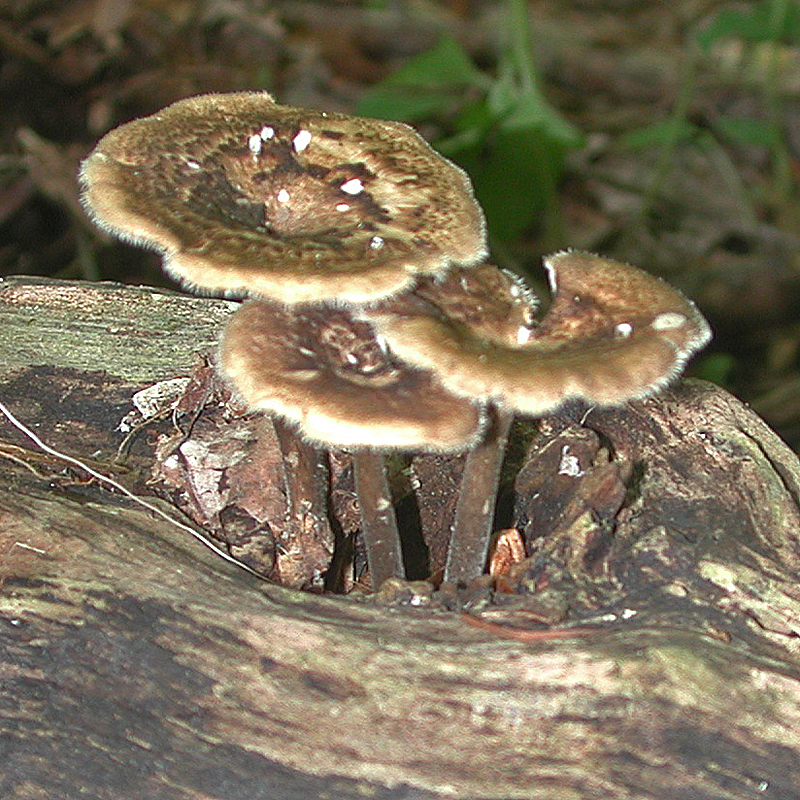
Lentinus arcularius, also known as the spring polypore, is a ubiquitous species of fungus in the family Polyporaceae.[1][2]
Taxonomy
[edit]It was first documented in 1783 by German naturalist August Batsch under the name Boletus arcularius. It was later renamed to Polyporus arcularius in 1821 by Swedish mycologist Elias Magnus Fries before being recently (2010) transferred to the genus Lentinus.[1]
Description
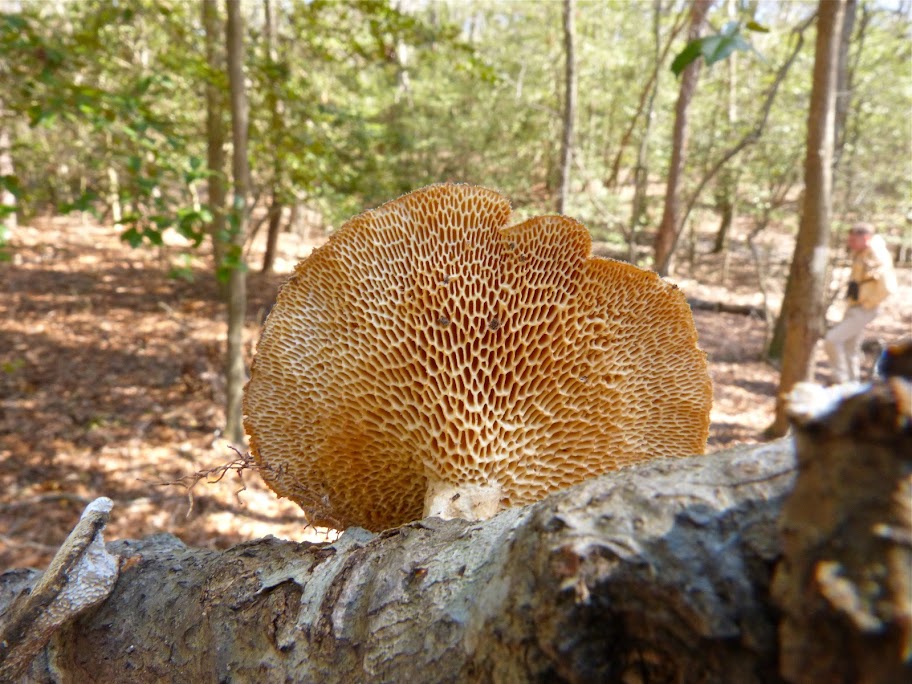
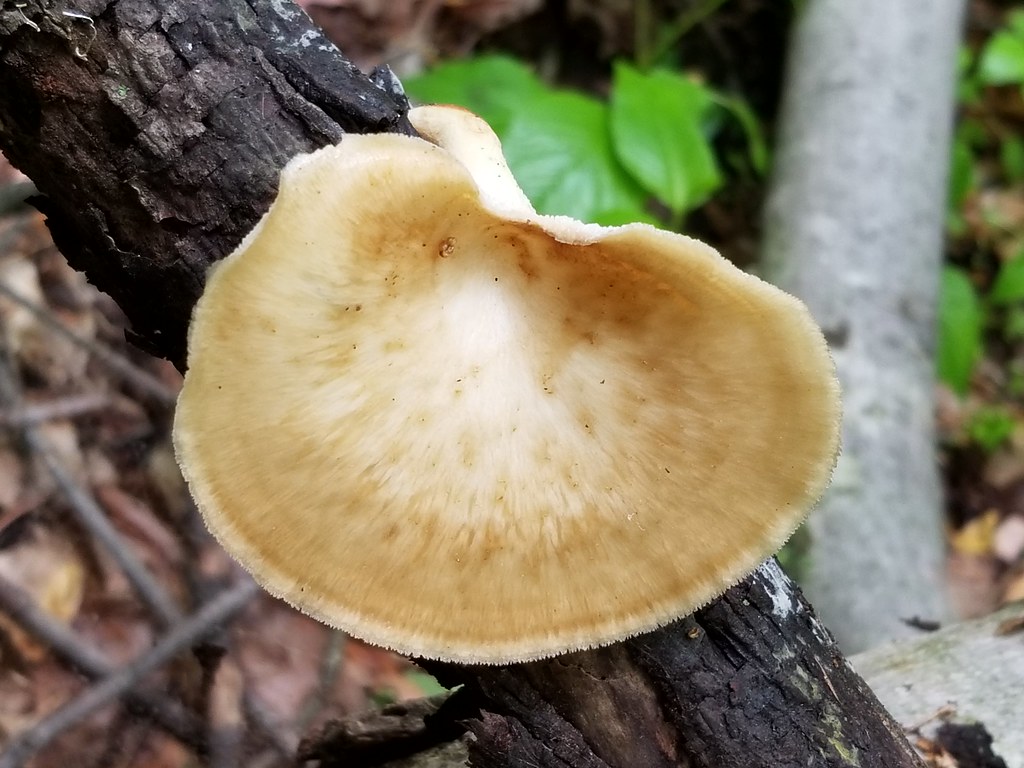
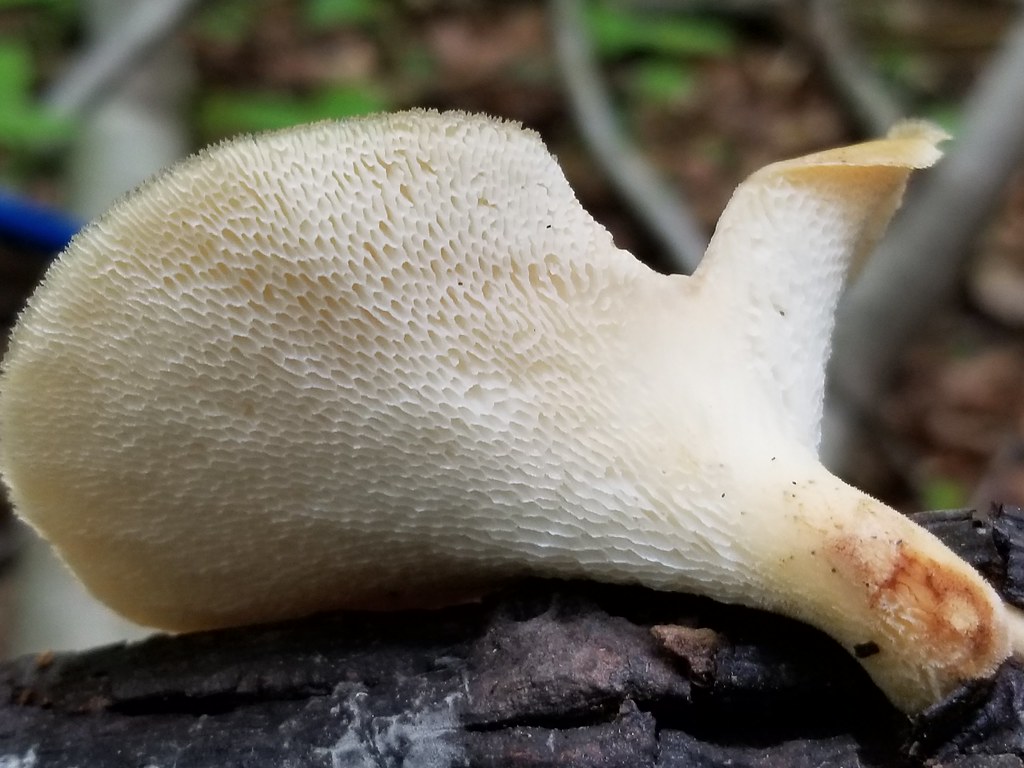
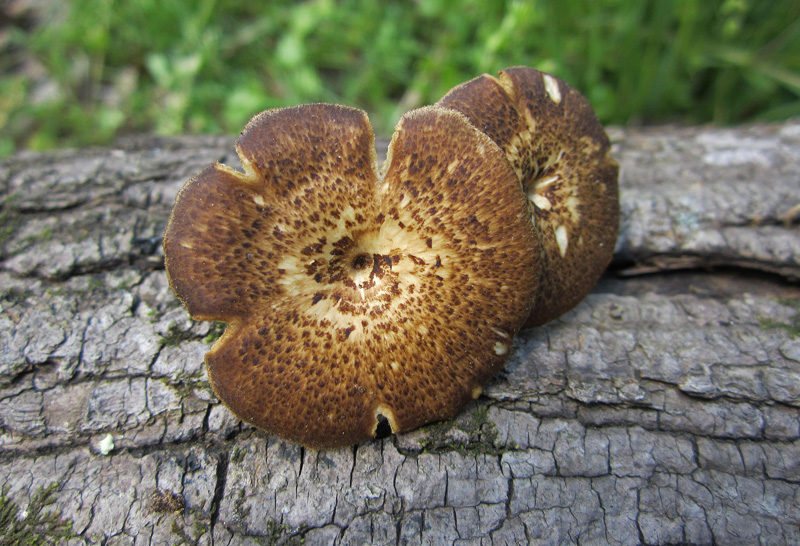
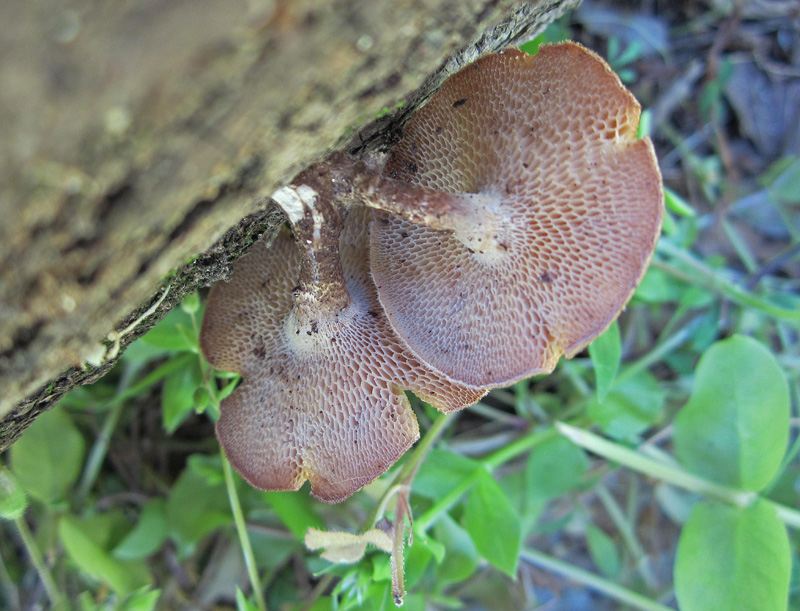
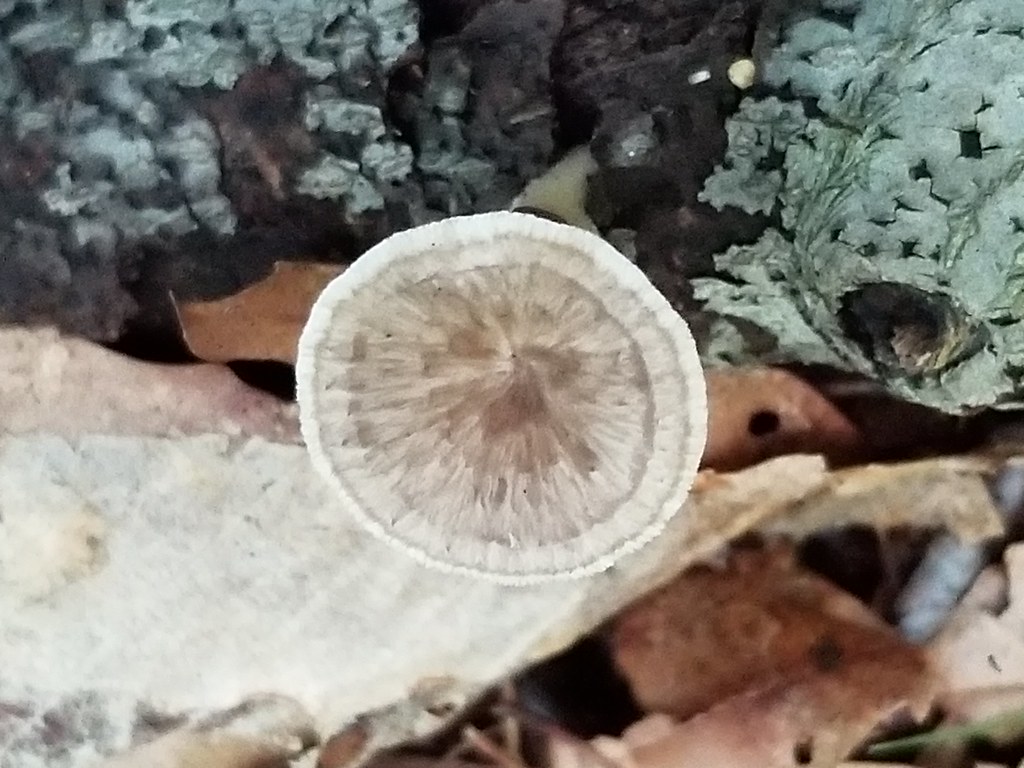
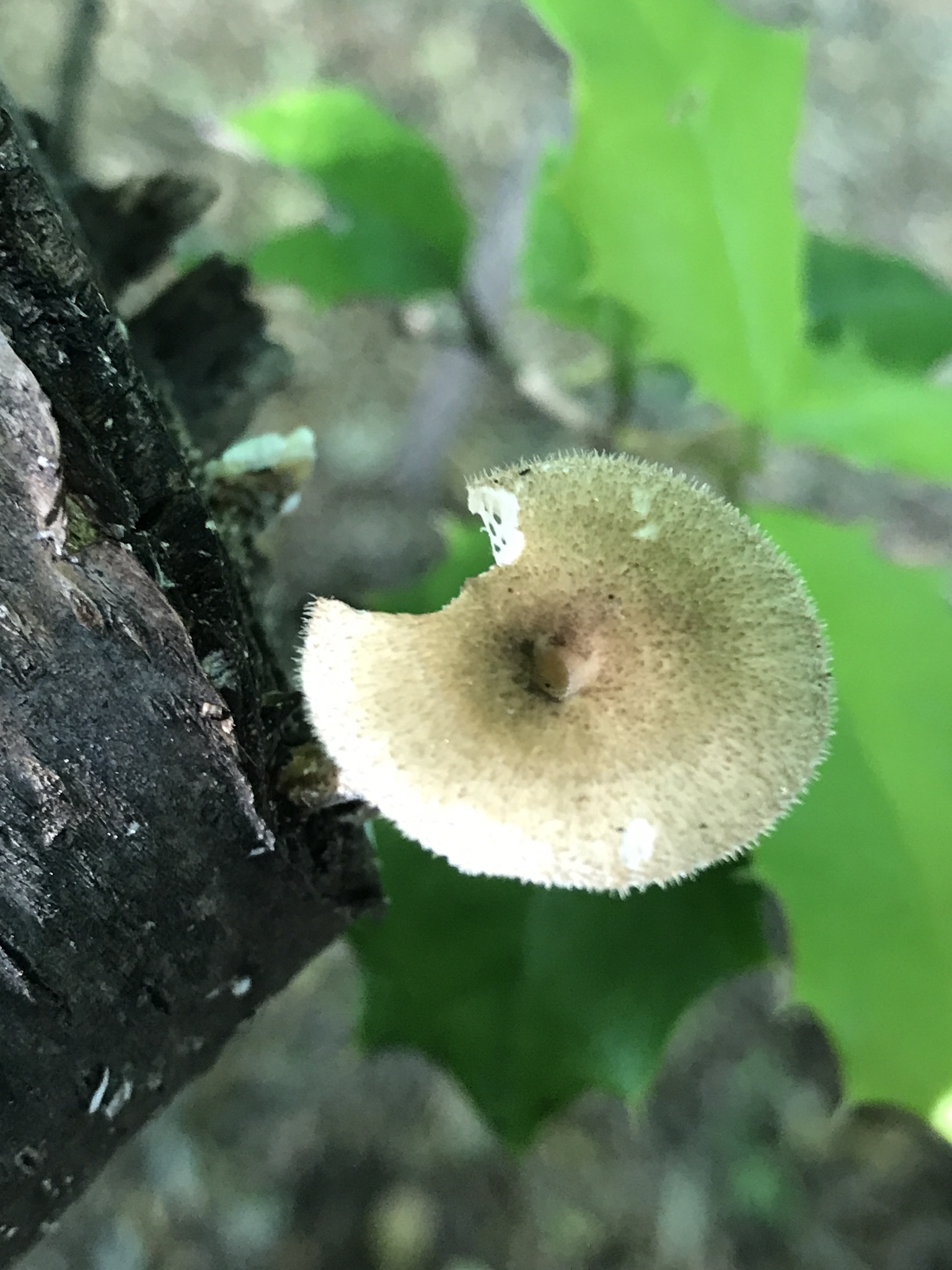
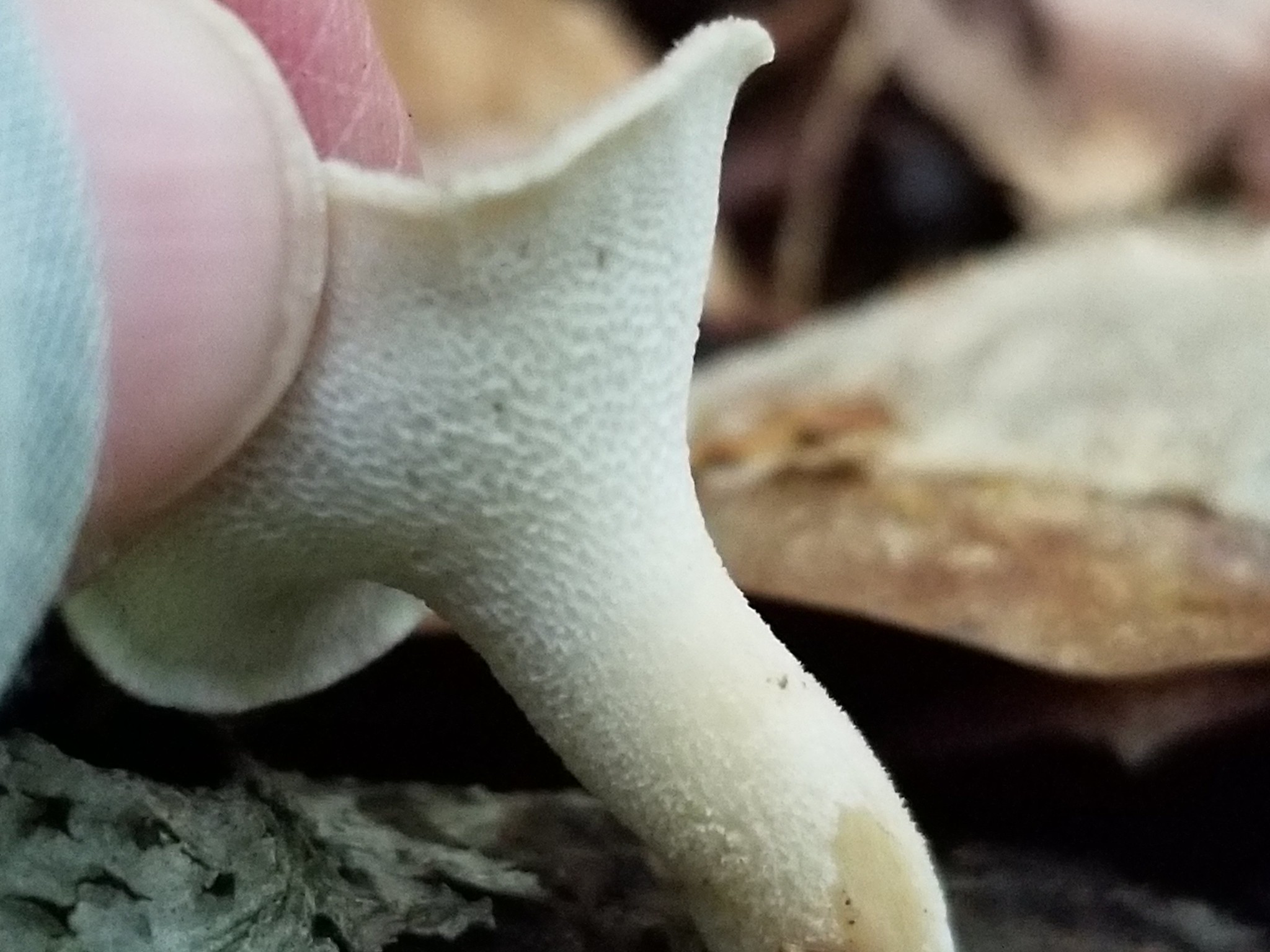
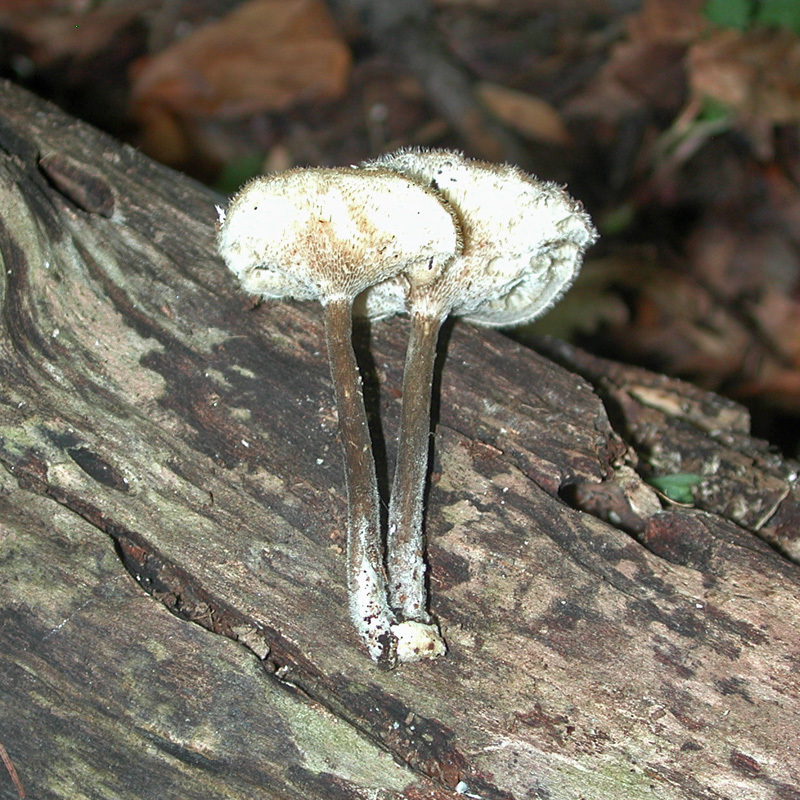
[edit]The cap is 1–8 centimetres (1⁄2–3+1⁄4 in) in diameter and convex to depressed in shape. It is pale tan to dark brown and may have small scales, while the margin has fine hairs.[3] The hymenium is decurrent, has hexagonal pores, and is cream to brown in color. The stipe is central, bare, scaly, and brownish. The odor is not distinct.[4] The spore print is cream to white.[5]
It is too small and tough to be of culinary interest.[3]
-
 Pores on underside

Distribution and habitat
[edit]It has been found on all continents, but has primarily been documented in the United States, Austria, Mexico, Australia, and Japan.[6]
References
[edit]- ^ a b "Polyporus arcularius in Mycobank".
- ^ "Species Fungorum - Names Record". www.speciesfungorum.org. Retrieved 2022-05-22.
- ^ a b Arora, David (1986) [1979]. Mushrooms Demystified: A Comprehensive Guide to the Fleshy Fungi (2nd ed.). Berkeley, CA: Ten Speed Press. p. 563. ISBN 978-0-89815-170-1.
- ^ "Polyporus arcularius (MushroomExpert.Com)". www.mushroomexpert.com. Retrieved 2022-05-22.
- ^ Audubon (2023). Mushrooms of North America. Knopf. p. 276. ISBN 978-0-593-31998-7.
- ^ "Polyporus arcularius (Batsch) Fr". www.gbif.org. Retrieved 2022-05-22.
External links
[edit] Media related to Lentinus arcularius at Wikimedia Commons
 Data related to Polyporus arcularius at Wikispecies


 | This Polyporales-related article is a stub. You can help Wikipedia by adding missing information. |