
Map Snapshot


47 Records
Status
Description
Citations
No citations linked for this taxon yet.
Source: Wikipedia
| Amanita farinosa | |
|---|---|

| |
Scientific classification 
| |
| Kingdom: | Fungi |
| Division: | Basidiomycota |
| Class: | Agaricomycetes |
| Order: | Agaricales |
| Family: | Amanitaceae |
| Genus: | Amanita |
| Species: | A. farinosa
|
| Binomial name | |
| Amanita farinosa (Schw.)
| |

| Amanita farinosa | |
|---|---|
| Mycological characteristics | |
 | Gills on hymenium |

 | Cap is flat or convex |
 | Hymenium is free |
 | Stipe is bare |
 | Spore print is white |
 | Ecology is mycorrhizal |
 | Edibility is poisonous |
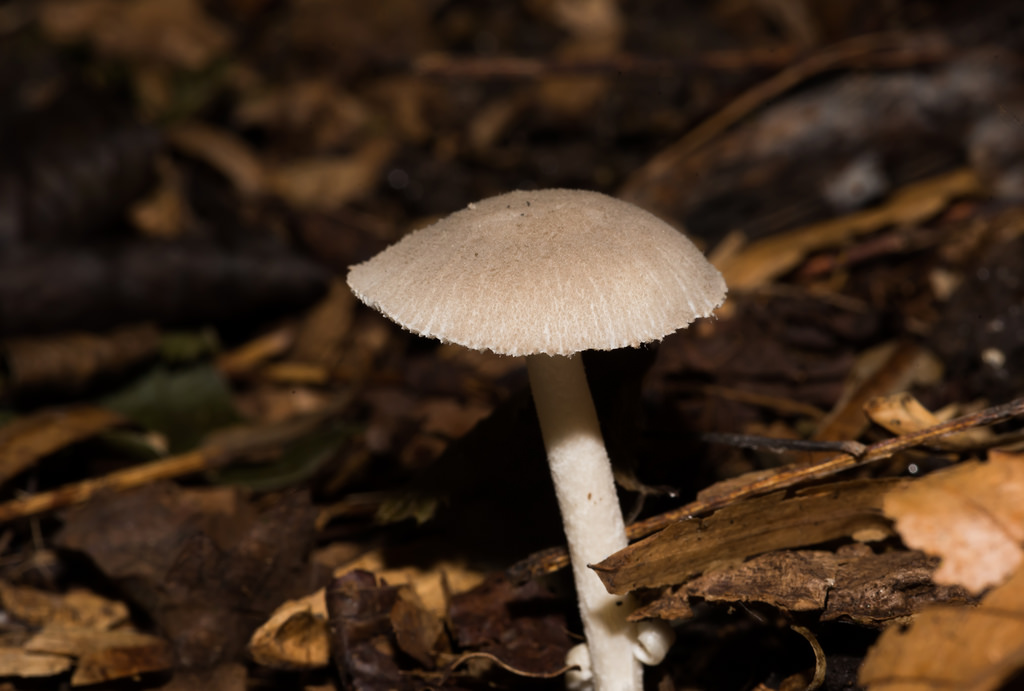
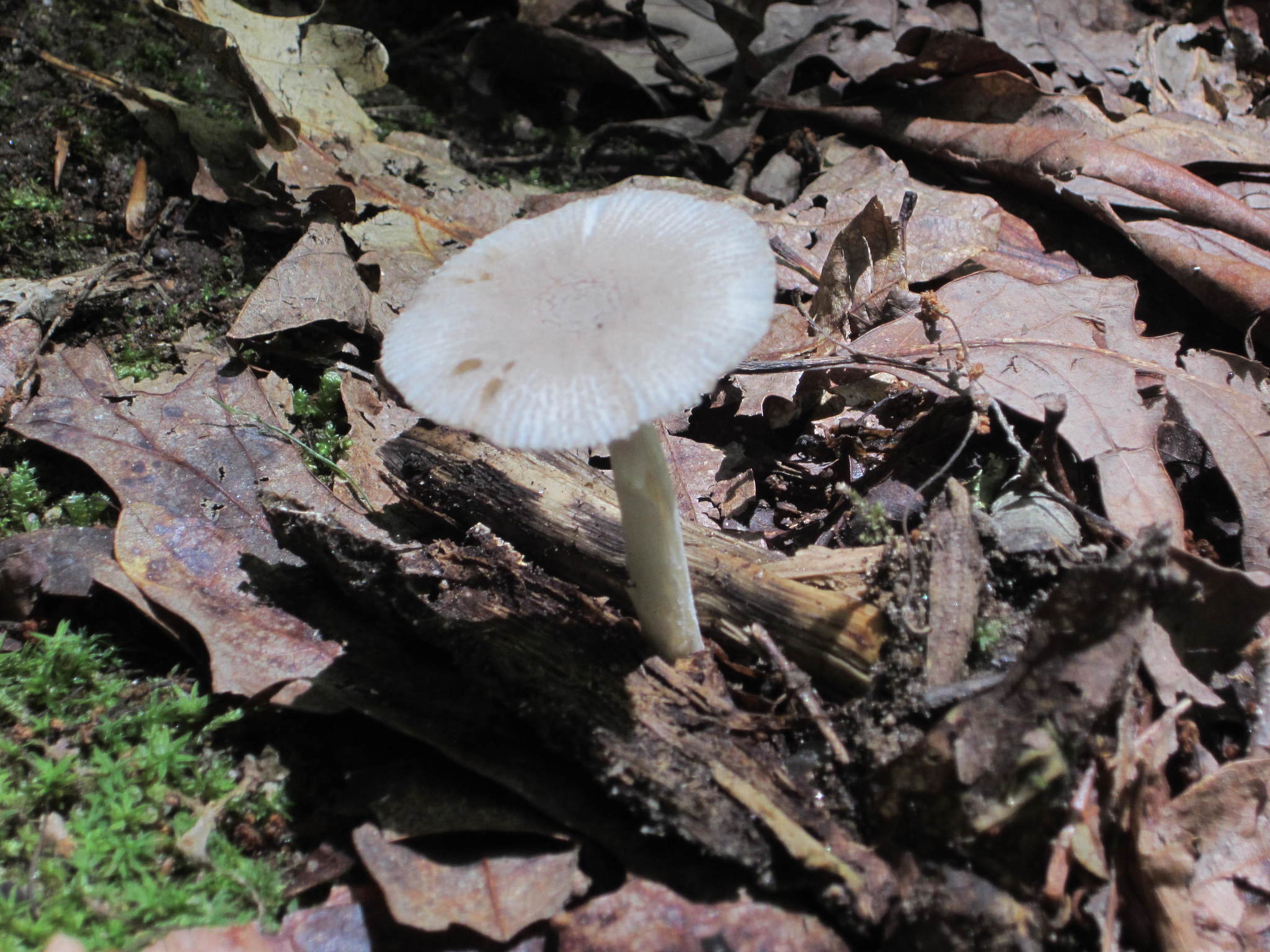
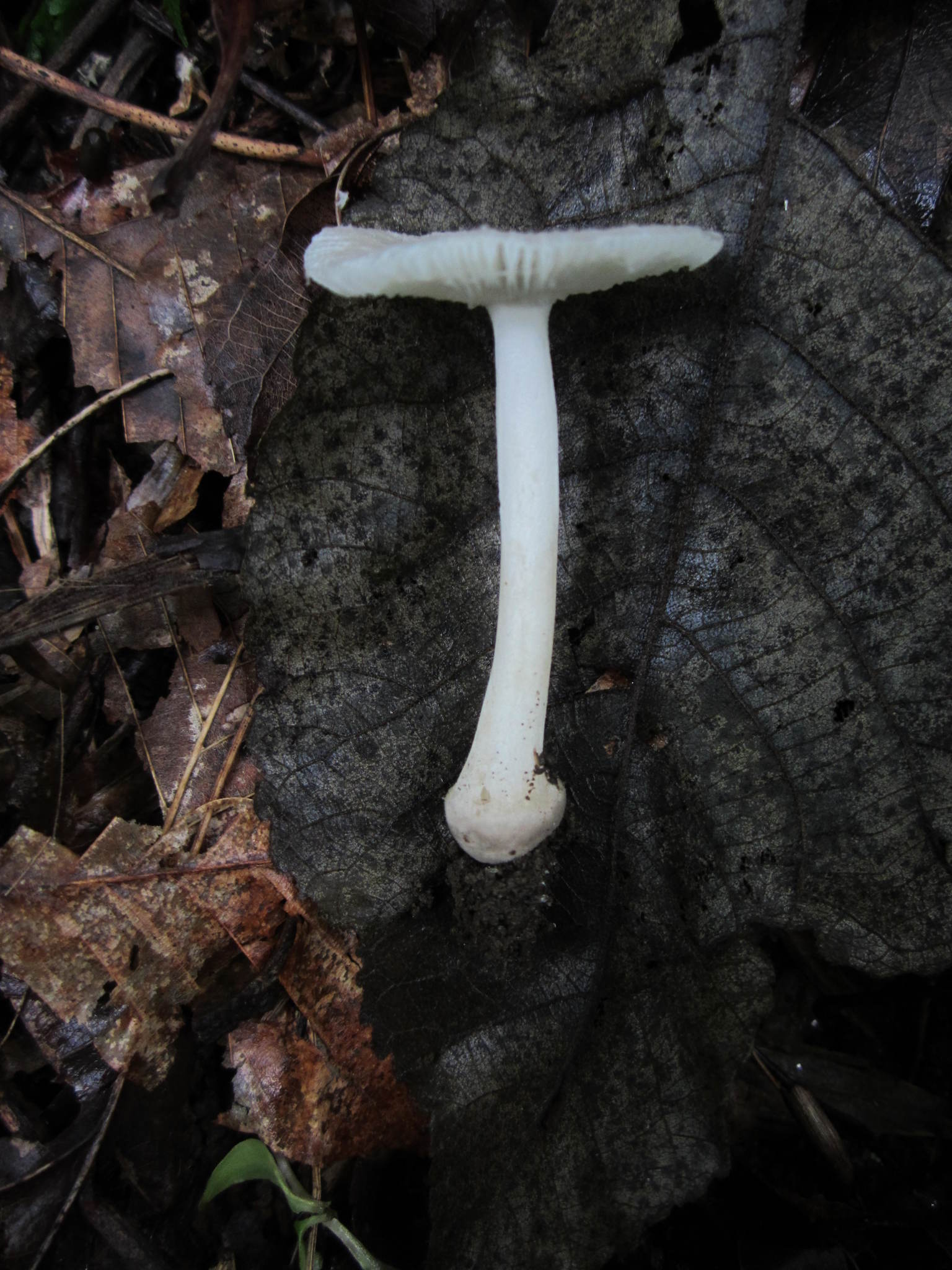
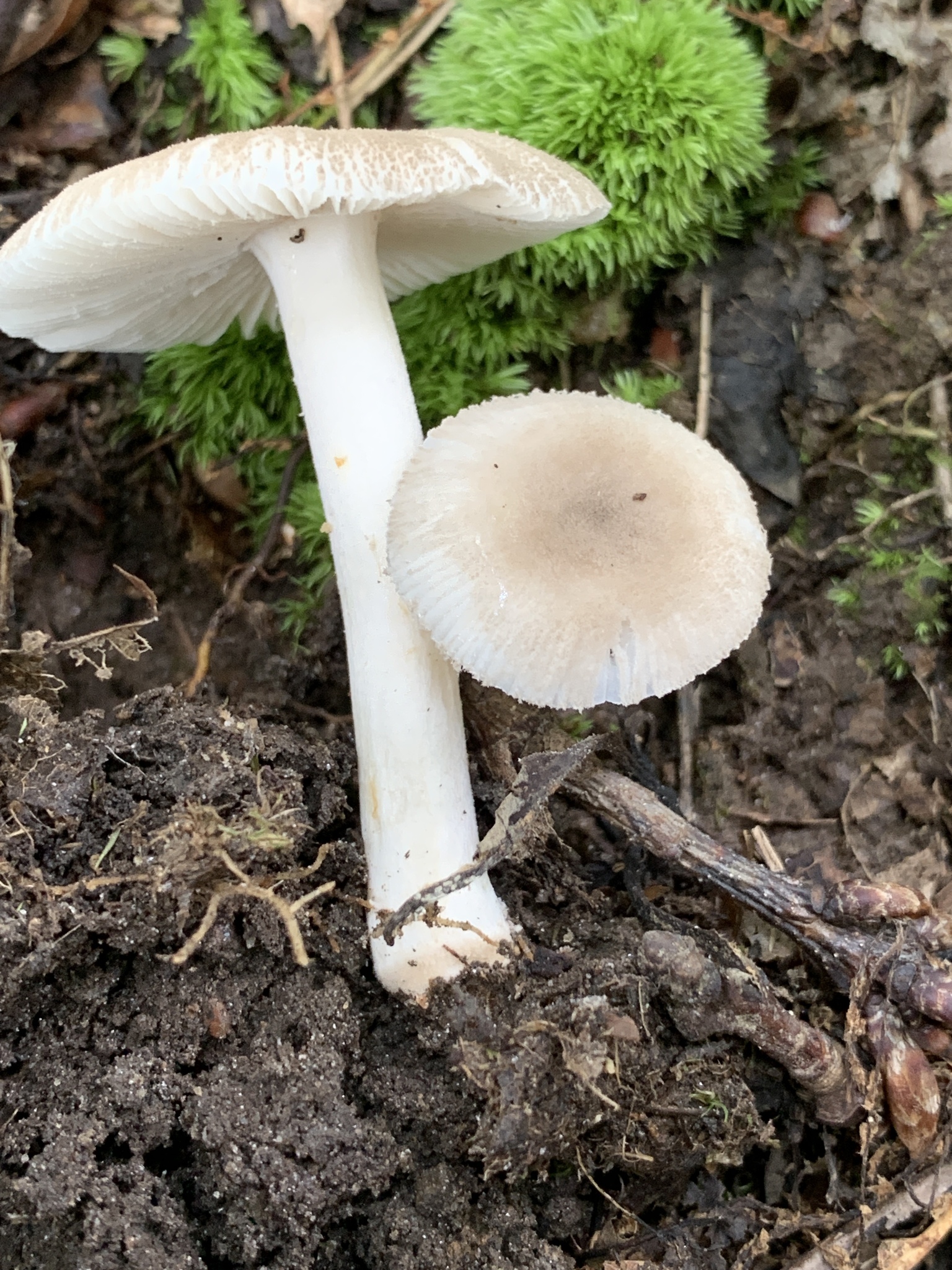
Amanita farinosa, commonly known as the floury amanita,[2] eastern American floury amanita or the American floury amanita,[3] is a North American poisonous mushroom of the genus Amanita,[4] a genus of fungi including some of the most deadly mushrooms.
Taxonomy
[edit]Two recent molecular studies show that A. farinosa is part of a subgroup within Amanita with its close relatives A. muscaria, A. gemmata, and A. roseotincta.[5][6]
Description
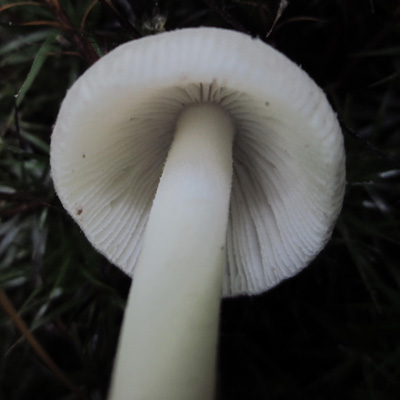
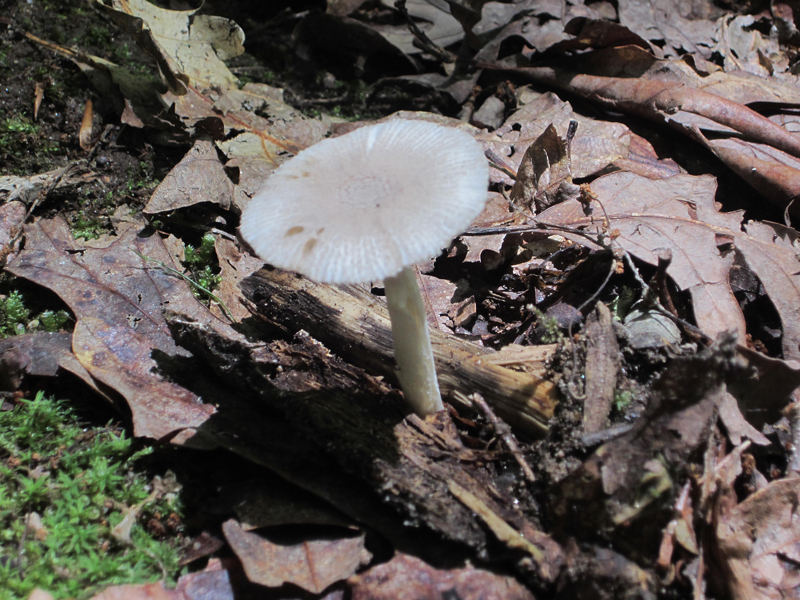
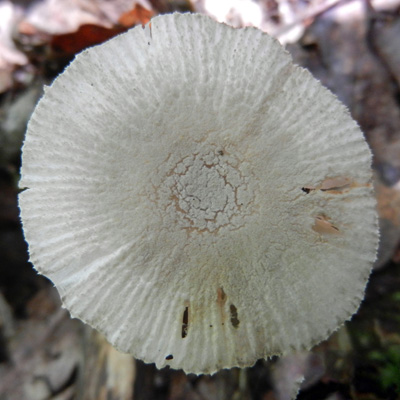
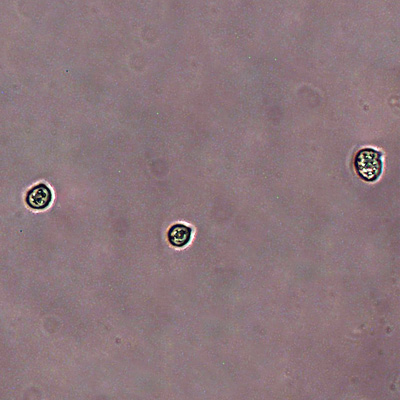
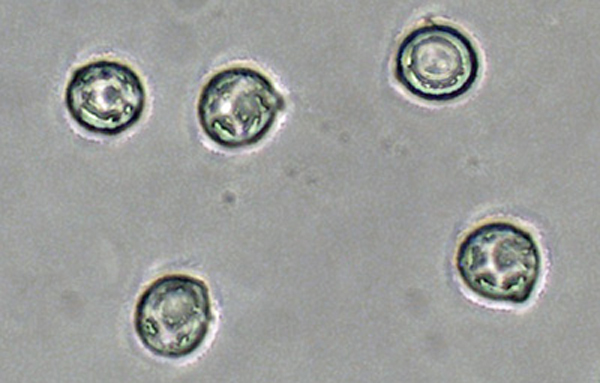
[edit]The cap is 2.5–7 centimetres (1–3 inches) in diameter, domed in young and flat in older specimens, with a striate margin. It is whitish grey and covered with brownish grey volval or mealy material. The gills are white. They may be attached to the stem or free. They are close and crowded and not bruising. The stem, or the stipe, lacks a ring and at its base a smallish bulb or volva. It measures up to 6.5 cm high and 1–3 cm thick. The stem is white to tan in color.[7] The spores are white. They are 5.5–8 x 6–8 μm in measurement and inamyloid. The spores are smooth and round to broadly elliptical. The flesh is white in color. It does not stain on exposure.[7] In old specimens, the smell can be strong and that of mink.
The poisonous mushroom resembles some other members of its genus.[8]
Distribution and habitat
[edit]An uncommon mushroom, it is found in eastern North America from summer to autumn among the underwood of hardwood trees.[8]
See also
[edit]Footnotes
[edit]- ^ NatureServe. "Amanita farinosa". NatureServe Explorer. Arlington, Virginia. Retrieved 17 April 2025.
- ^ Siegel, Noah; Schwarz, Christian (September 1, 2024). Mushrooms of Cascadia: A Comprehensive Guide to Fungi of the Pacific Northwest. Humboldt County, CA: Backcountry Press. p. 54. ISBN 9781941624197.
- ^ "Standardized Common Names for Wild Species in Canada". National General Status Working Group. 2020.
- ^ Phillips, Roger (2010). Mushrooms and Other Fungi of North America. Buffalo, NY: Firefly Books. p. 19. ISBN 978-1-55407-651-2.
- ^ Moncalvo J-M, Drehmel D, & Vilgalys R. (2000). Variation in modes and rates of evolution in nuclear and mitochondrial ribosomal DNA in the mushroom genus Amanita (Agaricales, Basidiomycota): phylogenetic implications. Molecular Phylogenetic and Evolution 16:48-63.
- ^ Drehmel D, Moncalvo J-M, & Vilgalys R. (1999). Molecular phylogeny of Amanita based on large subunit ribosomal DNA sequences: implications for taxonomy and character evolution. Mycologia 91:610-618
- ^ a b "Amanita farinosa (MushroomExpert.Com)". www.mushroomexpert.com. Archived from the original on 2025-12-12. Retrieved 2026-01-18.
- ^ a b Audubon (2023). Mushrooms of North America. Knopf. p. 528. ISBN 978-0-593-31998-7.

Poisonous Amanita mushrooms | |||||||||||||||||||||||||||||||
|---|---|---|---|---|---|---|---|---|---|---|---|---|---|---|---|---|---|---|---|---|---|---|---|---|---|---|---|---|---|---|---|
| Subgenus Amanita |
| .jpg) | |||||||||||||||||||||||||||||
| Subgenus Amanitina |
| ||||||||||||||||||||||||||||||
| Subgenus Lepidella |
| ||||||||||||||||||||||||||||||