

Map Snapshot


247 Records
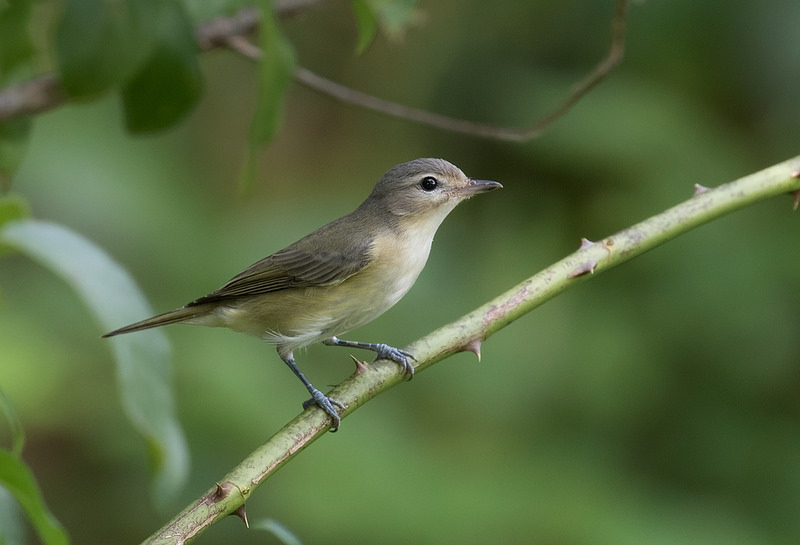
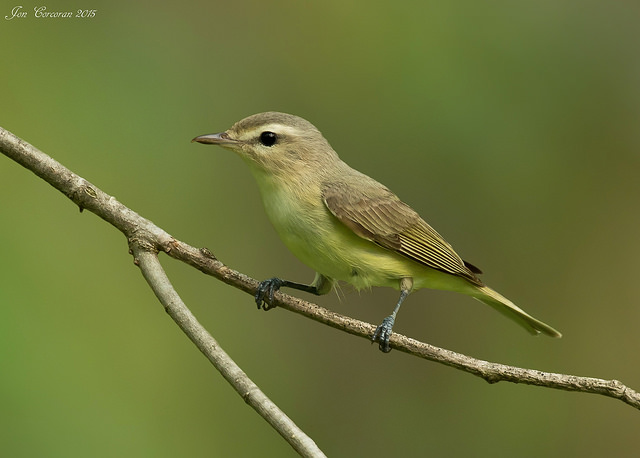
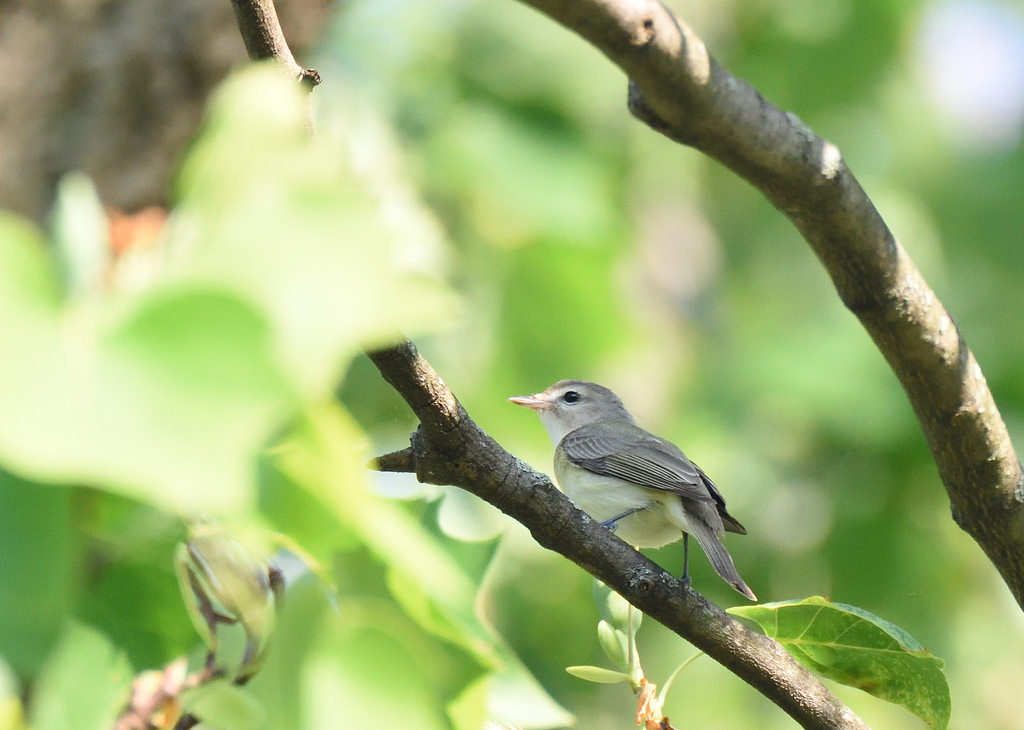
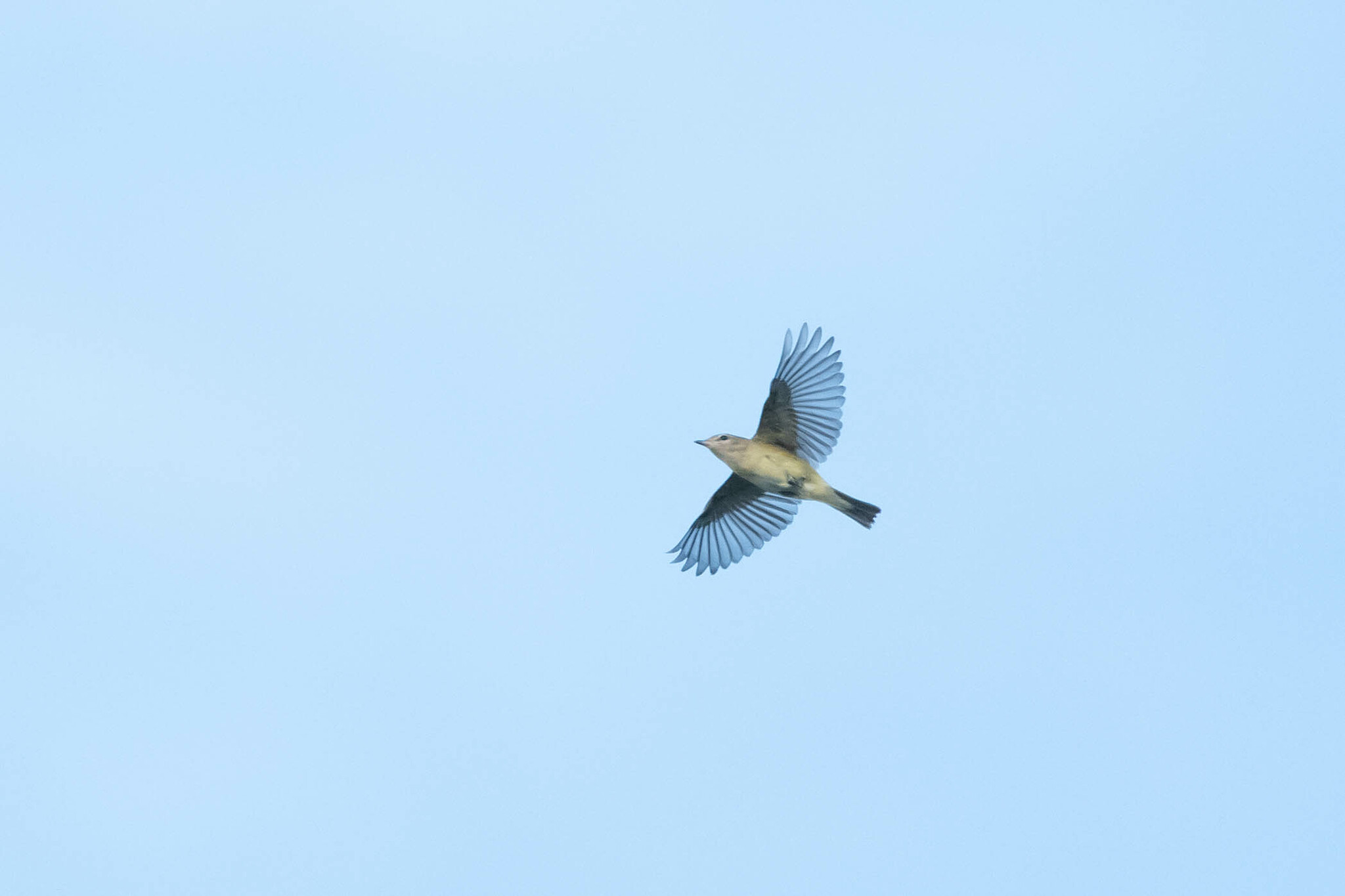
Eastern Warbling Vireo in Montgomery Co., Maryland (4/27/2022). (c) Stephen John Davies, some rights reserved (CC BY-NC). - Stephen John Davies via iNaturalist.
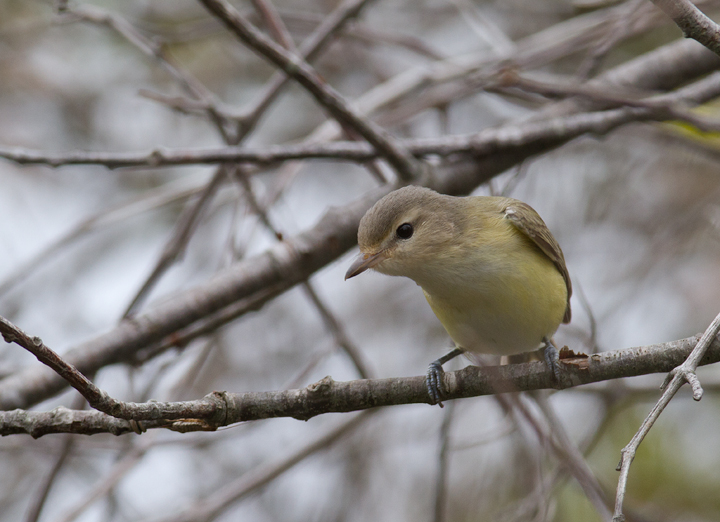
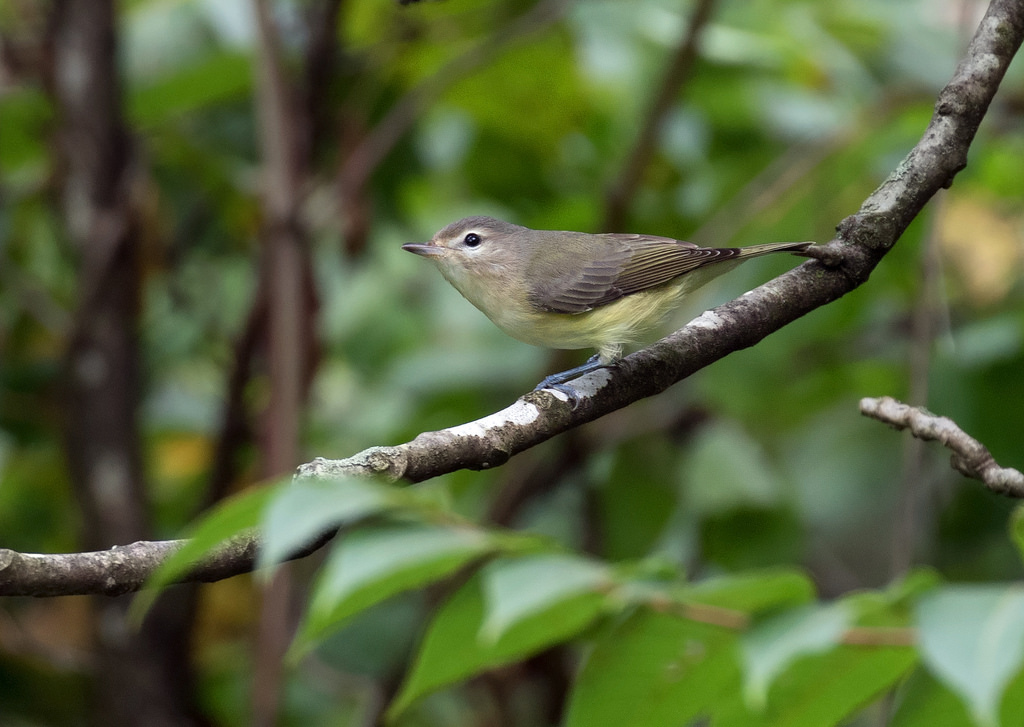
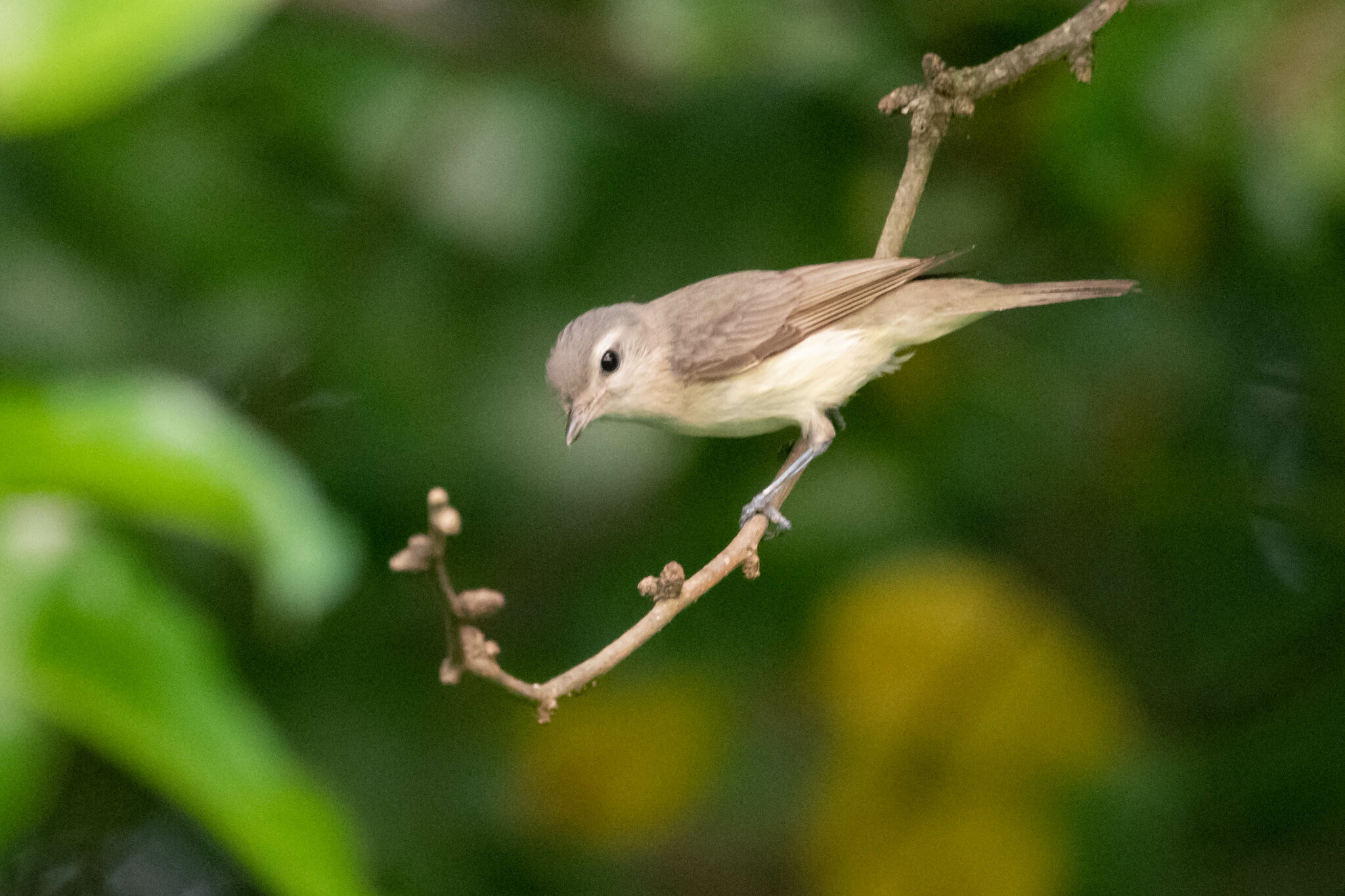
Eastern Warbling Vireo in Prince George's Co., Maryland (6/20/2009). (c) Bill Hubick, all rights reserved. - Bill Hubick.
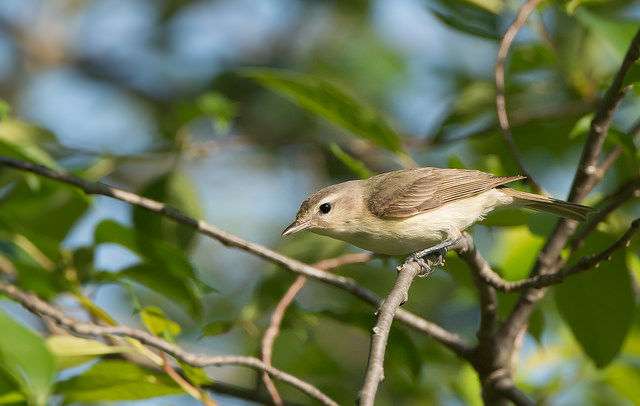
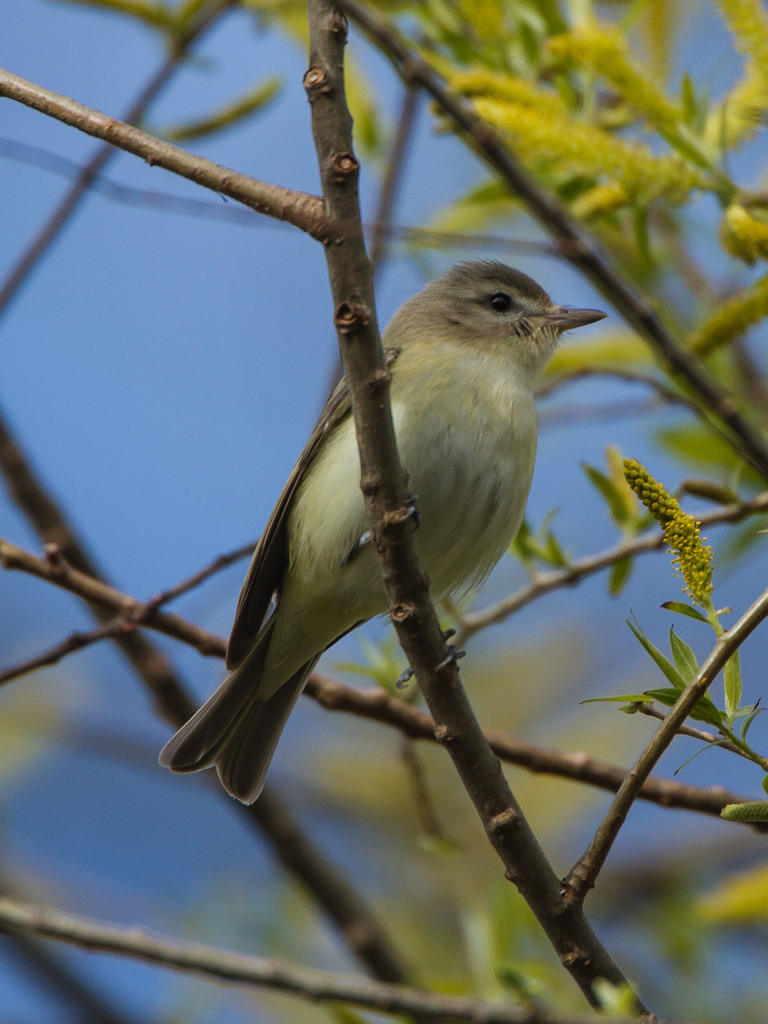
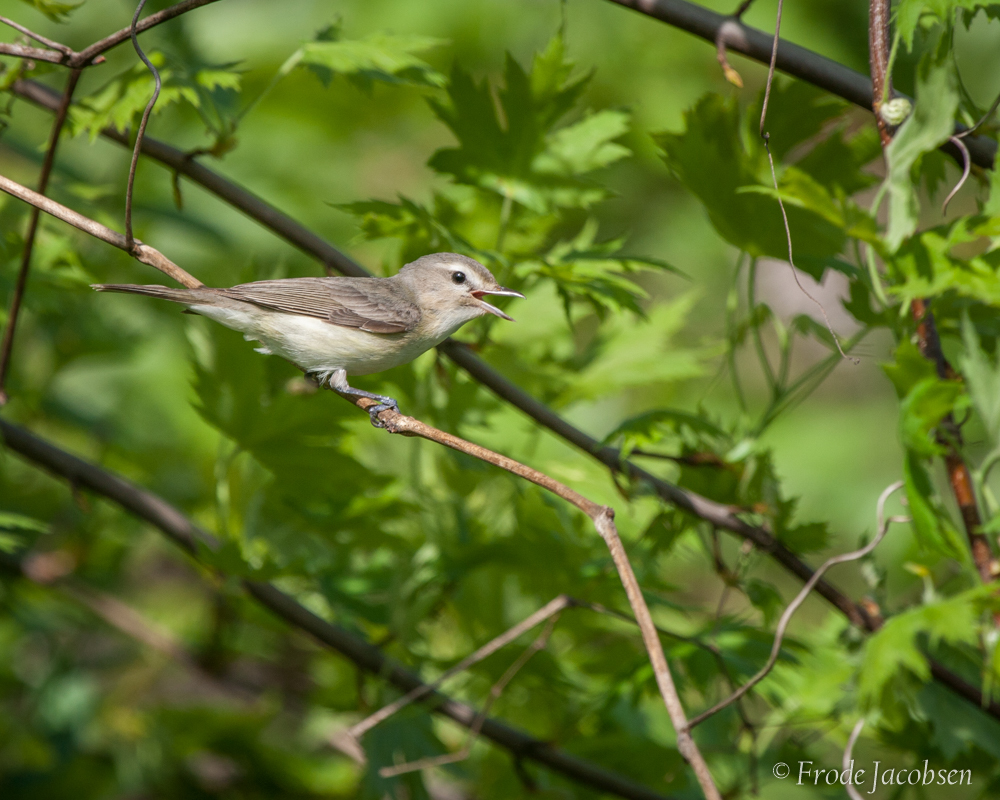
Eastern Warbling Vireo in Washington Co., Maryland (6/3/2023). (c) Frode Jacobsen, some rights reserved (CC BY-NC). - Frode Jacobsen.
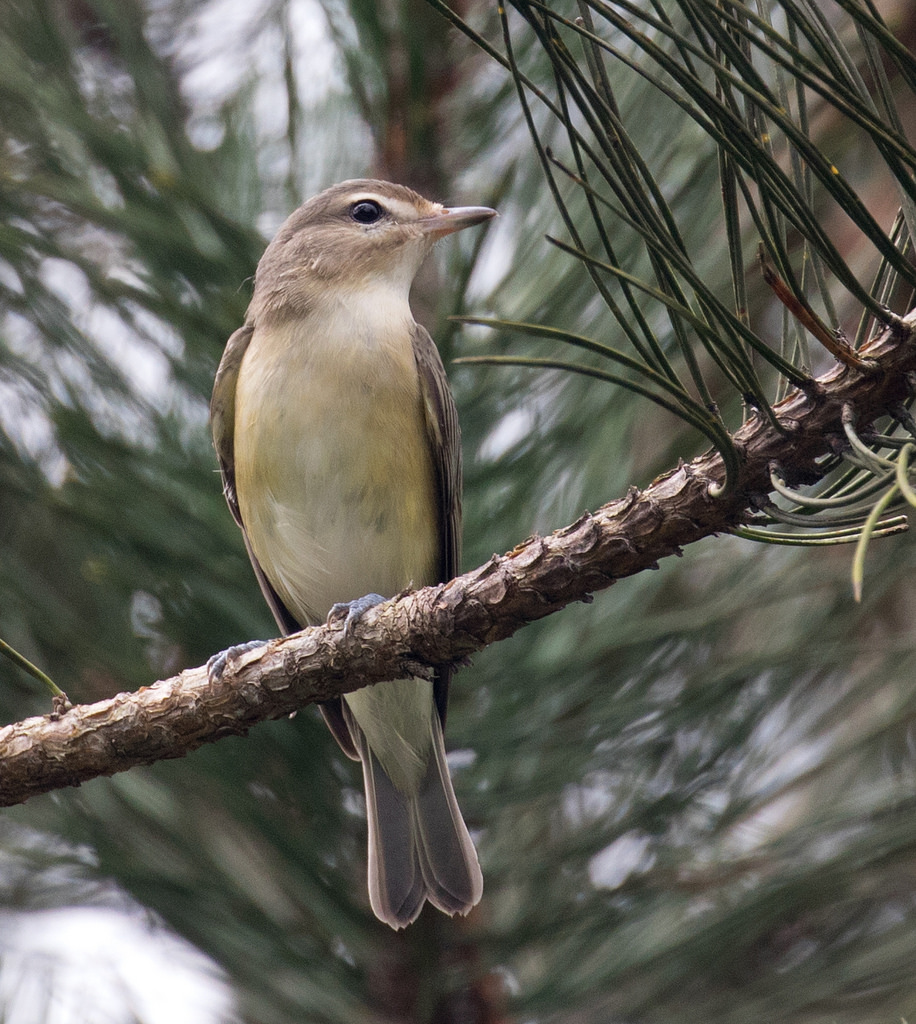
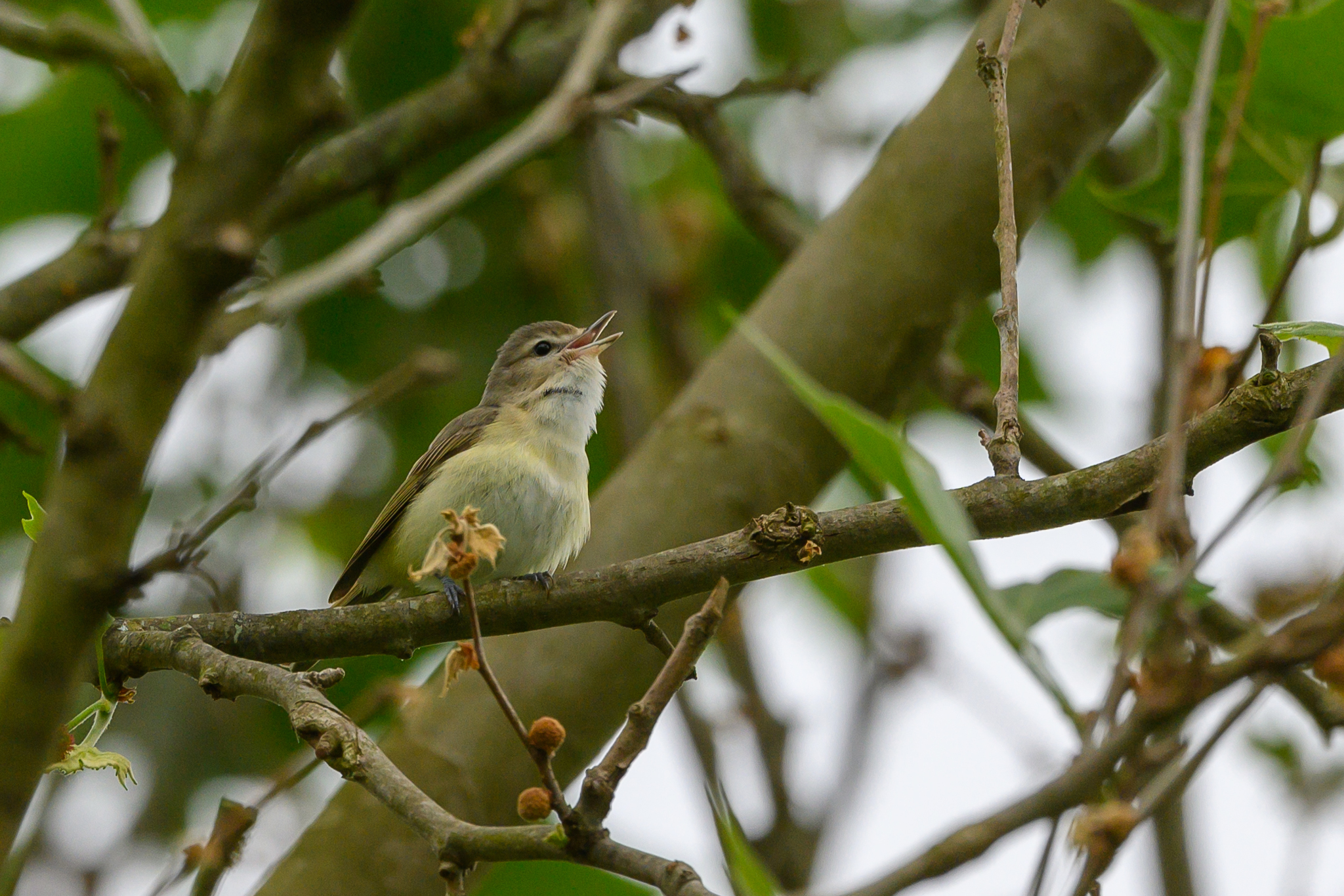
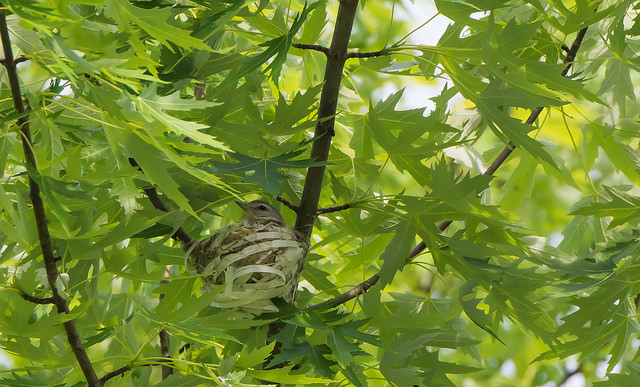
Eastern Warbling Vireo in Queen Anne's Co., Maryland (7/5/2021). (c) dansmall, some rights reserved (CC BY-NC). - Dan Small.
Agitated Eastern Warbling Vireo calls in Caroline Co., Maryland (7/15/2018). (c) Bill Hubick, all rights reserved. - Bill Hubick.
Status
Description
Where To Find
Citations
No citations linked for this taxon yet.
Source: Wikipedia
| Warbling vireo | |
|---|---|
.jpg)
| |
| Adult male V. g. gilvus singing in New York | |
Scientific classification 
| |
| Kingdom: | Animalia |
| Phylum: | Chordata |
| Class: | Aves |
| Order: | Passeriformes |
| Family: | Vireonidae |
| Genus: | Vireo |
| Species: | V. gilvus
|
| Binomial name | |
| Vireo gilvus (Vieillot, 1808)
| |

| |
| Approximate distribution map
Breeding Migration Year-round Non-breeding
| |


The warbling vireo (Vireo gilvus) is a small North American songbird.
Its breeding habitat is open deciduous and mixed woods from Alaska to Mexico. It often nests in widely spaced trees, often cottonwood or aspen, along streams or rivers. It migrates to Mexico and Central America.
Measurements:[2]
- Length: 12–13 cm (4.7–5.1 in)
- Wingspan: 22 cm (8.7 in)
- Weight: 10–16 g (0.35–0.56 oz)
They are mainly olive-grey on the head and upperparts with white underparts; they have brown eyes and the front of the face is light. There is a white supercilium. They have thick blue-grey legs and a stout bill. Western birds are generally smaller and have darker grey crowns.
Warbling vireos forage for insects in trees, hopping along branches and sometimes hovering. They also eat berries, especially before migration and in winter quarters, where they are, like other vireos, apparently quite fond of gumbo-limbo seeds, though they will not venture into human-modified habitat to get them.[3] They make a deep cup nest suspended from a tree branch or shrub, placed relatively high in the east and lower in the west. The male helps with incubation and may sing from the nest.
The song is a cheerful warble, similar to that of the painted bunting and the purple finch. There are subtle differences in song between eastern and western birds, at least where the ranges meet in Alberta. Some authors recommend splitting the eastern and western subspecies of this species into separate species,[4][5] and as of 2025, the eBird/Clements taxonomy split the two into separate species.[6]
- The eastern warbling vireo, V. g. gilvus, breeds from central Alberta and northern Montana east and south through most of the United States and parts of southern Canada, outside the range of the previous group. It winters south of the Isthmus of Tehuantepec from south-central Chiapas to Nicaragua. It completes its autumn moult on the breeding grounds, while the swainsonii group completes it after leaving.[7]
- The western warbling vireo, V. swainsoni, includes V. g. swainsoni, which breeds from southeastern Alaska and southwestern Northwest Territories to the Sierra San Pedro Mártir, Baja California, and V. g. brewsteri, which breeds from southern Idaho, Wyoming, and Montana to south-central Oaxaca. These two subspecies winter in Mexico. The swainsoni group also includes V. g. victoriae, an isolated population breeding in the Sierra de la Laguna, Baja California Sur, and migrating to unknown wintering grounds.[7]
The brown-capped vireo (Vireo leucophrys), resident in Central America and northern South America, is sometimes considered conspecific with the warbling vireo.
-
 Vireo singing Ruby Mountains, Nevada
 -
 On nest, Ruby Mountains, Nevada
 -
 Perched, Illinois
 -
 Perched, Connecticut


Notes
[edit]- ^ BirdLife International (2021). "Vireo gilvus". IUCN Red List of Threatened Species. 2021 e.T22735122A137781453. doi:10.2305/IUCN.UK.2021-3.RLTS.T22735122A137781453.en.
- ^ "Warbling Vireo Identification, All About Birds, Cornell Lab of Ornithology". www.allaboutbirds.org. Retrieved 2020-09-27.
- ^ Foster (2007)
- ^ Lovell, Scott F; Lein, M Ross; Rogers, Sean M (2021-03-03). "Cryptic speciation in the Warbling Vireo (Vireo gilvus)". Ornithology. 138 (1). doi:10.1093/ornithology/ukaa071. ISSN 0004-8038. Retrieved 2026-02-09.
- ^ Carpenter, Amanda M.; Graham, Brendan A.; Spellman, Garth M.; Klicka, John; Burg, Theresa M. (2021). "Genetic, bioacoustic and morphological analyses reveal cryptic speciation in the warbling vireo complex (Vireo gilvus: Vireonidae: Passeriformes)". Zoological Journal of the Linnean Society. 195 (1): 45–64.
- ^ van Dort, John (2026-01-16). "The Warbling Vireo split". eBird.
- ^ a b Gardali, Thomas and Grant Ballard. 2000. Warbling Vireo (Vireo gilvus), The Birds of North America Online (A. Poole, Ed.). Ithaca: Cornell Lab of Ornithology; Retrieved from the Birds of North America Online 2009-06-22. Subscription required.
References
[edit]- Foster, Mercedes S. (2007): The potential of fruiting trees to enhance converted habitats for migrating birds in southern Mexico. Bird Conservation International 17(1): 45–61. doi:10.1017/S0959270906000554 PDF fulltext
- Hilty, Steven L. (2003): Birds of Venezuela. Christopher Helm, London. ISBN 0-7136-6418-5
- Stiles, F. Gary & Skutch, Alexander Frank (1989): A guide to the birds of Costa Rica. Comistock, Ithaca. ISBN 0-8014-9600-4
External links
[edit]

- Warbling Vireo Species Account - Cornell Lab of Ornithology
- Warbling Vireo - Vireo gilvus Archived 2021-03-02 at the Wayback Machine - USGS Patuxent Bird Identification InfoCenter
- "Warbling Vireo media". Internet Bird Collection.
- Warbling Vireo photo gallery at VIREO (Drexel University)
| National | |
|---|---|
| Other | |
