
Map Snapshot


12 Records
Status
Description
Citations
No citations linked for this taxon yet.
Source: Wikipedia
| Hemileccinum hortonii | |
|---|---|

| |
Scientific classification 
| |
| Kingdom: | Fungi |
| Division: | Basidiomycota |
| Class: | Agaricomycetes |
| Order: | Boletales |
| Family: | Boletaceae |
| Genus: | Hemileccinum |
| Species: | H. hortonii
|
| Binomial name | |
| Hemileccinum hortonii (A.H. Sm. & Thiers) M. Kuo & B. Ortiz
| |
| Synonyms[1] | |
| Hemileccinum hortonii | |
|---|---|
| Mycological characteristics | |
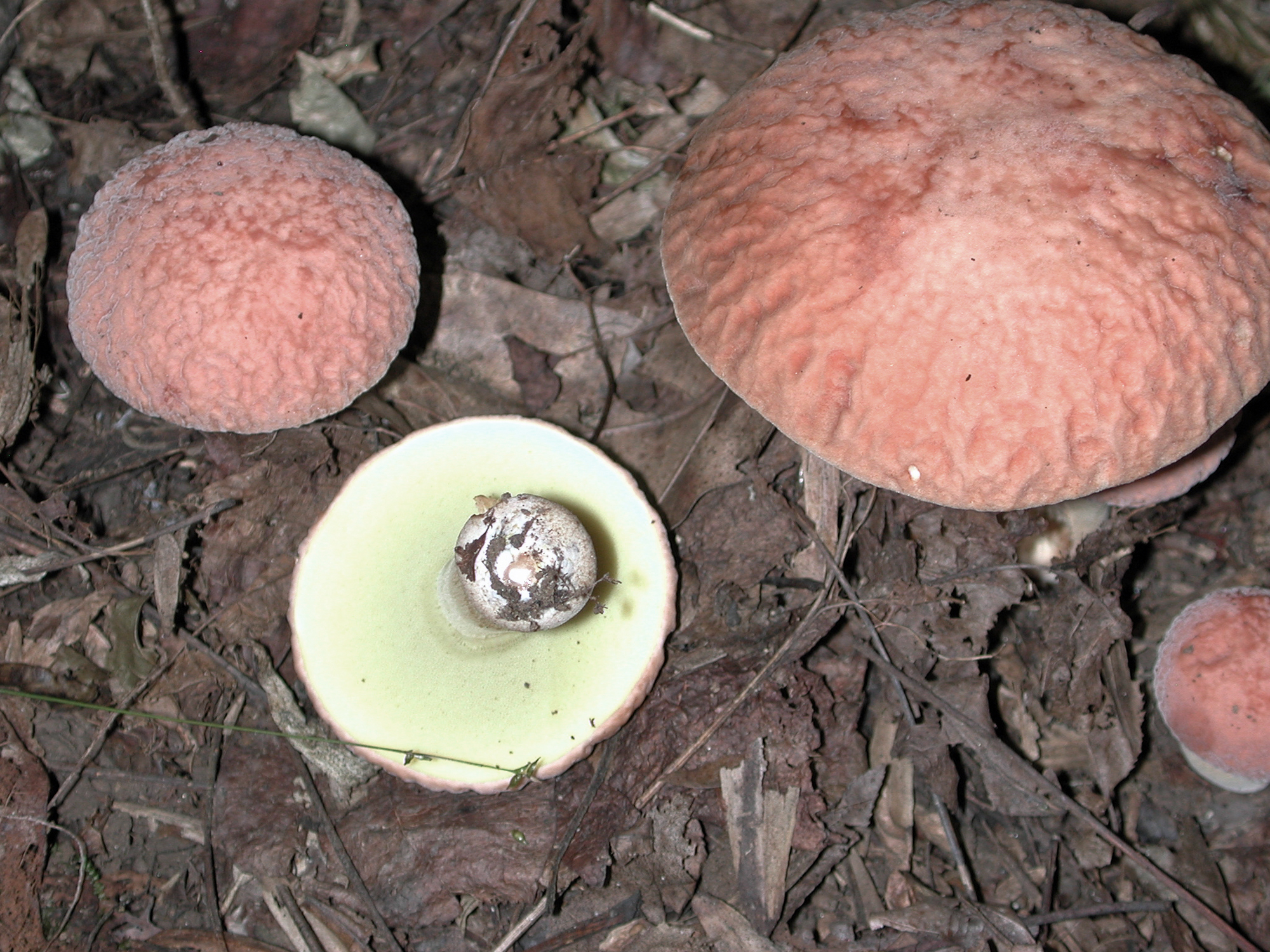
 | Pores on hymenium |
 | Cap is convex |
 | Hymenium is adnate |
 | Stipe is bare |
 | Spore print is olive-brown |
 | Ecology is mycorrhizal |
 | Edibility is choice |
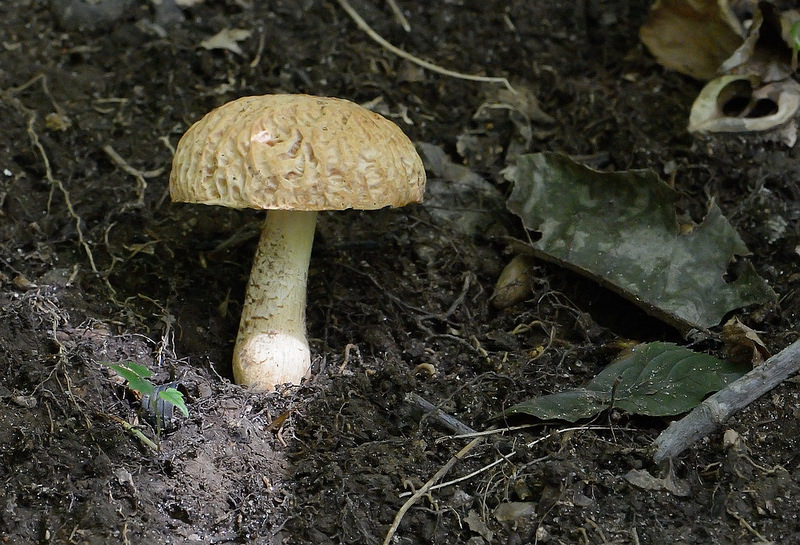
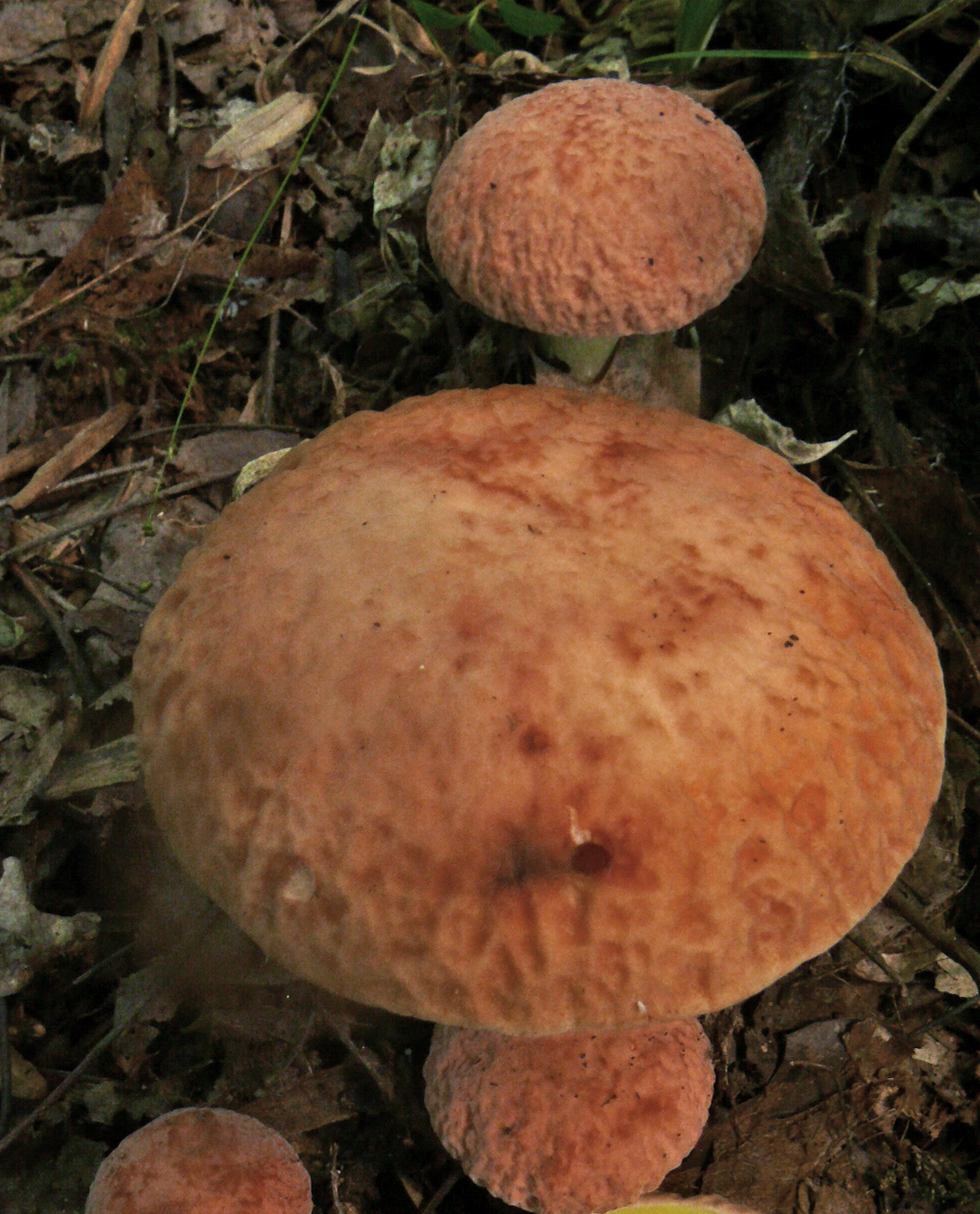
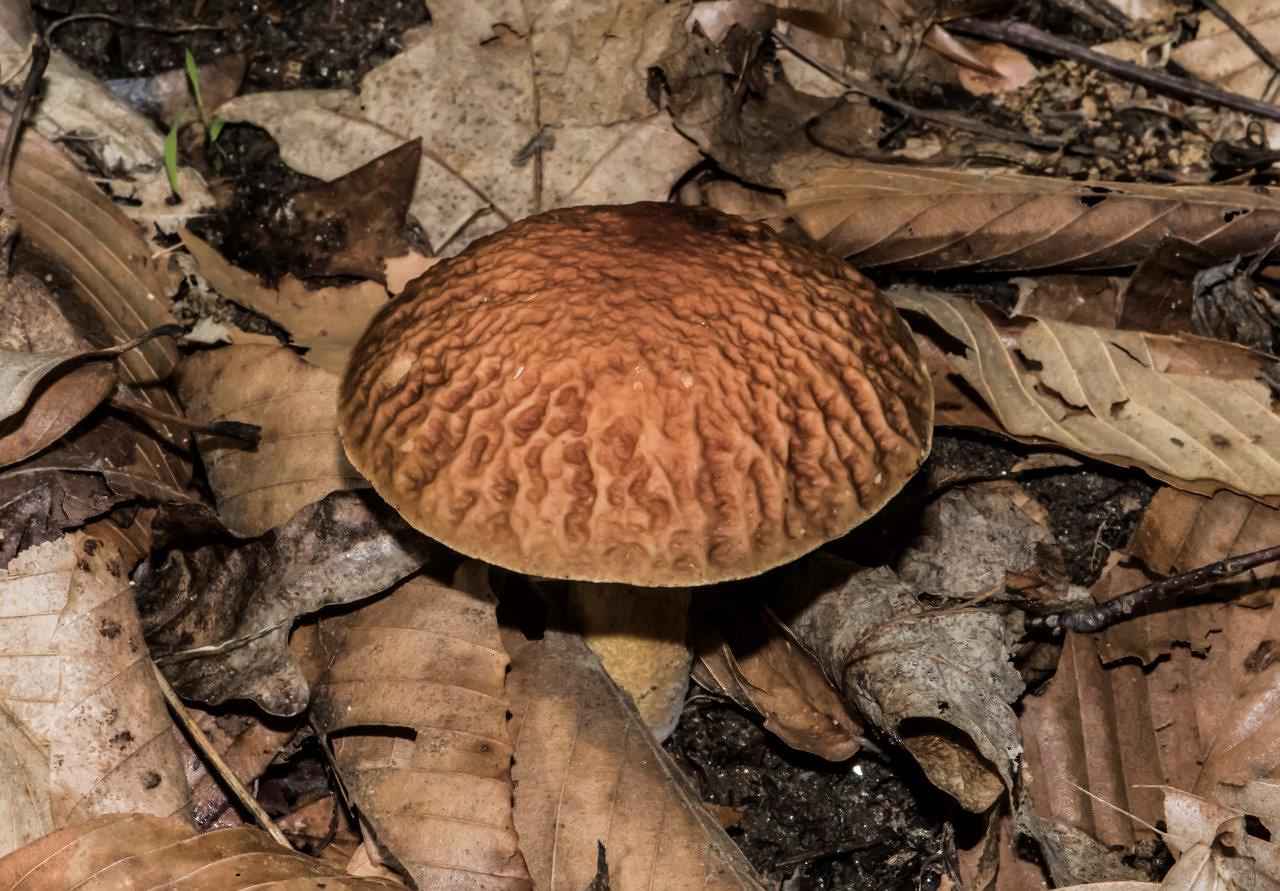
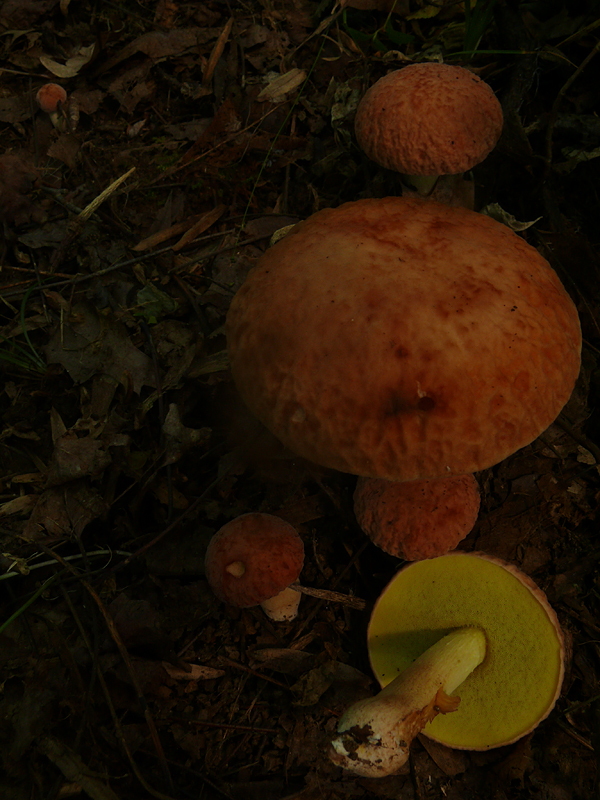
Hemileccinum hortonii, sometimes called Corrugated Bolete or Horton's Bolete, is a fungus of the genus Hemileccinum.
Taxonomy
[edit]First described as variety corrugis of Boletus subglabripes by Charles Horton Peck in 1897, it was given its current name in 1971 by mycologists Alexander H. Smith and Harry Delbert Thiers.[2]
Description
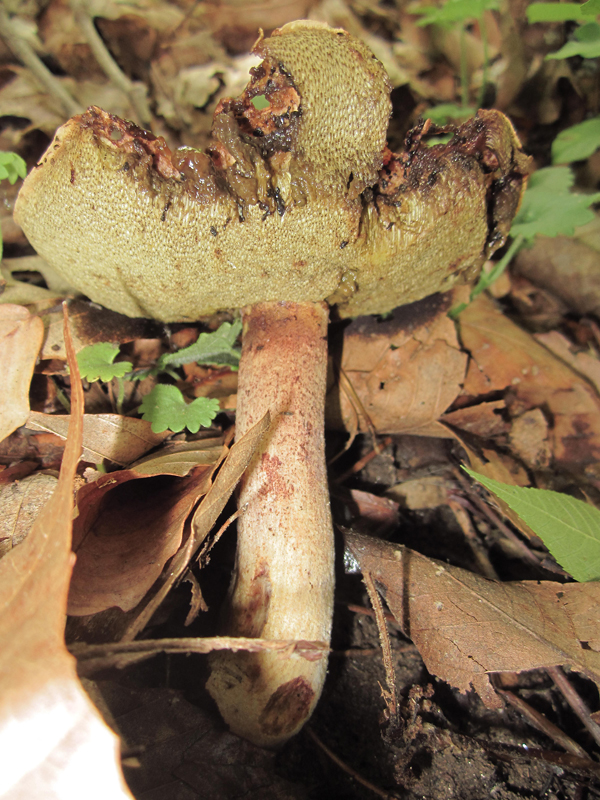
[edit]The brownish cap is 3–12 centimetres (1+1⁄4–4+3⁄4 in) wide. The stem is 4–10 cm (1+1⁄2–4 in) tall and 1–2.5 cm (1⁄2–1 in) thick. The flesh is whitish and can stain light blue. The spore print is olive brown.[3]
Similar species
[edit]It resembles Boletus separans, Leccinum crocipodium, and L. rugosiceps.[3] Hemileccinum subglabripes is similar, but differs by having a relatively smooth cap and a stem covered in tiny yellow scabers.
Distribution and habitat
[edit]The species can be found in the eastern United States from June to August. It grows under hardwood, mostly oak.[3]
Uses
[edit]See also
[edit]References
[edit]- ^ "Boletus hortonii A.H. Sm. & Thiers, The Boletes of Michigan: 319, 1971". MycoBank. International Mycological Association. Retrieved 2013-05-26.
- ^ Smith AH, Thiers HD. (1971). The Boletes of Michigan. Ann Arbor: University of Michigan Press. p. 319.
- ^ a b c Audubon (2023). Mushrooms of North America. Knopf. p. 339. ISBN 978-0-593-31998-7.
- ^ Phillips, Roger (2010). Mushrooms and Other Fungi of North America. Buffalo, NY: Firefly Books. p. 263. ISBN 978-1-55407-651-2.
- ^ Kuo, Michael. "Hemileccinum hortonii". MushroomExpert.Com. Retrieved 2023-08-17.
External links
[edit]
 | This Boletales-related article is a stub. You can help Wikipedia by adding missing information. |