


Map Snapshot


46 Records
Status
Description
Relationships
Citations
No citations linked for this taxon yet.
Source: Wikipedia
| Cryptoporus volvatus | |
|---|---|

| |
Scientific classification 
| |
| Kingdom: | Fungi |
| Division: | Basidiomycota |
| Class: | Agaricomycetes |
| Order: | Polyporales |
| Family: | Polyporaceae |
| Genus: | Cryptoporus |
| Species: | C. volvatus
|
| Binomial name | |
| Cryptoporus volvatus | |
| Synonyms | |
| |
| Cryptoporus volvatus | |
|---|---|
| Mycological characteristics | |
 | Pores on hymenium |
 | No distinct cap |
 | Hymenium attachment is irregular or not applicable |
| Lacks a stipe |
 | Spore print is pink |

 | Ecology is saprotrophic or parasitic |
 | Edibility is too hard to eat |
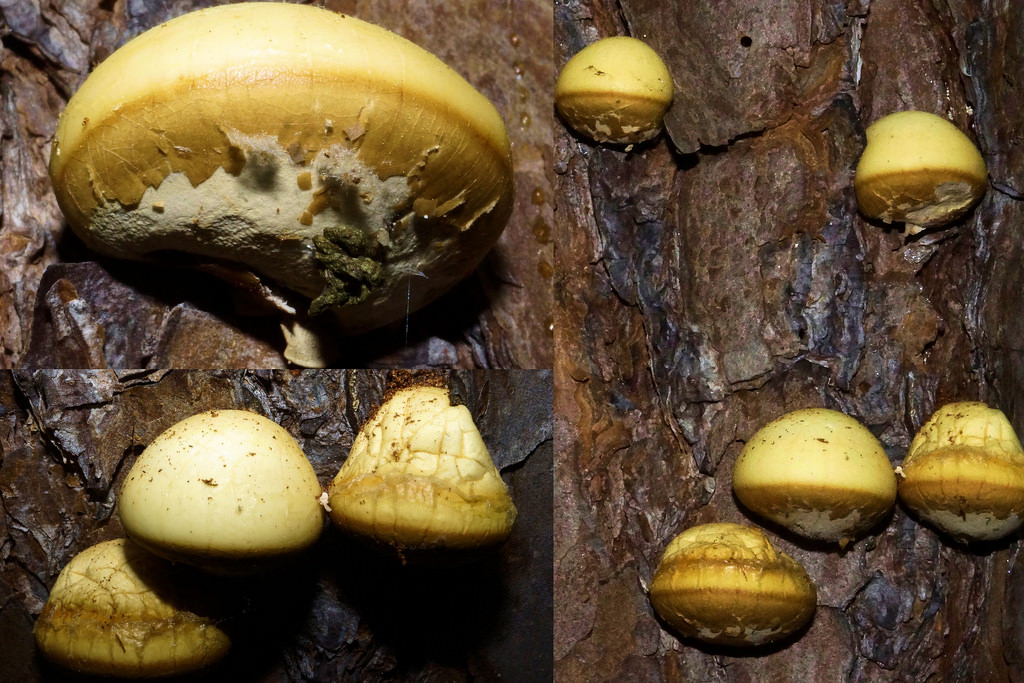
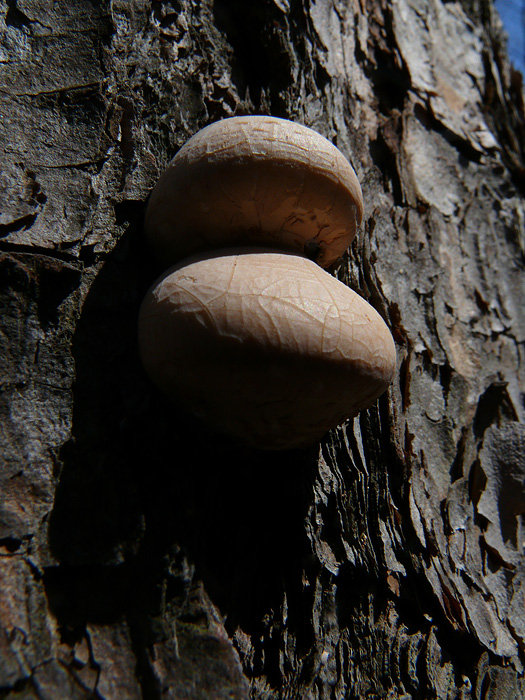
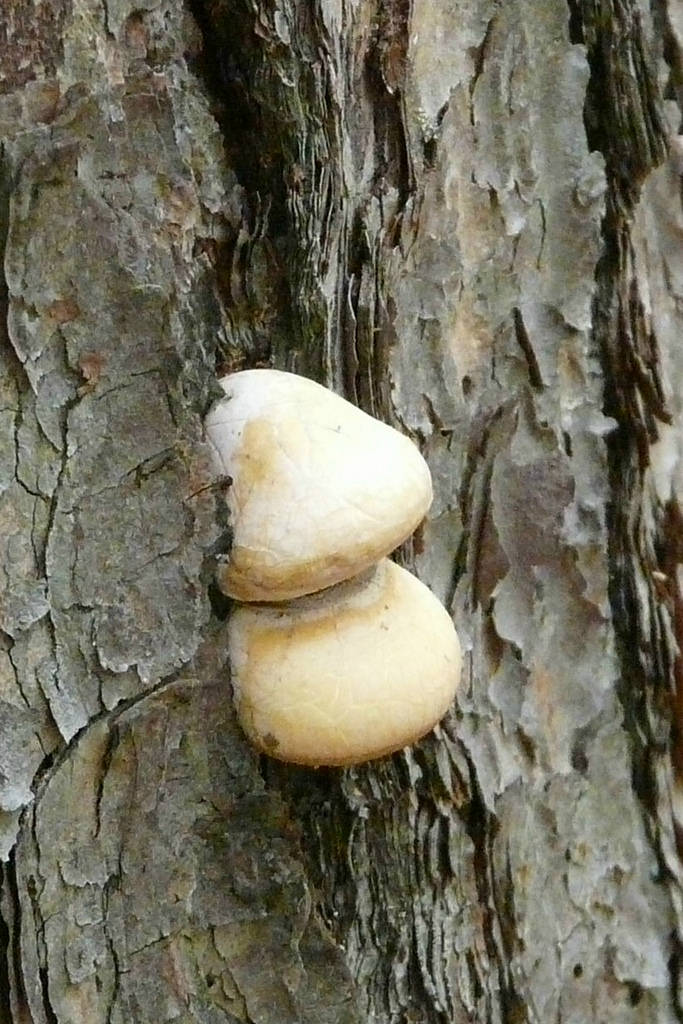
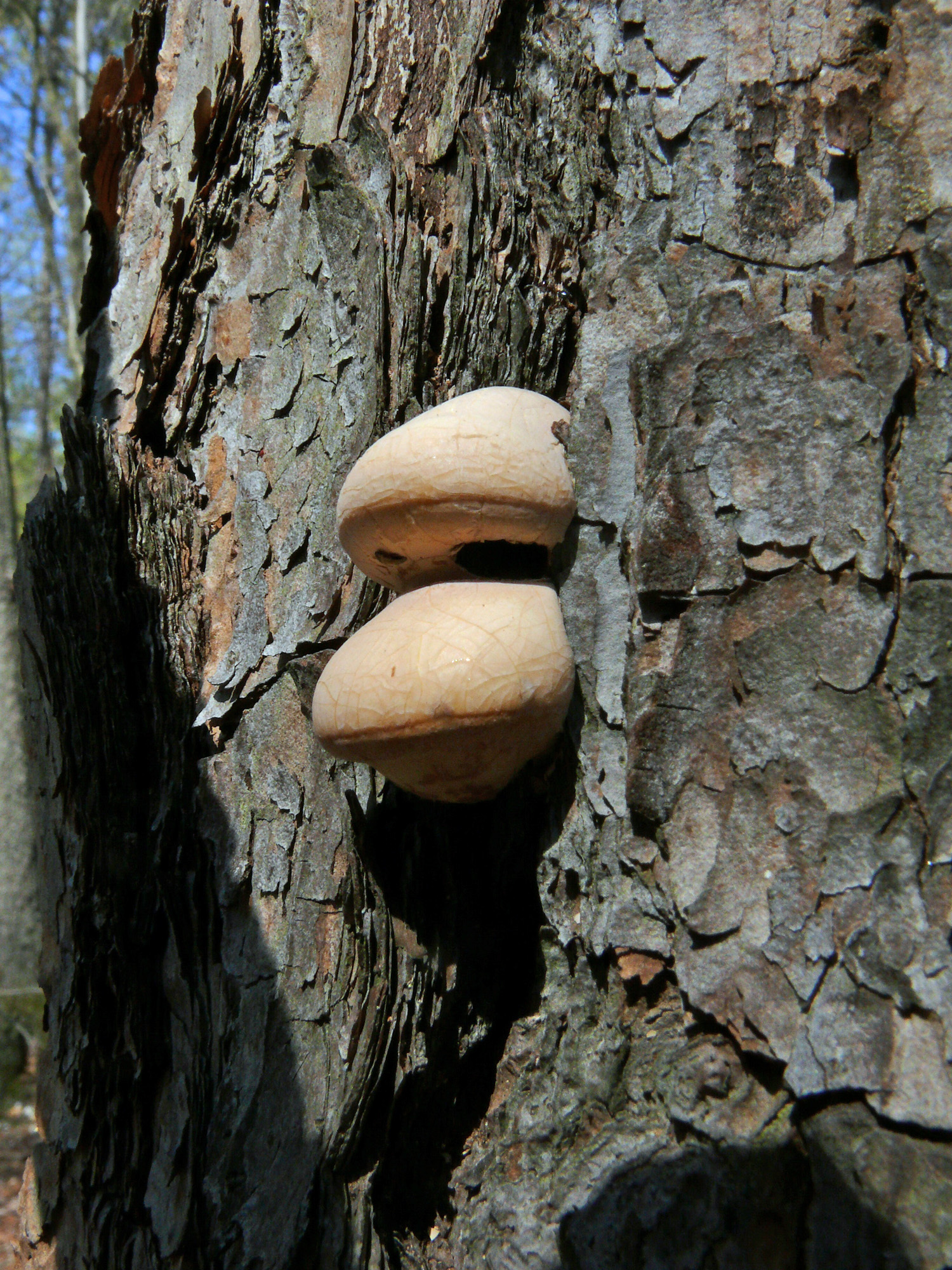
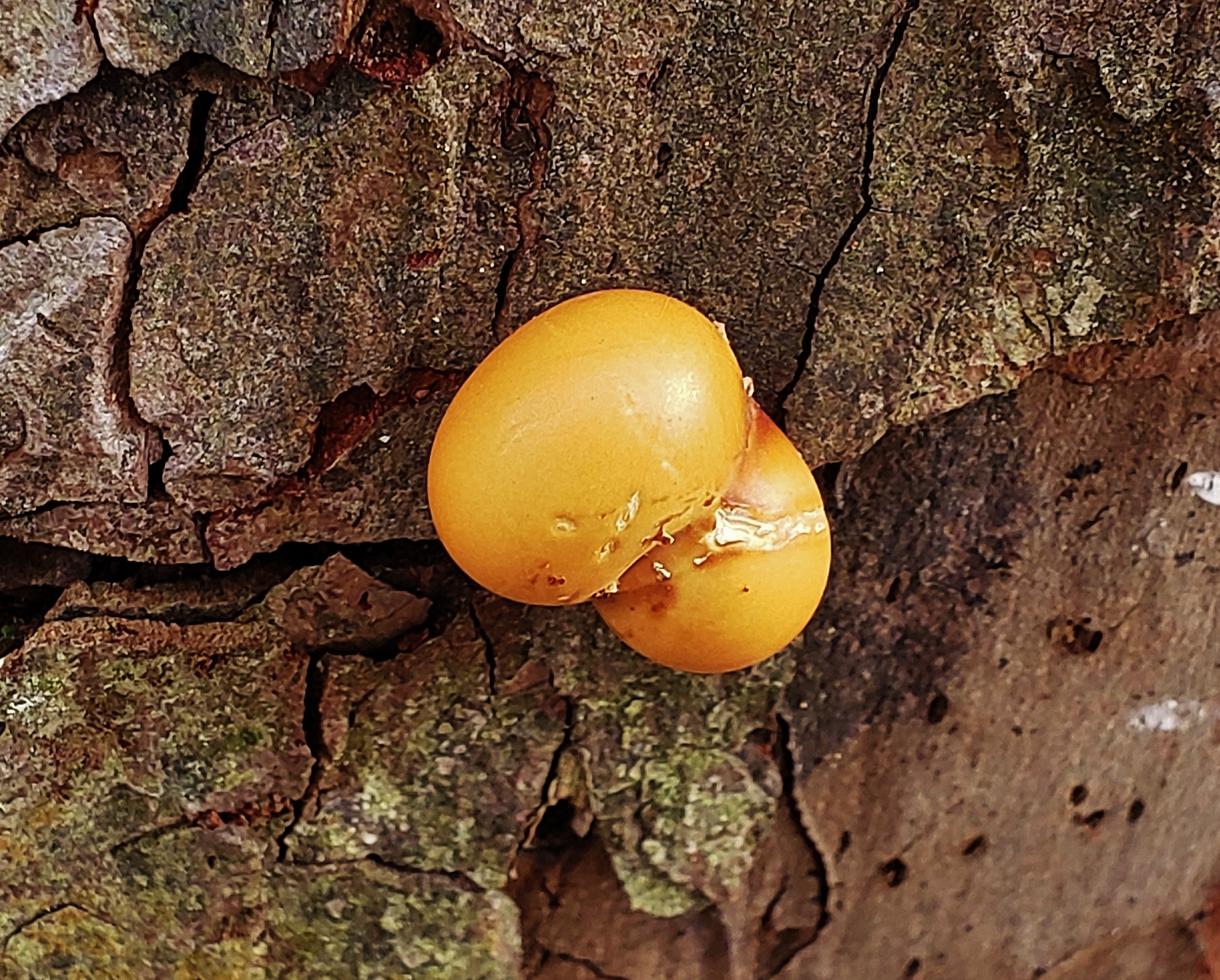
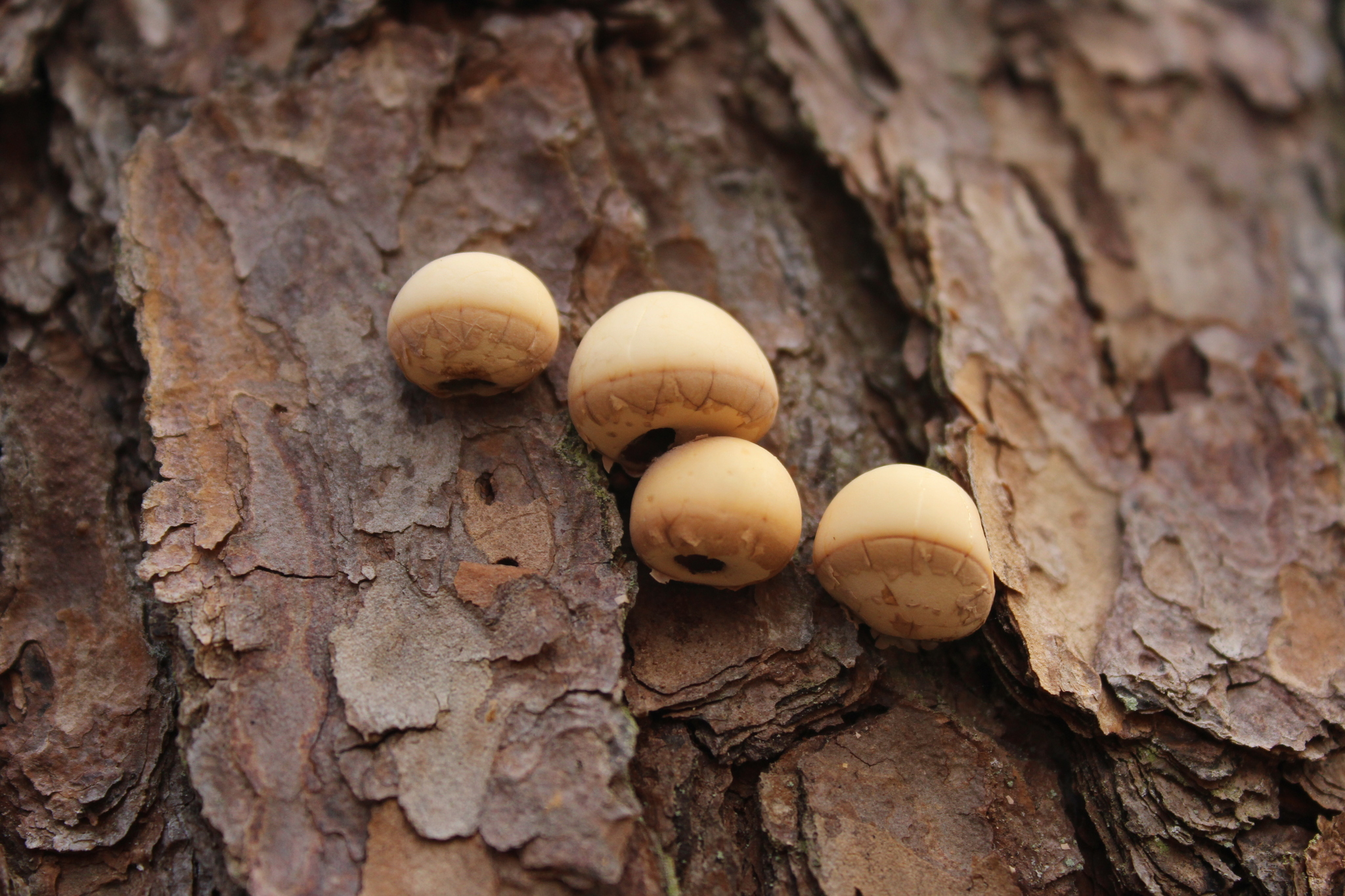
Cryptoporus volvatus, commonly known as the veiled polypore or cryptic globe fungus,[1] is a polypore fungus that decomposes the rotting sapwood of conifers. It is an after effect of attack by the pine bark beetle.[2]
The fungus was originally described by American mycologist Charles Horton Peck in 1875 as Polyporus volvatus.[3] Cornelius Lott Shear transferred it to the genus Cryptoporus in 1902.[4]
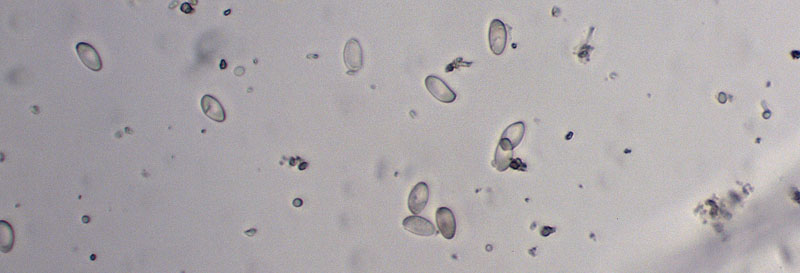
The fruiting body is 1.5–8.5 centimetres (1⁄2–3+1⁄4 in) across[1][5] and cream or tan in color.[6] It is hollow inside[1] and a hole is either torn by insects or a tear appears on the underside.[6] There are 3–4 whitish pores per millimetre, hidden by the veil-like margin.[1] The spores are pinkish.[6]
Some insects lay their larvae inside the fruiting body.[1] Due to its toughness, it is inedible.[1][7]
References
[edit]- ^ a b c d e f Arora, David (1986) [1979]. Mushrooms Demystified: A Comprehensive Guide to the Fleshy Fungi (2nd ed.). Berkeley, CA: Ten Speed Press. p. 585. ISBN 978-0-89815-170-1.
- ^ Davis, R.M.; Sommer, R.; Menge, J.A. (2012). Field Guide to Mushrooms of Western North America. University of California Press. p. 341. ISBN 978-0-520-27108-1.
- ^ Peck, C.H. (1875). "Report of the Botanist (1873)". Annual Report on the New York State Museum of Natural History. 27: 73–116 (see p. 98).
- ^ Shear, C.L. (1902). "Mycological notes and new species". Bulletin of the Torrey Botanical Club. 29 (7): 449–457. doi:10.2307/2478544. JSTOR 2478544.
- ^ Audubon (2023). Mushrooms of North America. Knopf. p. 266. ISBN 978-0-593-31998-7.
- ^ a b c Davis, R. Michael; Sommer, Robert; Menge, John A. (2012). Field Guide to Mushrooms of Western North America. Berkeley: University of California Press. p. 341. ISBN 978-0-520-95360-4. OCLC 797915861.
- ^ Miller Jr., Orson K.; Miller, Hope H. (2006). North American Mushrooms: A Field Guide to Edible and Inedible Fungi. Guilford, CN: FalconGuides. p. 427. ISBN 978-0-7627-3109-1.
 | This Polyporales-related article is a stub. You can help Wikipedia by adding missing information. |