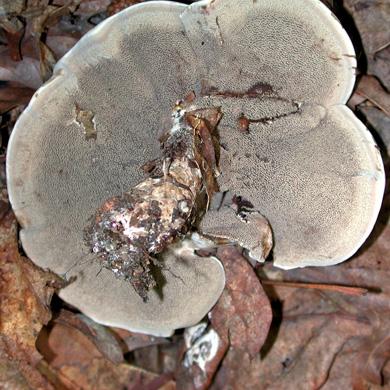
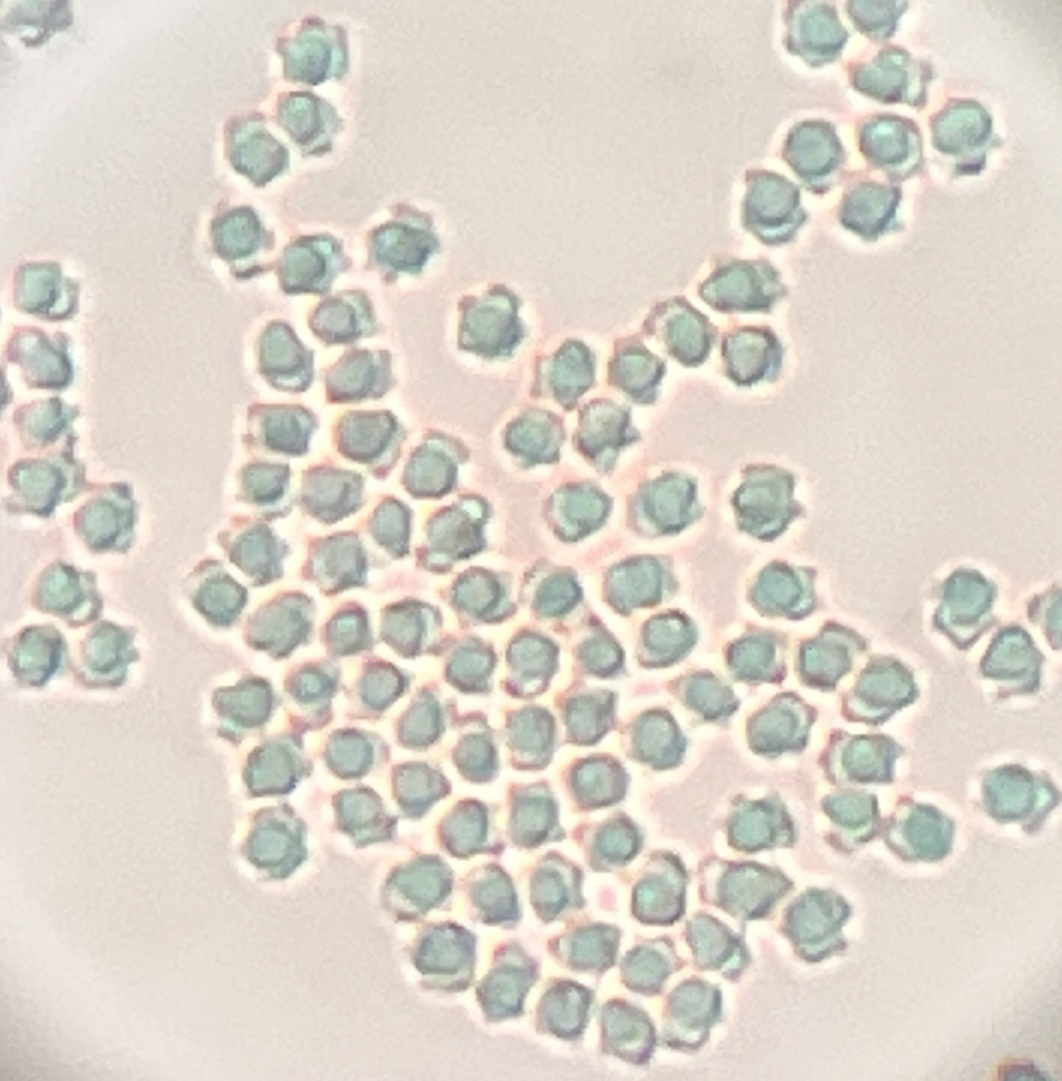
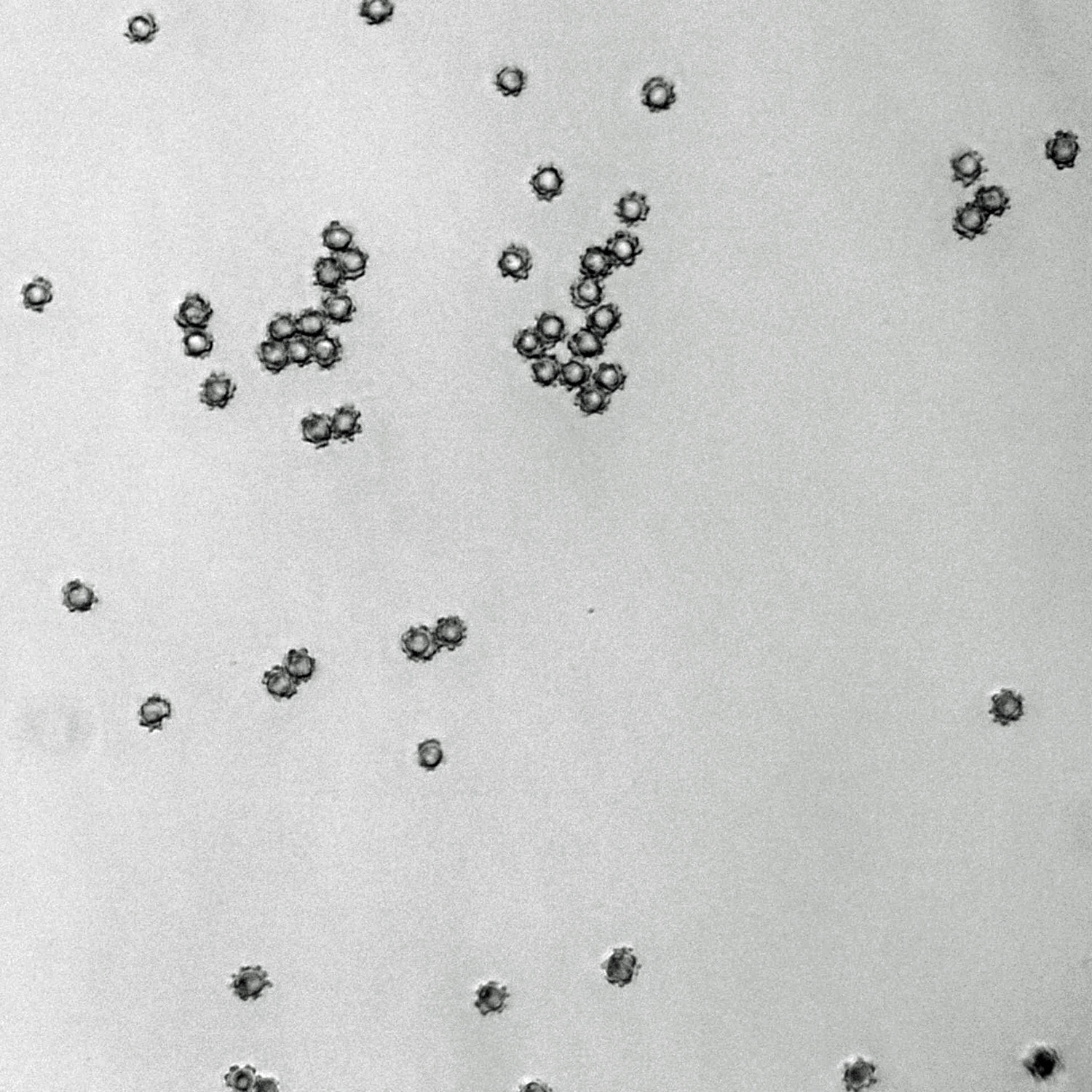
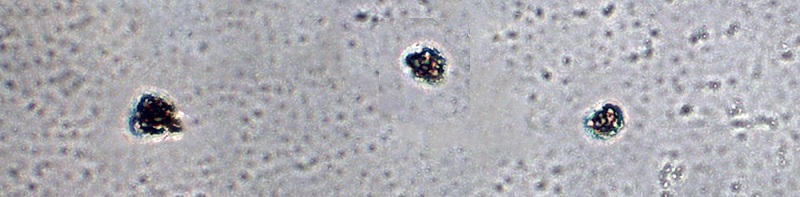
Spores collected from a Zonate Tooth specimen in Howard Co., Maryland (9/7/2009). Nearly round/irregular, prominantly nodulose; measured 4.5-6.3 X 4.5-6.3 microns.
Found scattered or in groups fused on ground under conifers or hardwoods.
Description
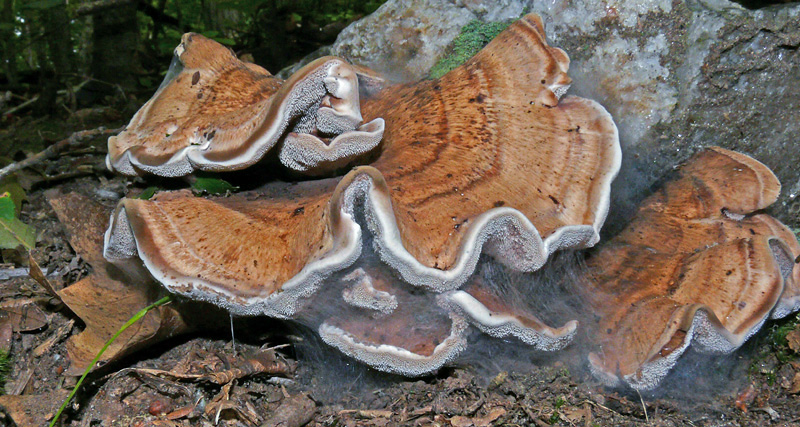
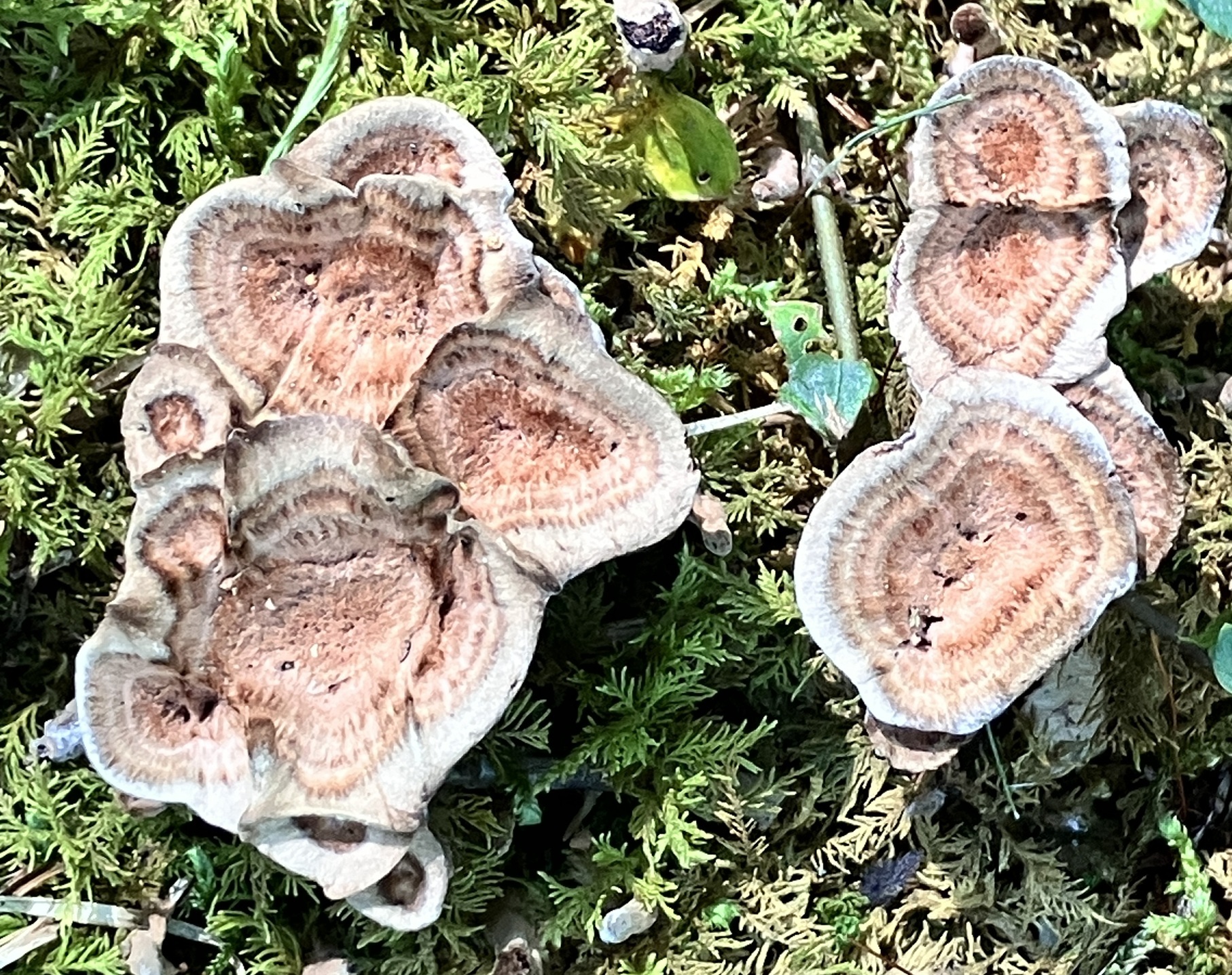
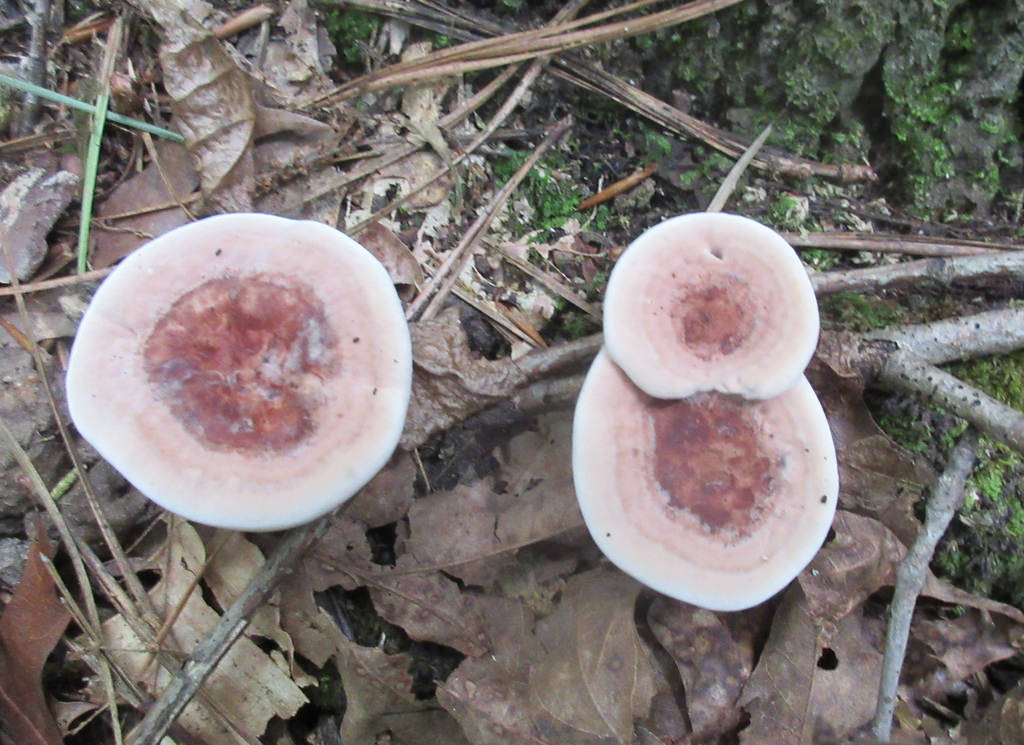
Cap: Concentric rings of various colors, margin white (stains purple-brown or black), inner zones various colors; may be convex, flat, depressed, or funnel-shpaed; surface roughened with pits and ridges; flesh orange to
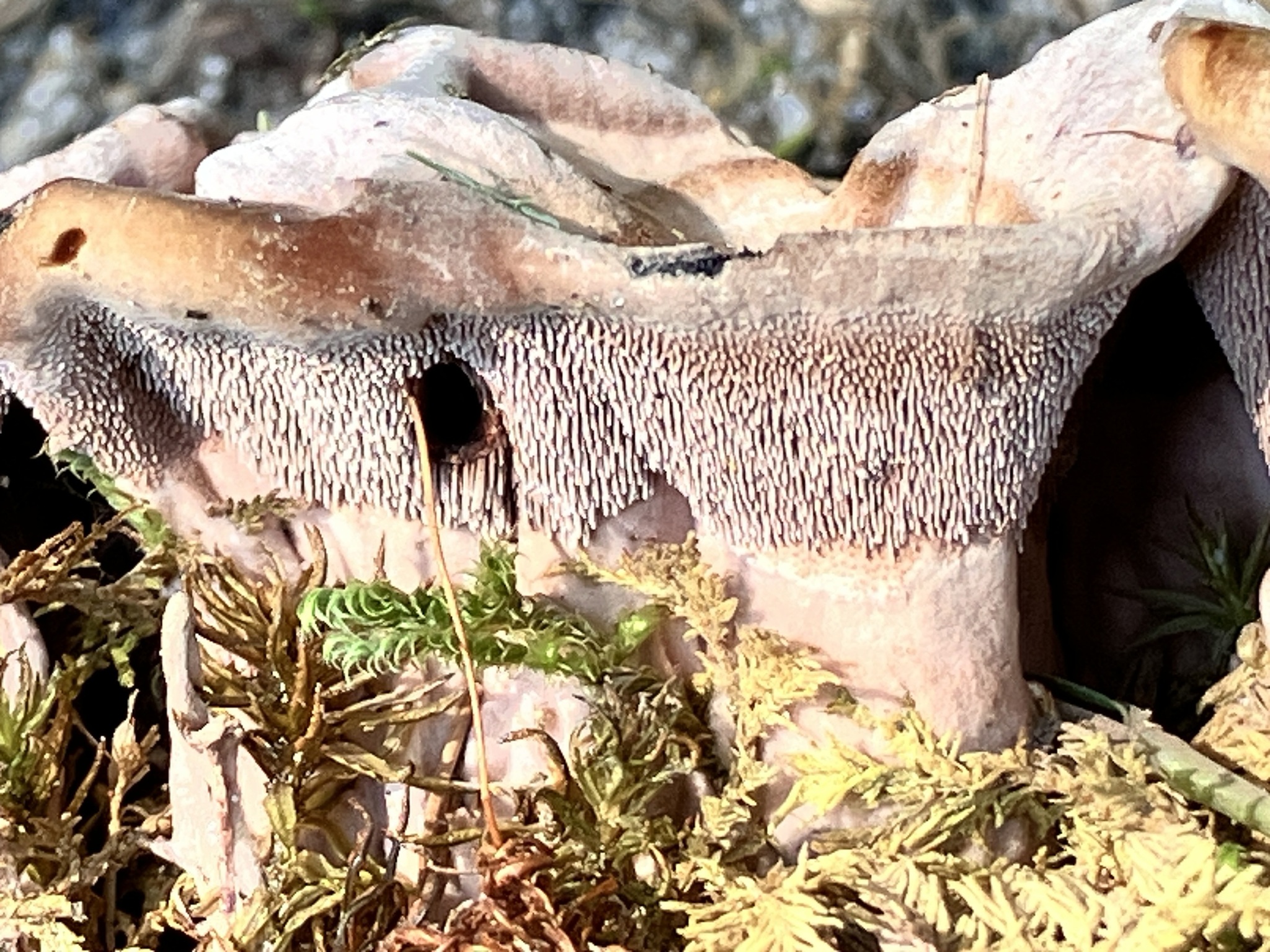
reddish-brown, fibrous, tough; unpleasant odor when cut. Fertile surface: Covered with gray-brown spines (1-3 mm) with paler tips, spines continue down stalk. Stalk: Colored like cap; typically tapers up (J. Solem, pers. comm.).
Eating mushrooms can be dangerous. One should do so only with expert advice and great care. MBP accepts no liability for injury sustained in consuming fungi or other biodiversity.Use of media featured on Maryland
Biodiversity Project is only permitted with express permission of the
photographer.
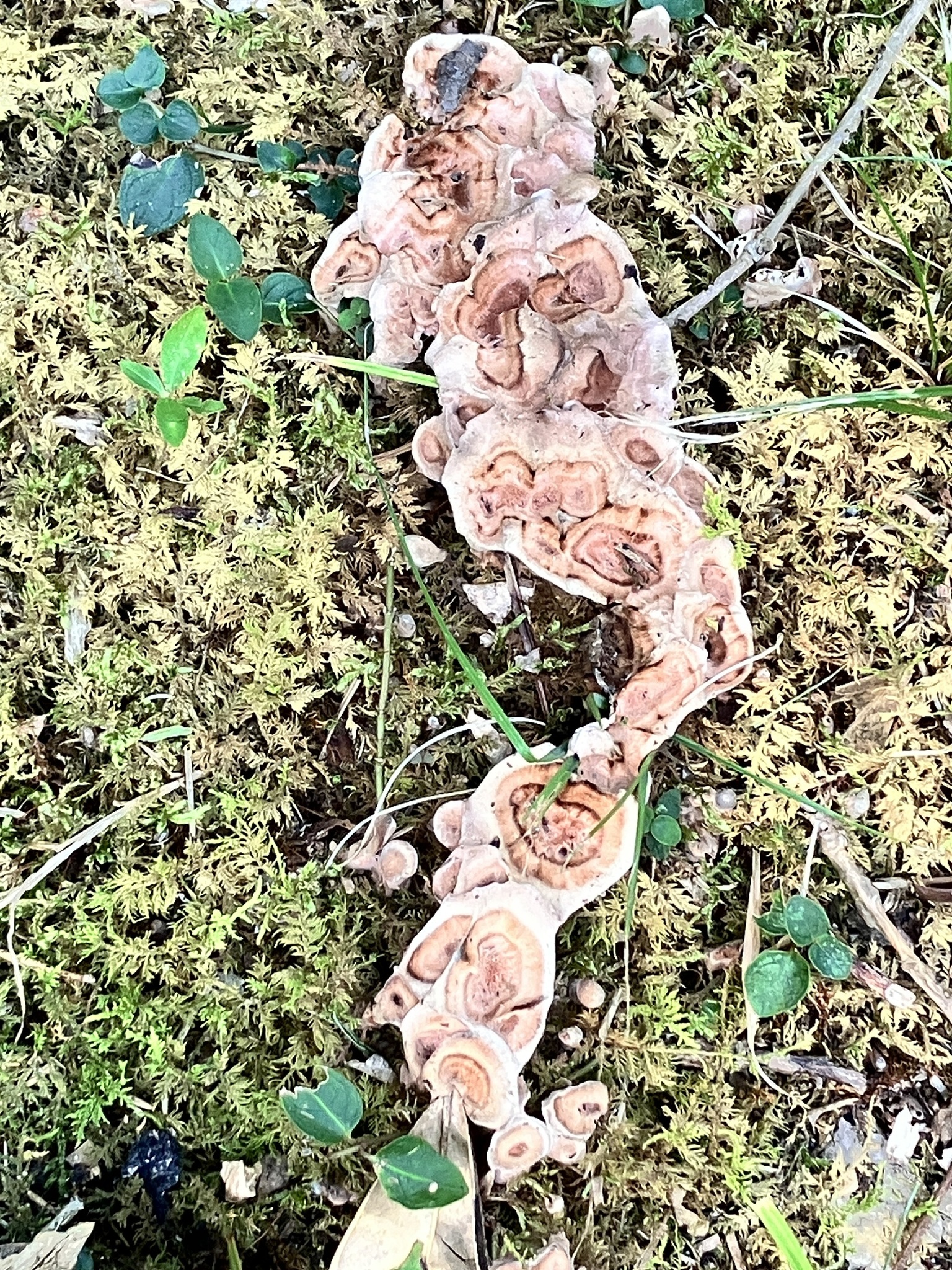
Zonate Tooth (cluster of fruiting bodies) in Howard Co., Maryland (9/7/2009).
Media by
Robert Solem.
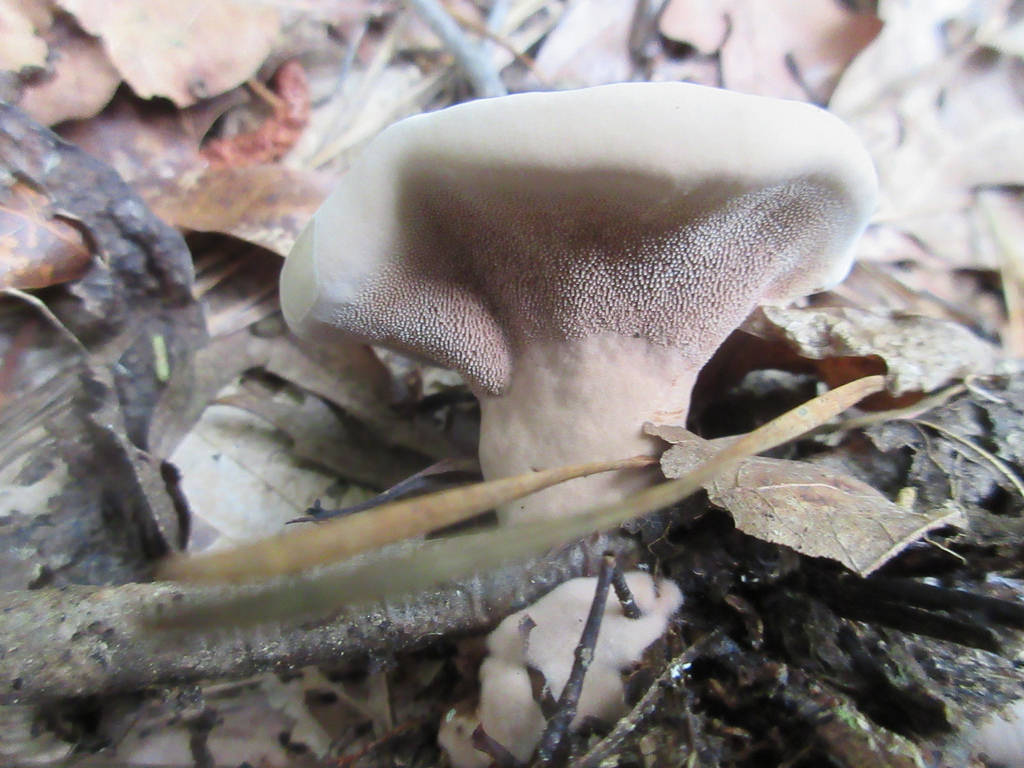
A young specimen of Zonate Tooth in Prince George's Co., Maryland (8/20/2018). Determined by Jo and Bob Solem.
View Record Details
Media by
Anne Looker.
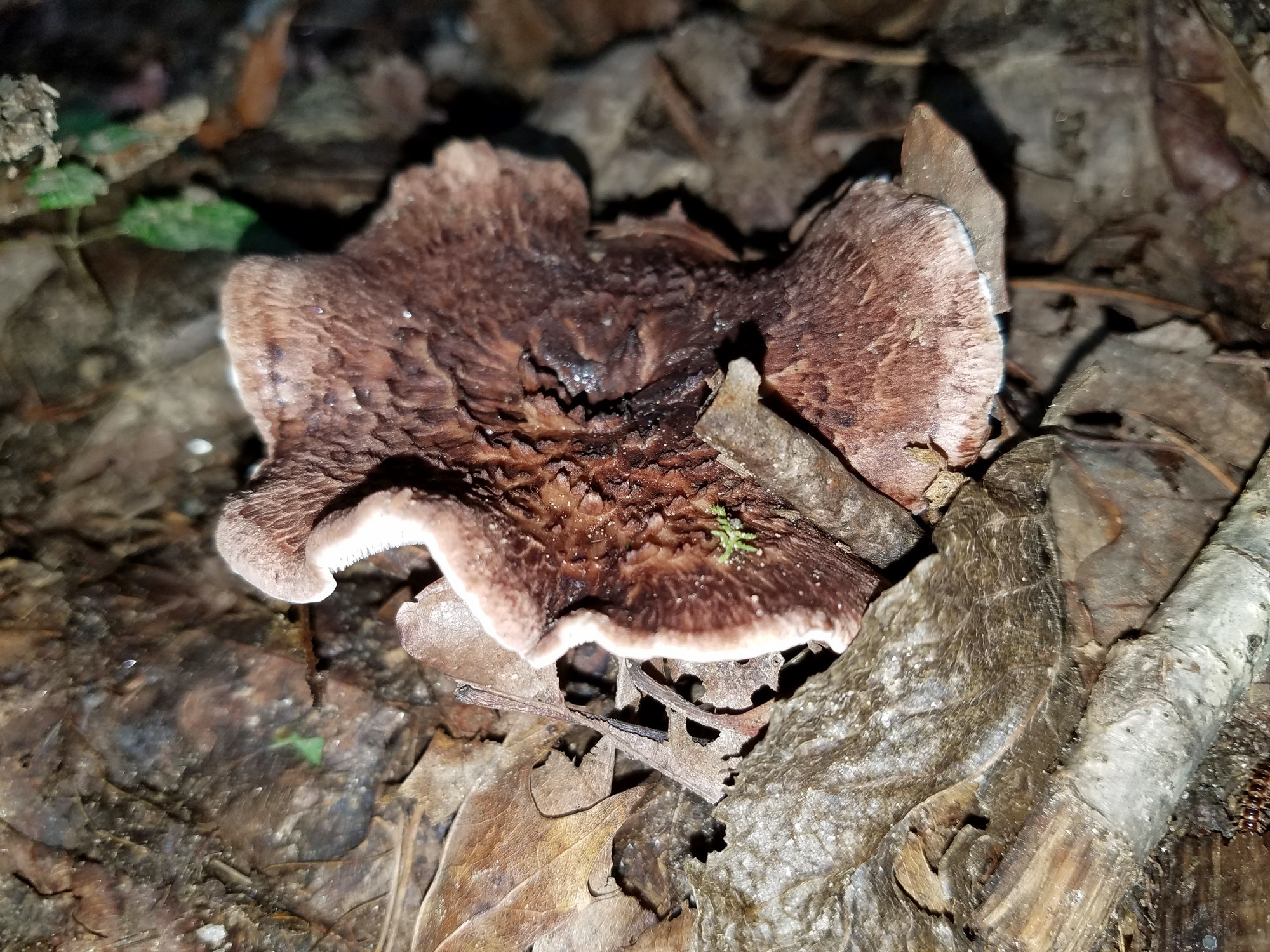
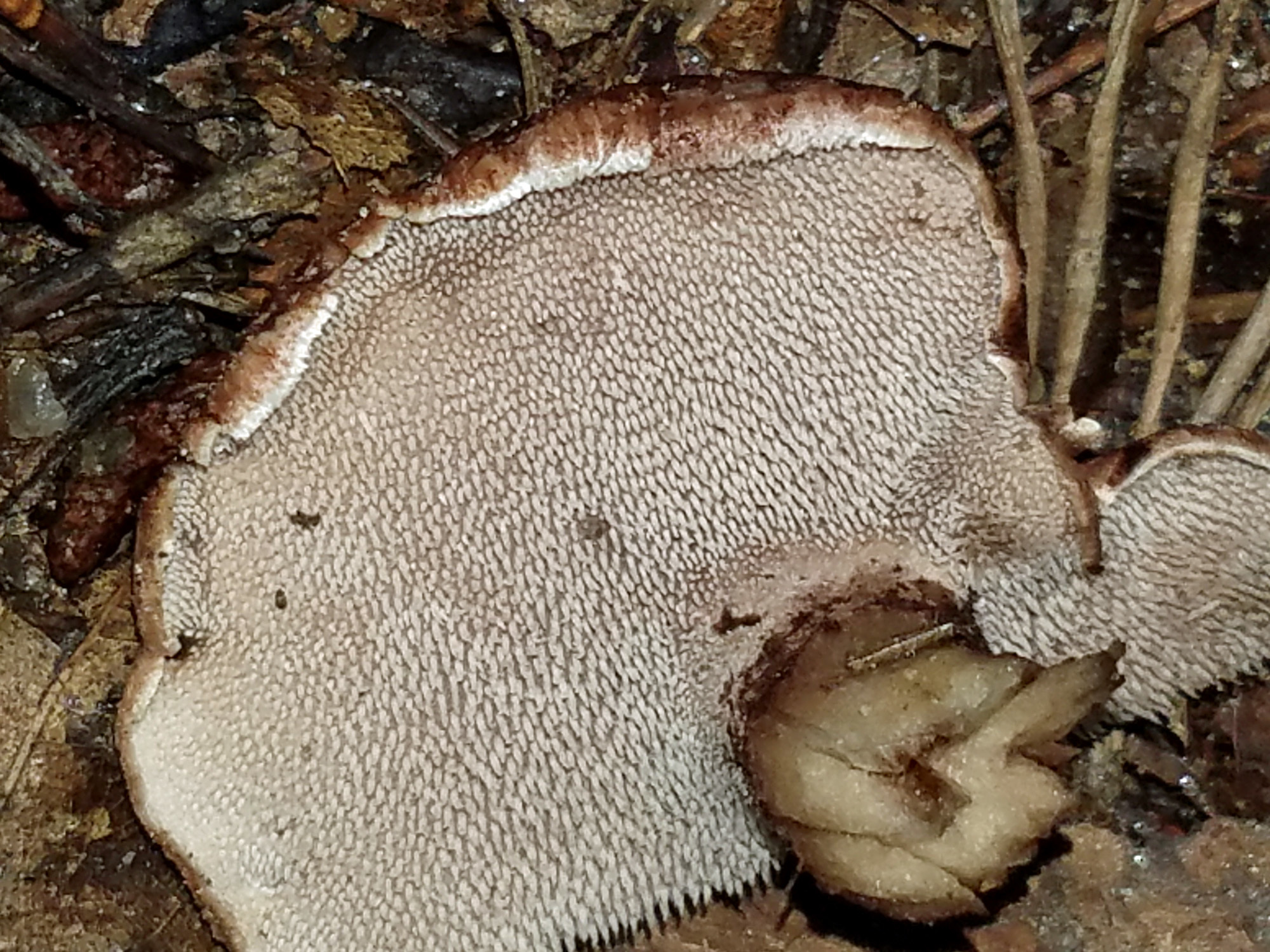
Young specimens of Zonate Tooth in Prince George's Co., Maryland (8/20/2018). Determined by Jo and Bob Solem.
View Record Details
Media by
Anne Looker.
Spores collected from a Zonate Tooth specimen in Howard Co., Maryland (9/7/2009). Nearly round/irregular, prominantly nodulose; measured 4.5-6.3 X 4.5-6.3 microns.
Media by
Robert Solem.
Hydnellum concrescens is an inedible fungus, commonly known as the zoned hydnellum or zoned tooth fungus. As with other tooth fungi, the spores are produced on spines on the underside of the cap, rather than gills. It has a funnel-shaped cap, typically between 2 and 7 cm (0.79 and 2.76 in) in diameter, which has characteristic concentric zones of color. The cap may also have radial ridges extending from the center to the margins. The spines are pink in young specimens, but turn brown with age.
This species is very similar in appearance to Hydnellum scrobiculatum, and traditionally, largely unreliable microscopic characteristics such as spore size and ornamentation have been used to distinguish between the two. Recent research has demonstrated a way to discriminate the two species using DNA sequencing of the ITS regions.[1]
^Parfitt D, Martyn Ainsworth A, Simpson D, Rogers HJ, Boddy L (2007). "Molecular and morphological discrimination of stipitate hydnoids in the genera Hydnellum and Phellodon". Mycological Research. 111 (Pt 7): 761–77. doi:10.1016/j.mycres.2007.05.003. PMID17681224.