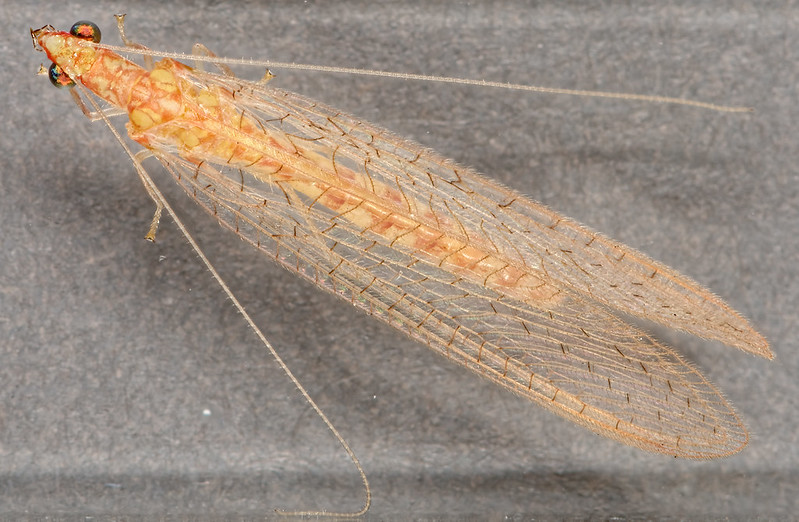
An adult Red-lipped Green Lacewing in Montgomery Co., Maryland (12/15/2019). Determined by Dr. Catherine Tauber.
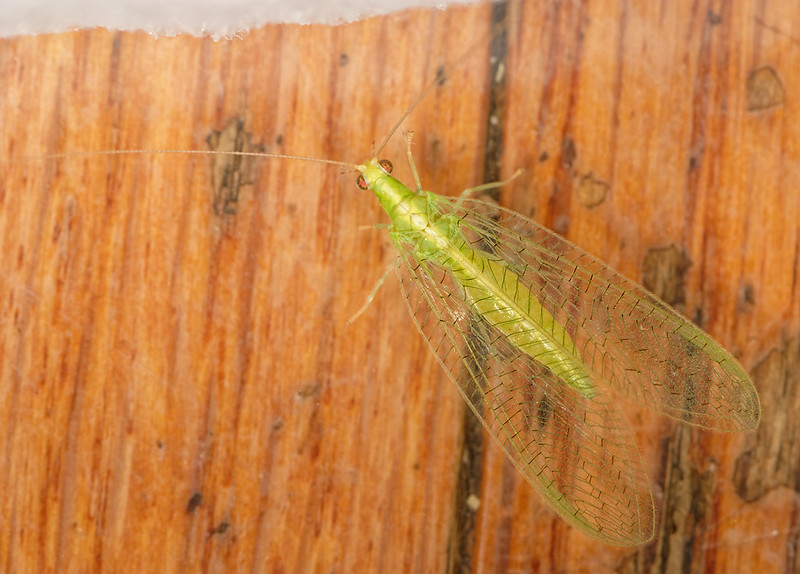
Red-lipped Green Lacewing in Calvert Co., Maryland (6/8/2019).

Red-lipped Green Lacewing in Prince George's Co., Maryland (3/17/2020).
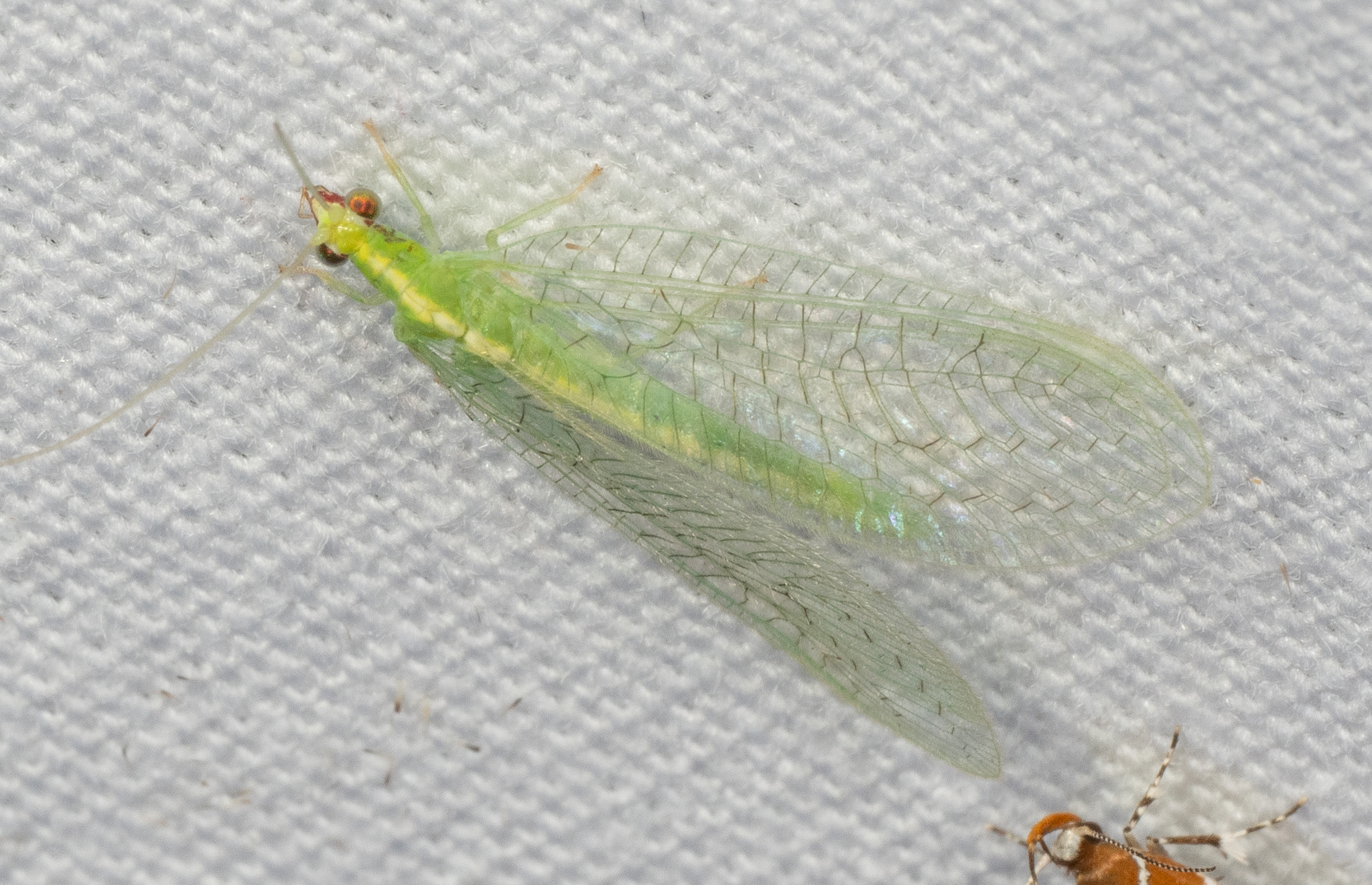
Red-lipped Green Lacewing in Montgomery Co., Maryland (8/5/2024). (c) Jim Moore (Maryland), some rights reserved (CC BY-NC).
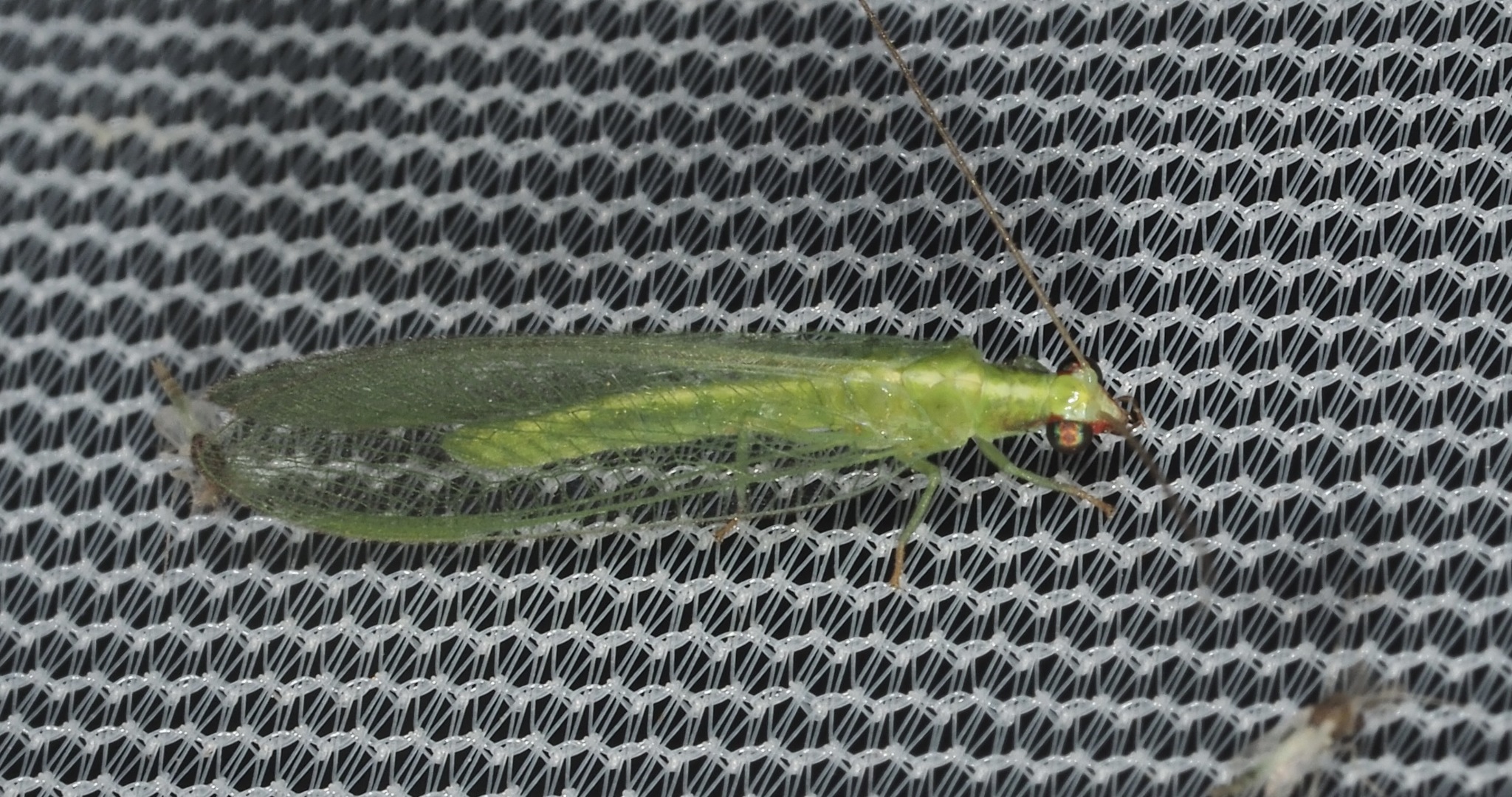
Red-lipped Green Lacewing in Somerset Co., Maryland (7/30/2021). (c) Jim Brighton, some rights reserved (CC BY-NC).
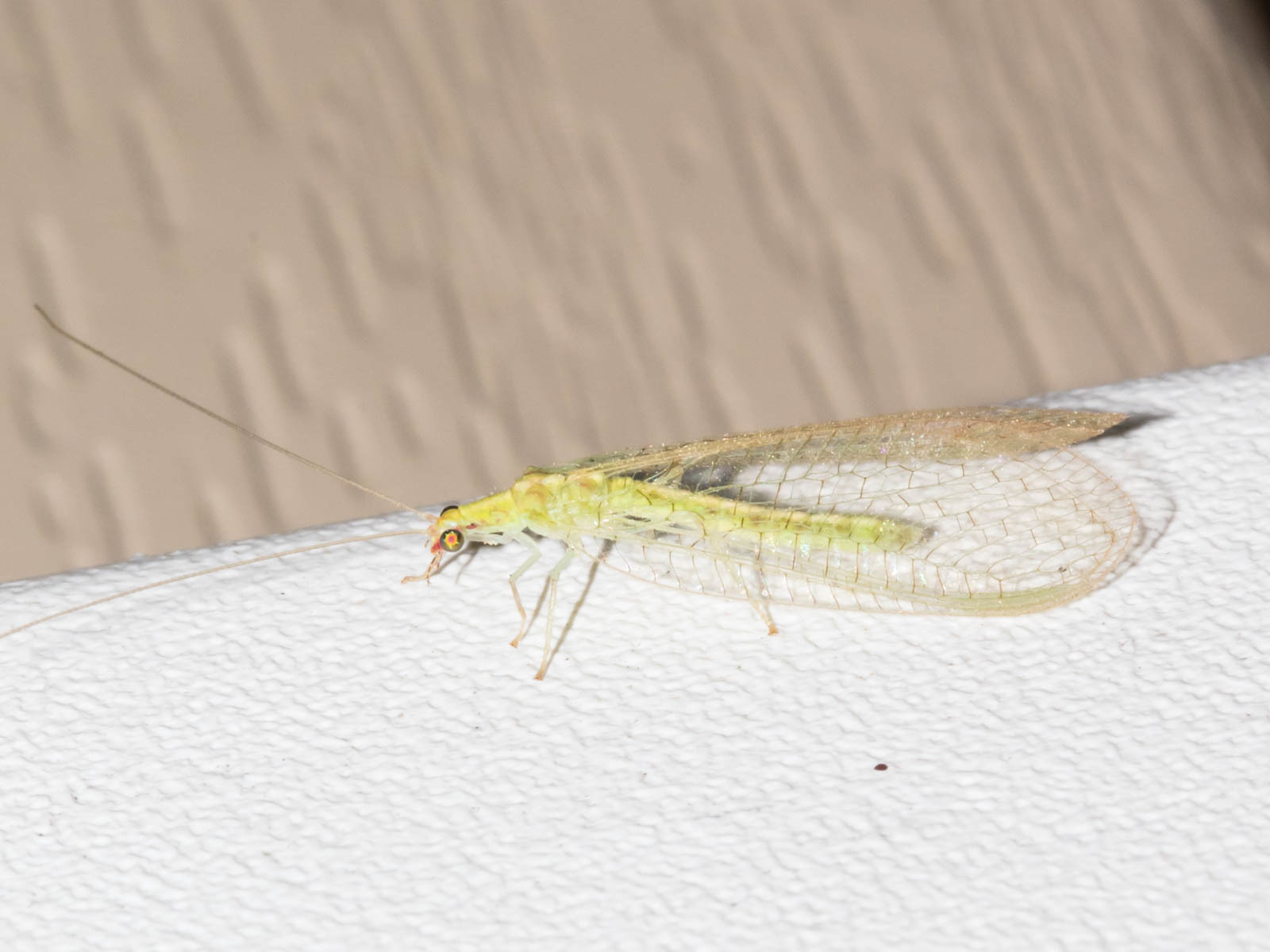
Red-lipped Green Lacewing in Anne Arundel Co., Maryland (Date obscured). (c) Timothy Reichard, all rights reserved.
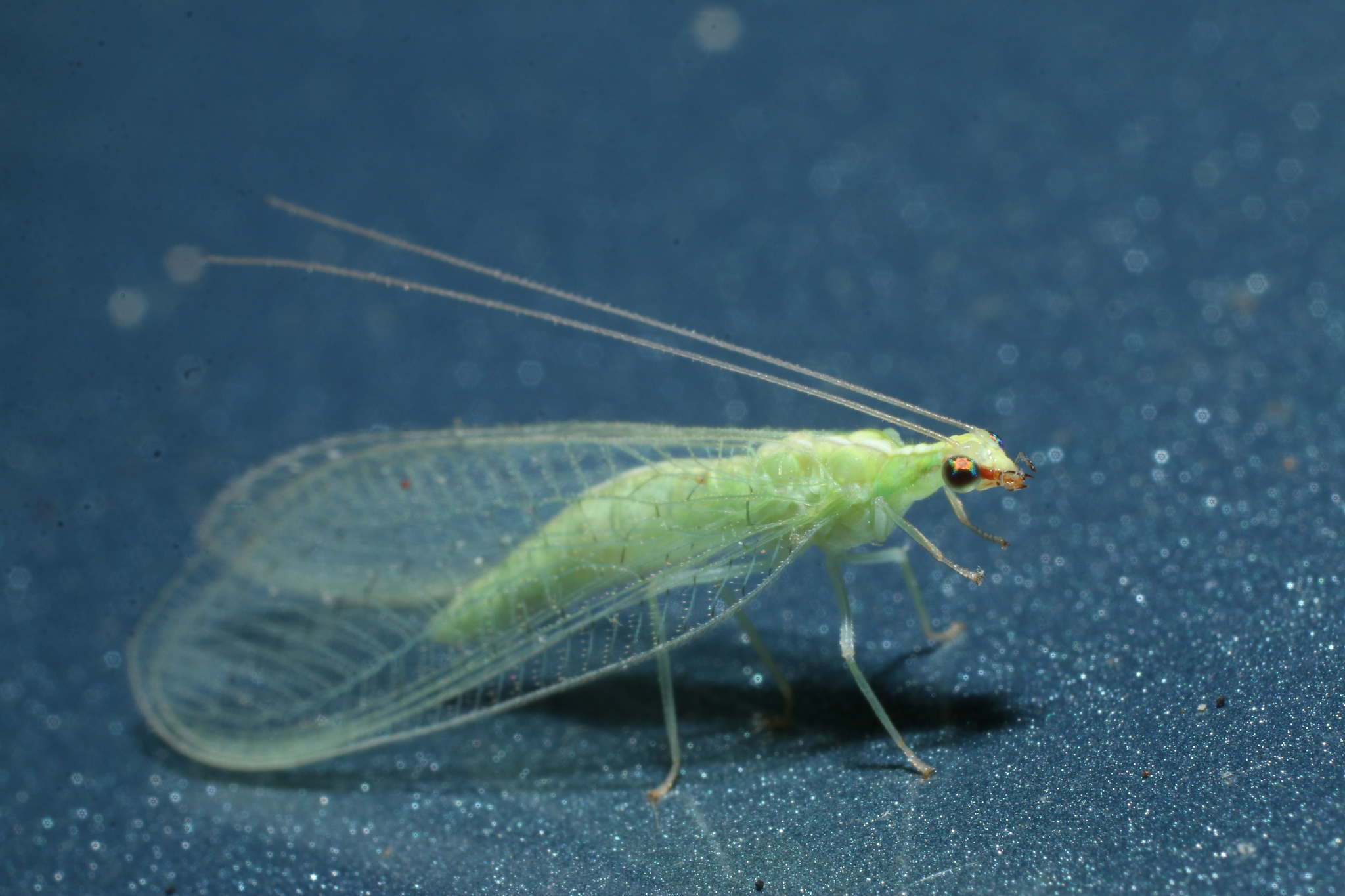
Red-lipped Green Lacewing in St. Mary's Co., Maryland (6/25/2021). (c) jtylerbell, some rights reserved (CC BY-NC).
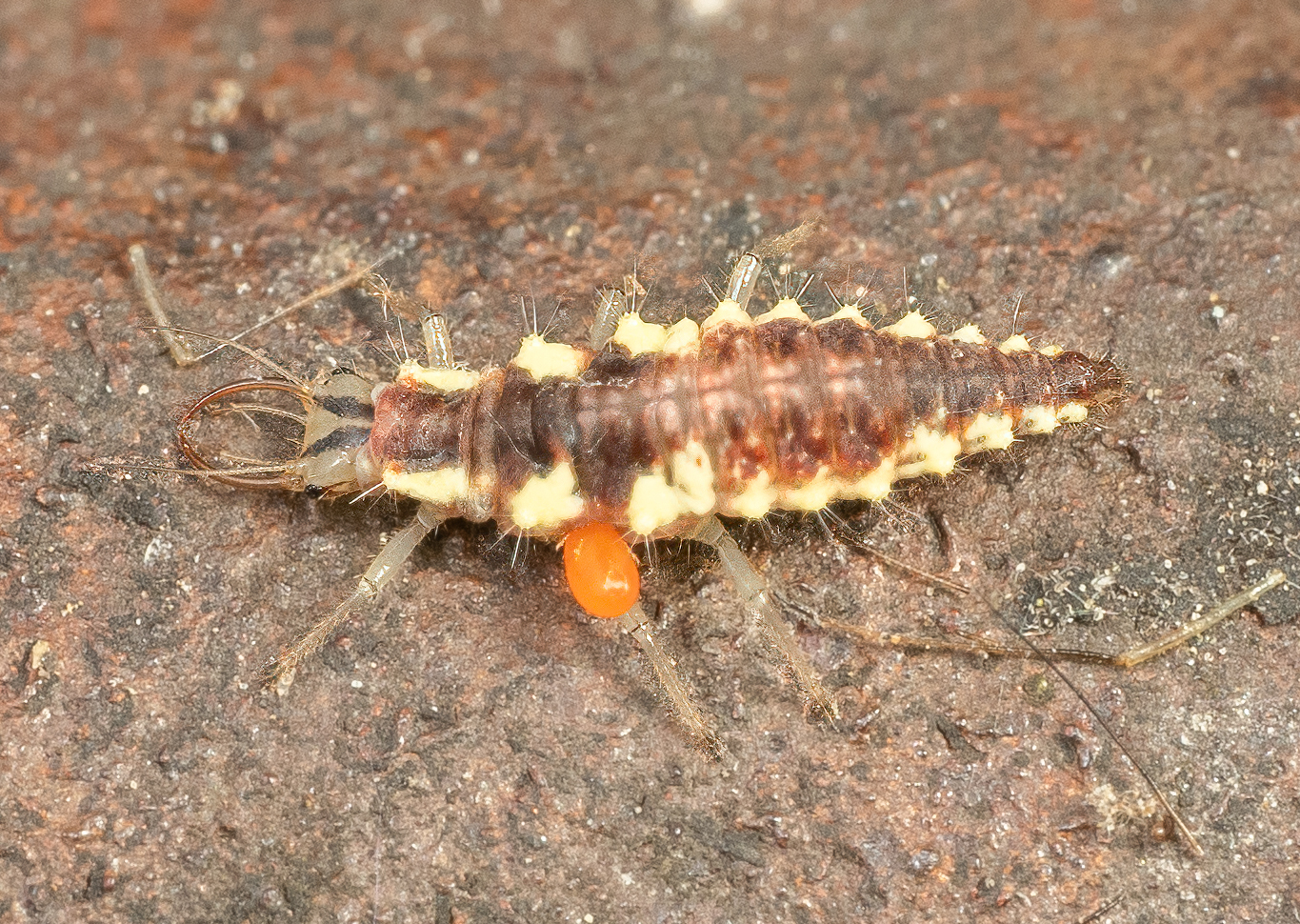
Red-lipped Green Lacewing larva in Montgomery Co., Maryland (7/3/2024). Determined by Jonathan Hoskins and Ken Wolgemuth/BugGuide. (c) Jim Moore (Maryland), some rights reserved (CC BY-NC).
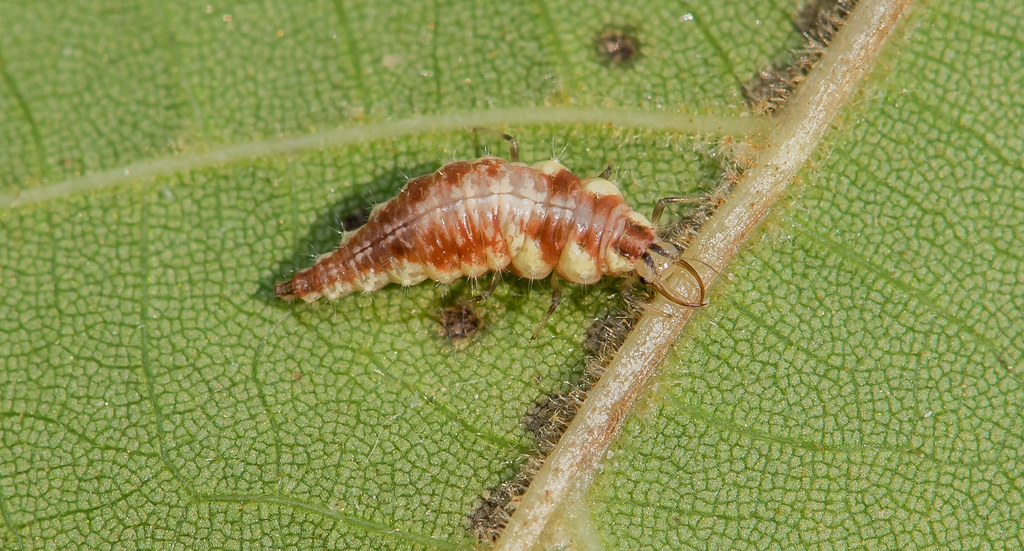
Red-lipped Green Lacewing larva in Howard Co., Maryland (7/21/2015). Determined by Jonathan Hoskins/BugGuide.
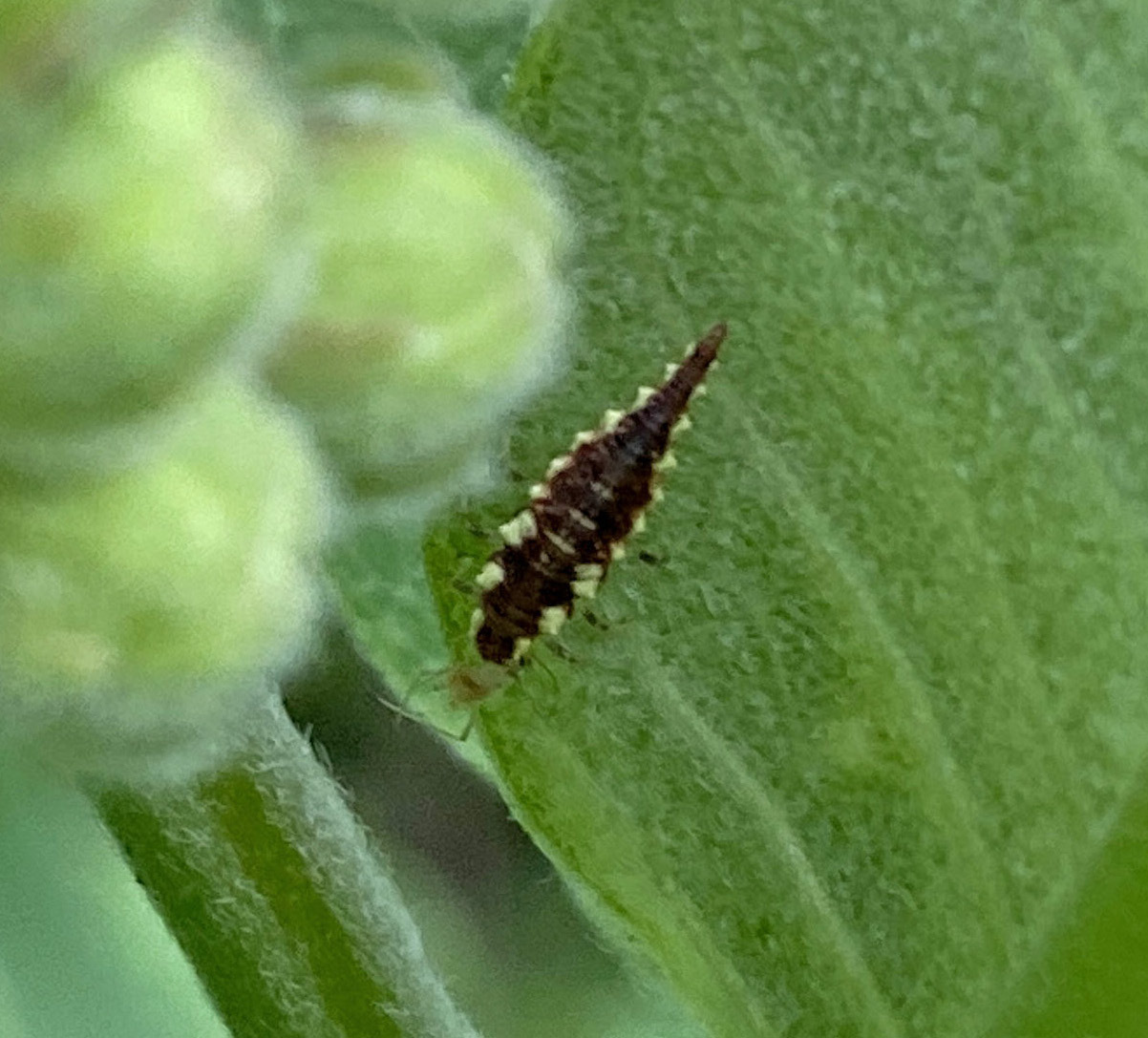
Red-lipped Green Lacewing in Anne Arundel Co., Maryland (6/19/2021). (c) eaglebeach, some rights reserved (CC BY-NC).
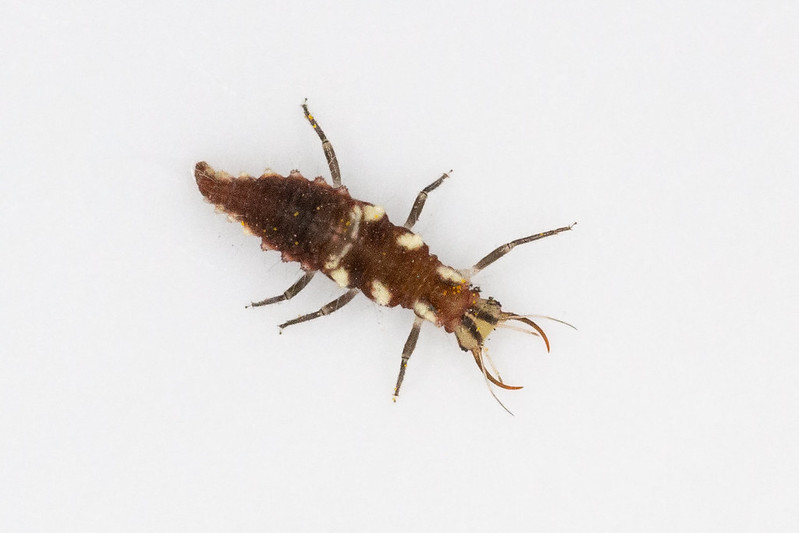
Red-lipped Green Lacewing in Carroll Co., Maryland (7/30/2024). Verified by Jonathan Hoskins/BugGuide.
Map Snapshot


40 Records
Description
Adults identified by "near-entirely red genae (cheeks), black cross veins, and pointed hind wingtips." Larvae feature "two dark stripes on the head capsule, three pairs of prominent white spots on the thorax, often with the hindmost pair connected by a slight band, and otherwise largely dark body color lacking pale markings through the middle of the abdomen. The legs are often black, unlike in allies." (BugGuide, 2024)
Citations
No citations linked for this taxon yet.
Use of media featured on Maryland
Biodiversity Project is only permitted with express permission of the
photographer.
An adult Red-lipped Green Lacewing in Montgomery Co., Maryland (12/15/2019). Determined by Dr. Catherine Tauber.
View Record Details
Media by
Steve Scholnick.
Red-lipped Green Lacewing in Calvert Co., Maryland (6/8/2019).
View Record Details
Media by
Steve Scholnick.
Red-lipped Green Lacewing in Prince George's Co., Maryland (3/17/2020).
View Record Details
Media by
Barbara Thurlow.
Red-lipped Green Lacewing in Montgomery Co., Maryland (8/5/2024). (c) Jim Moore (Maryland), some rights reserved (CC BY-NC).
View Record Details
Media by
Jim Moore.
Red-lipped Green Lacewing in Somerset Co., Maryland (7/30/2021). (c) Jim Brighton, some rights reserved (CC BY-NC).
View Record Details
Media by
Jim Brighton.
Red-lipped Green Lacewing in Anne Arundel Co., Maryland (Date obscured). (c) Timothy Reichard, all rights reserved.
View Record Details
Media by
Timothy Reichard.
Red-lipped Green Lacewing in St. Mary's Co., Maryland (6/25/2021). (c) jtylerbell, some rights reserved (CC BY-NC).
View Record Details
Media by
Tyler Bell.
Red-lipped Green Lacewing larva in Montgomery Co., Maryland (7/3/2024). Determined by Jonathan Hoskins and Ken Wolgemuth/BugGuide. (c) Jim Moore (Maryland), some rights reserved (CC BY-NC).
View Record Details
Media by
Jim Moore.
Red-lipped Green Lacewing larva in Howard Co., Maryland (7/21/2015). Determined by Jonathan Hoskins/BugGuide.
View Record Details
Media by
Bonnie Ott.
Red-lipped Green Lacewing in Anne Arundel Co., Maryland (6/19/2021). (c) eaglebeach, some rights reserved (CC BY-NC).
View Record Details
Media by
Lynn Strauss.
Red-lipped Green Lacewing in Carroll Co., Maryland (7/30/2024). Verified by Jonathan Hoskins/BugGuide.
View Record Details
Media by
Barbara Speckart.
Source: Wikipedia
| Chrysoperla rufilabris | |
|---|---|
.jpg)
| |
Scientific classification 
| |
| Kingdom: | Animalia |
| Phylum: | Arthropoda |
| Clade: | Pancrustacea |
| Class: | Insecta |
| Order: | Neuroptera |
| Family: | Chrysopidae |
| Tribe: | Chrysopini |
| Genus: | Chrysoperla |
| Species: | C. rufilabris
|
| Binomial name | |
| Chrysoperla rufilabris (Burmeister, 1839)
| |
| Synonyms[1] | |
| |
Chrysoperla rufilabris, also known as the red-lipped green lacewing, is a species of green lacewing in the family Chrysopidae.[2][3]
Distribution
[edit]This species is native to the eastern portion of North America.[3][4]
Description
[edit].jpg)
C. rufilabris are distinguished from other members of the genus found in North America by the broadly red genae, pointed apex of the fore wing, black gradate crossveins, and spinellae on the male genitalia.[4]
Biology
[edit]The larvae of this species prey upon soft-bodied insects including aphids, thrips, and whiteflies.[5][6]
References
[edit]- ^ Oswald, John D. (Jul 2018). "Chrysoperla rufilabris (Burmeister, 1839) in Neuropterida Species of the World". Lacewing Digital Library. Retrieved 7 May 2020.
- ^ Hoskins, Jonathan W.; Maxwell, John R.; Belov, Vassili; Gould, Anita; Kropiewnicki, Ted. "Chrysoperla rufilabris species Information". BugGuide.net. Retrieved 2019-09-24.
- ^ a b Penny, Norman D.; Adans, Phillip A.; Stange, Lionel A. (1997). "Species catalog of the Neuroptera, Megaloptera and Raphidioptera of America north of Mexico". Proceedings of the California Academy of Sciences. Fourth Series. 50: 39–114.
- ^ a b Brooks, S.J. (1994). "A taxonomic review of the common green lacewing genus Chrysoperla (Neuroptera: Chrysopidae)" (PDF). Bulletin of the Natural History Museum, Entomology Series. 63 (2): 137–210. Retrieved 7 May 2021.
- ^ Schuster, David J.; Stansly, Philip A. (2000). "Response of two lacewing species to biorational and broad-spectrum insecticides". Phytoparasitica. 28 (4): 297–304. Bibcode:2000Phyto..28..297S. doi:10.1007/BF02981824. S2CID 42225759.
- ^ Khan, I.; Morse, J.G. (1999). "Laboratory studies on the evaluation of Chrysoperla spp. as predators of citrus thrips". Sarhad Journal of Agriculture. 15 (5): 459–465.
External links
[edit] Media related to Chrysoperla rufilabris at Wikimedia Commons

 | This Neuroptera related article is a stub. You can help Wikipedia by adding missing information. |