
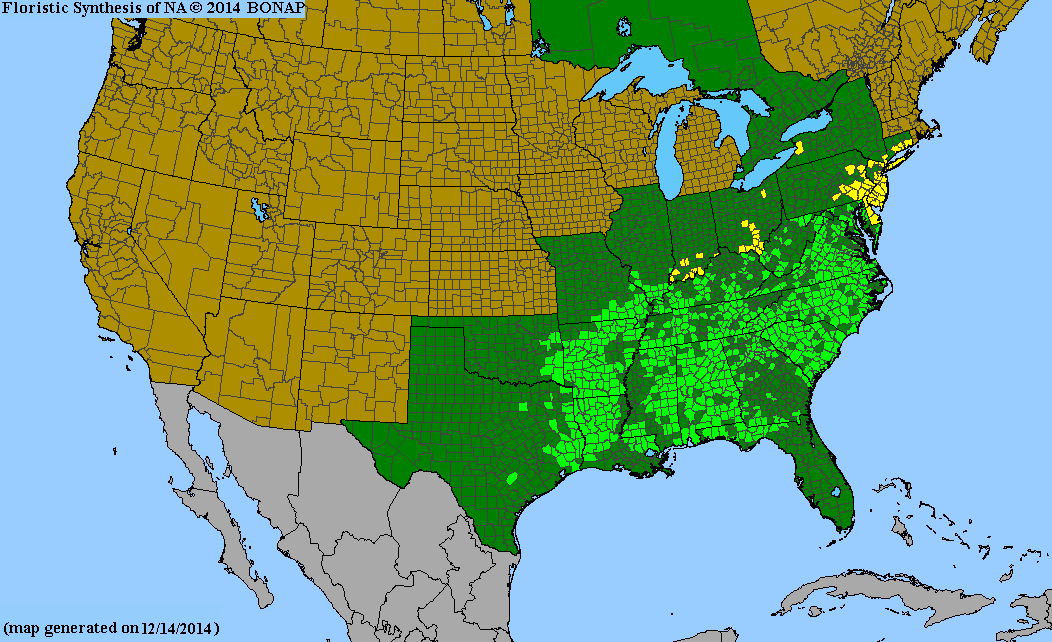
Map Snapshot


57 Records
Status
Description
Relationships
Citations
No citations linked for this taxon yet.
Source: Wikipedia
| Asclepias variegata | |
|---|---|

| |
Scientific classification 
| |
| Kingdom: | Plantae |
| Clade: | Tracheophytes |
| Clade: | Angiosperms |
| Clade: | Eudicots |
| Clade: | Asterids |
| Order: | Gentianales |
| Family: | Apocynaceae |
| Genus: | Asclepias |
| Species: | A. variegata
|
| Binomial name | |
| Asclepias variegata | |
| Synonyms | |
|
Biventraria variegata (L.) Small | |
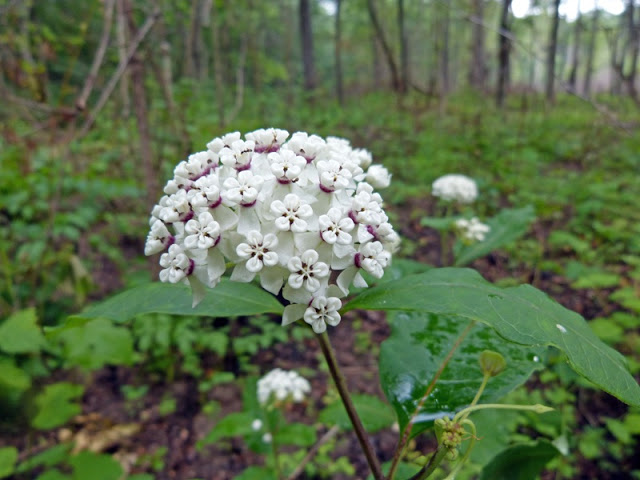
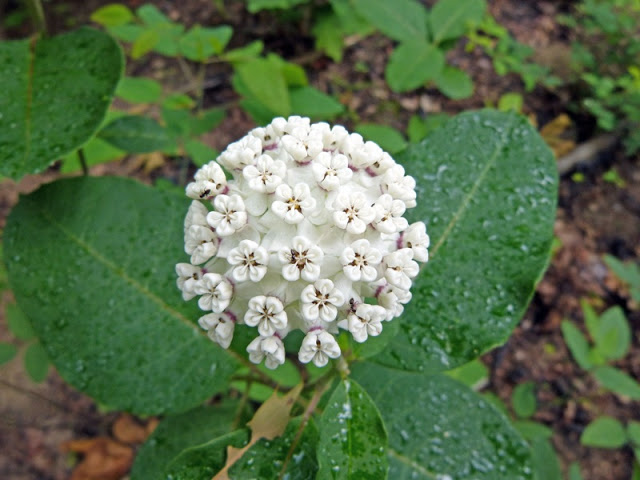
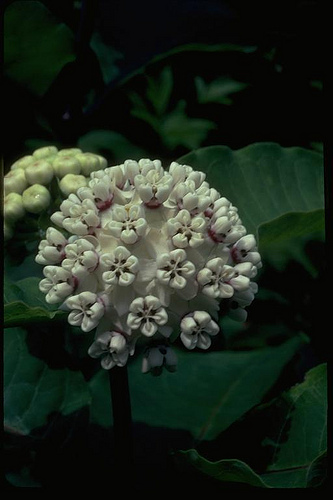
Asclepias variegata, commonly called the redring milkweed[1] or white milkweed,[2] is a plant in the family Apocynaceae. It is native to eastern North America, where it is found in Canada and the United States.[3] It is most common in the Southeastern United States, and becomes rare in the northern edge of its range.
Description
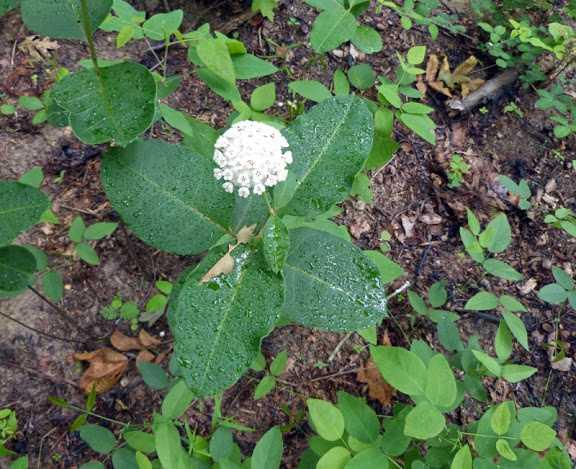
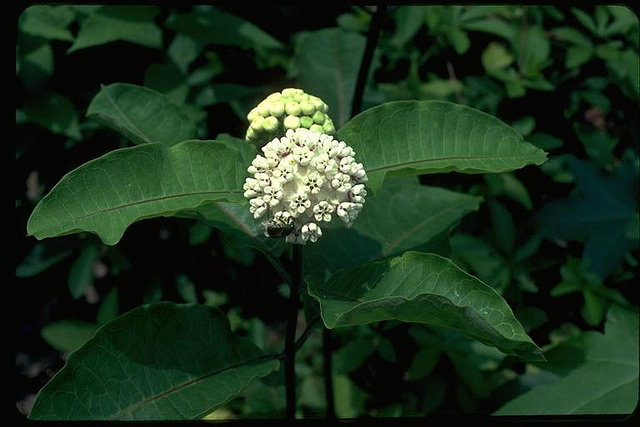
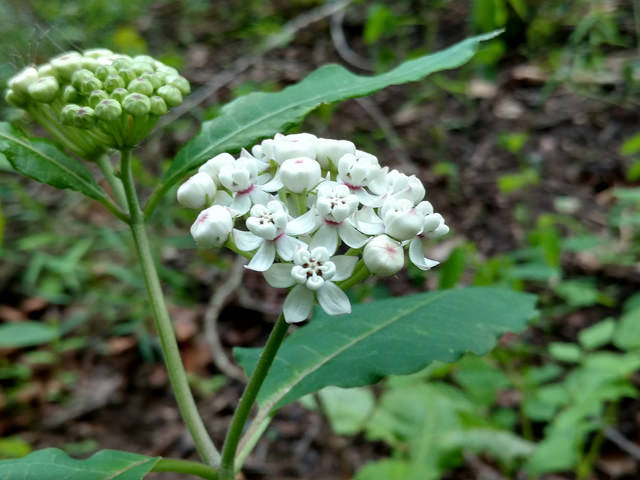
[edit]Asclepias variegata is a perennial herb, with stems reaching between 20 and 100 centimeters in height. Its leaves are most commonly opposite, arranged in 2 to 5 pairs and range in length from 5 to 14 centimeters.[4]
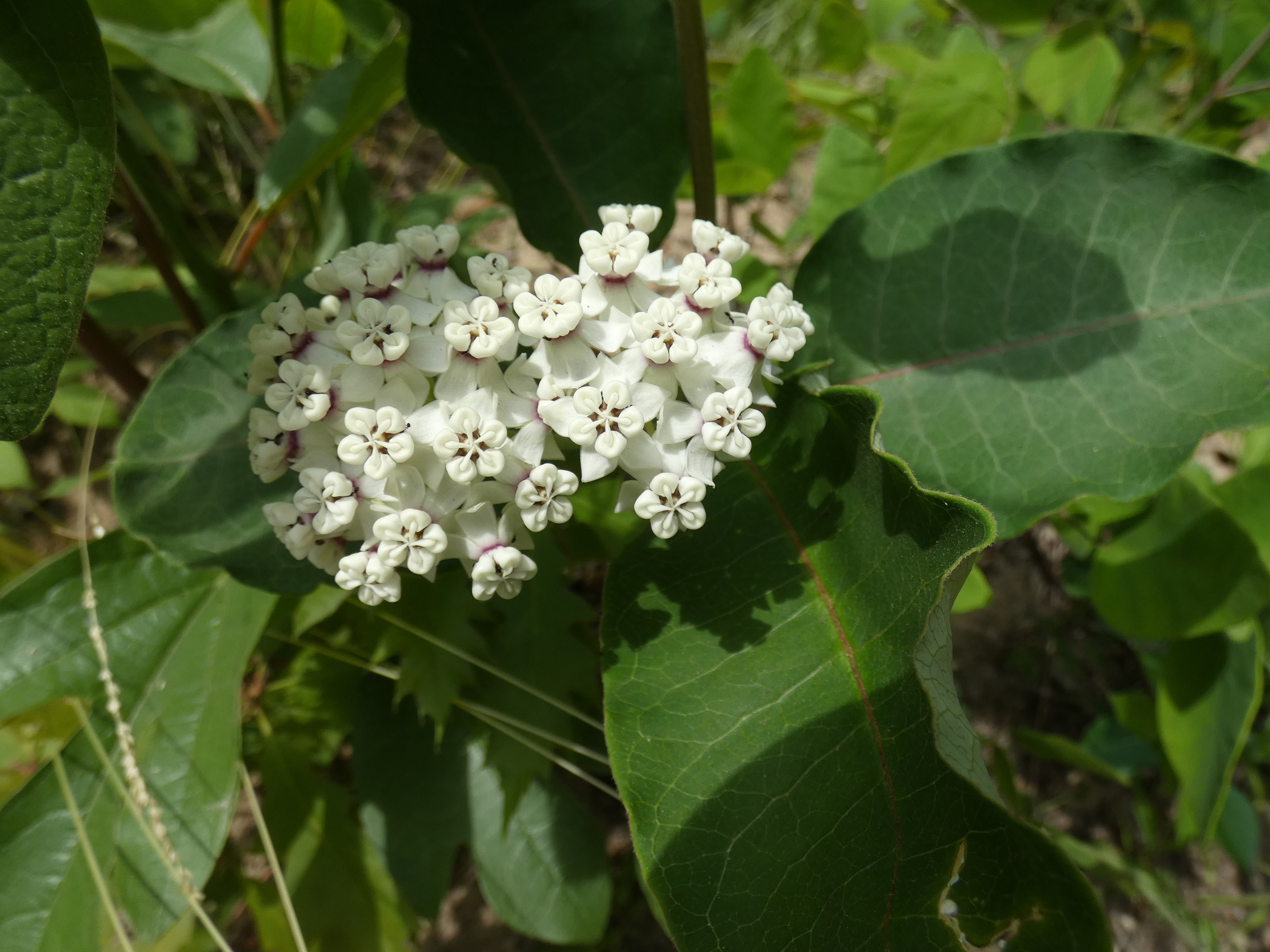
It produces small white flowers with purplish centers that area crowded into round, terminal clusters.[5]
Ecology
[edit]Habitat
[edit]A. variegata is found most commonly in upland woodlands and mesic hammocks, but also occurs on bluffs, and in savannas, often in sandy soils.[6][7][8] This species prefers higher light levels.[9]
It often occurs alongside species such as pine, hickory, oak, and sweetgum, among others.[9]
Phenology
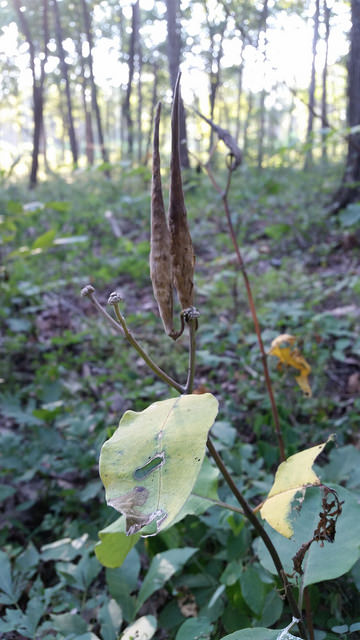
[edit]This species flowers in early summer.[2] Fruiting has been observed from late summer into fall.[9]
Fire Ecology
[edit]A. variegata possesses a deep taproot which allows it to regenerate post-fire.[9] It has been found in pinelands and pine-oak-hickory stands that regularly receive prescribed burns.[9]
Asclepias variegata is insect pollinated and is recorded to have been visited in northern Florida by the bee species Augochlorella aurata.[10]
Conservation status in the United States
[edit]It is endangered in the states of New York, and Pennsylvania.[11] It is listed as a special concern species and believed extirpated in Connecticut.[12]
References
[edit]
- ^ NRCS. "Asclepias variegata". PLANTS Database. United States Department of Agriculture (USDA). Retrieved 26 August 2017.
- ^ a b Alan Weakley. "Flora of the Southern and Mid-Atlantic States". Archived from the original on 2018-10-06. Retrieved 2017-10-14.
- ^ Kartesz, John T. (2014). "Asclepias variegata". County-level distribution map from the North American Plant Atlas (NAPA). Biota of North America Program (BONAP). Retrieved 14 October 2017.
- ^ Radford, Albert Ernest; Ahles, Harry E.; Bell, Clyde Ritchie (1983). Manual of the vascular flora of the Carolinas (9. printing ed.). Chapel Hill, NC: Univ. of North Carolina Press. ISBN 978-0-8078-1087-3.
- ^ "Lady Bird Johnson Wildflower Center - The University of Texas at Austin". wildflower.org. Retrieved 27 August 2017.
- ^ Weakley, A.S. 2020. Flora of the Southeastern United States. Edition of 20 October 2020. University of North Carolina at Chapel Hill, Chapel Hill, North Carolina.
- ^ Wunderlin, Richard P.; Hansen, Bruce F. (2011). Guide to the vascular plants of Florida (3rd ed.). Gainesville, FL: University Press of Florida. ISBN 978-0-8130-3543-7.
- ^ Yatskievych, George (2006). Flora of Missouri, Volume 2. Missouri Botanical Garden Press. pp. 156–157.
- ^ a b c d e Florida State University Robert K. Godfrey Herbarium database. URL: http://herbarium.bio.fsu.edu. Last accessed: June 2014. Collectors: Loran C. Anderson, Robert K. Godfrey, H. Kurz, K. Craddock Burks, James R. Burkhalter, L G Plank, Gary R. Knight, Andre F. Clewell, R. Kral, Richard S. Mitchell, Lisa Keppner, Ed Keppner, D.C. Hunt, R. Komarek, Wilson Baker, and R. F. Doren. States and Counties: Florida: Leon, Santa Rosa, Okaloosa, Jackson, Gadsden, Liberty, Jefferson, Wakulla, Walton, and Bay. Georgia: Grady and Thomas.
- ^ Ulyshen, M. D., K. Robertson, S. Horn, and C. Dixon. 2024. Characterization of the bee community and pollinatrion network in a southeastern U.S. pine savanna. Frontiers in Ecology and Evolution 12:1403602.
- ^ "Plants Profile for Asclepias variegata (Redring milkweed)". plants.usda.gov. Retrieved 30 December 2017.
- ^ "Connecticut's Endangered, Threatened and Special Concern Species 2015". State of Connecticut Department of Energy and Environmental Protection Bureau of Natural Resources. Retrieved 31 December 2017.(Note: This list is newer than the one used by plants.usda.gov and is more up-to-date.)
 | This Asclepiadoideae article is a stub. You can help Wikipedia by adding missing information. |