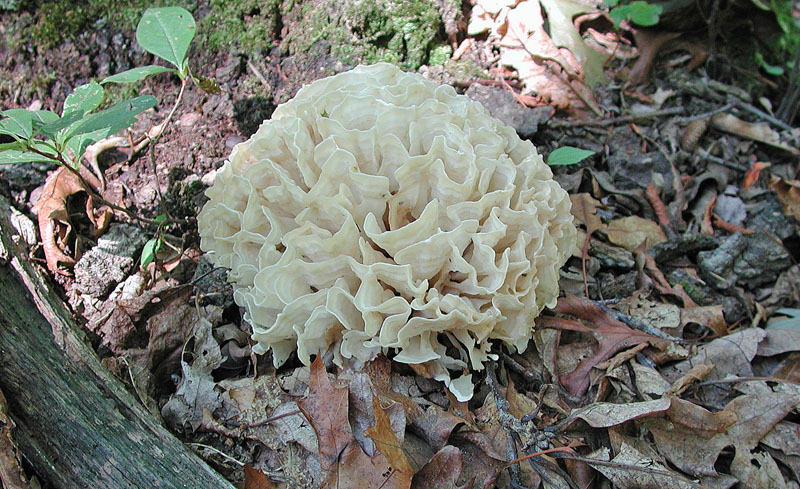
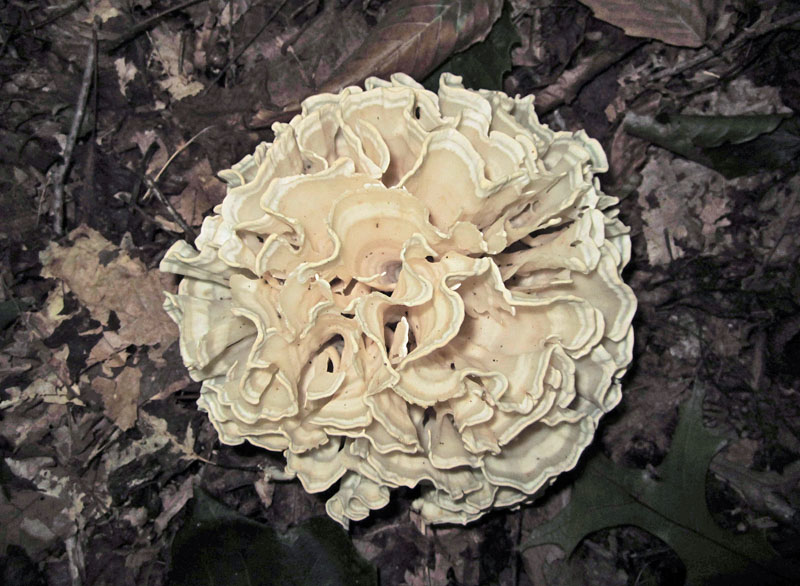
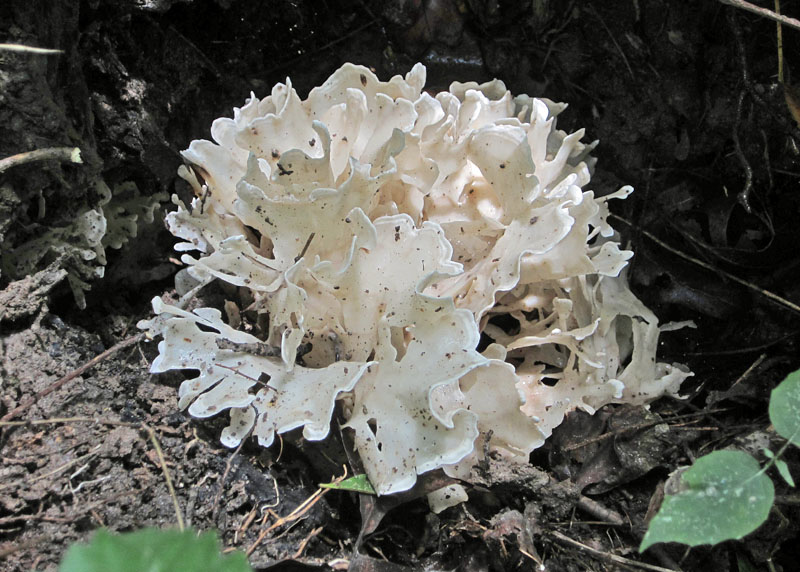
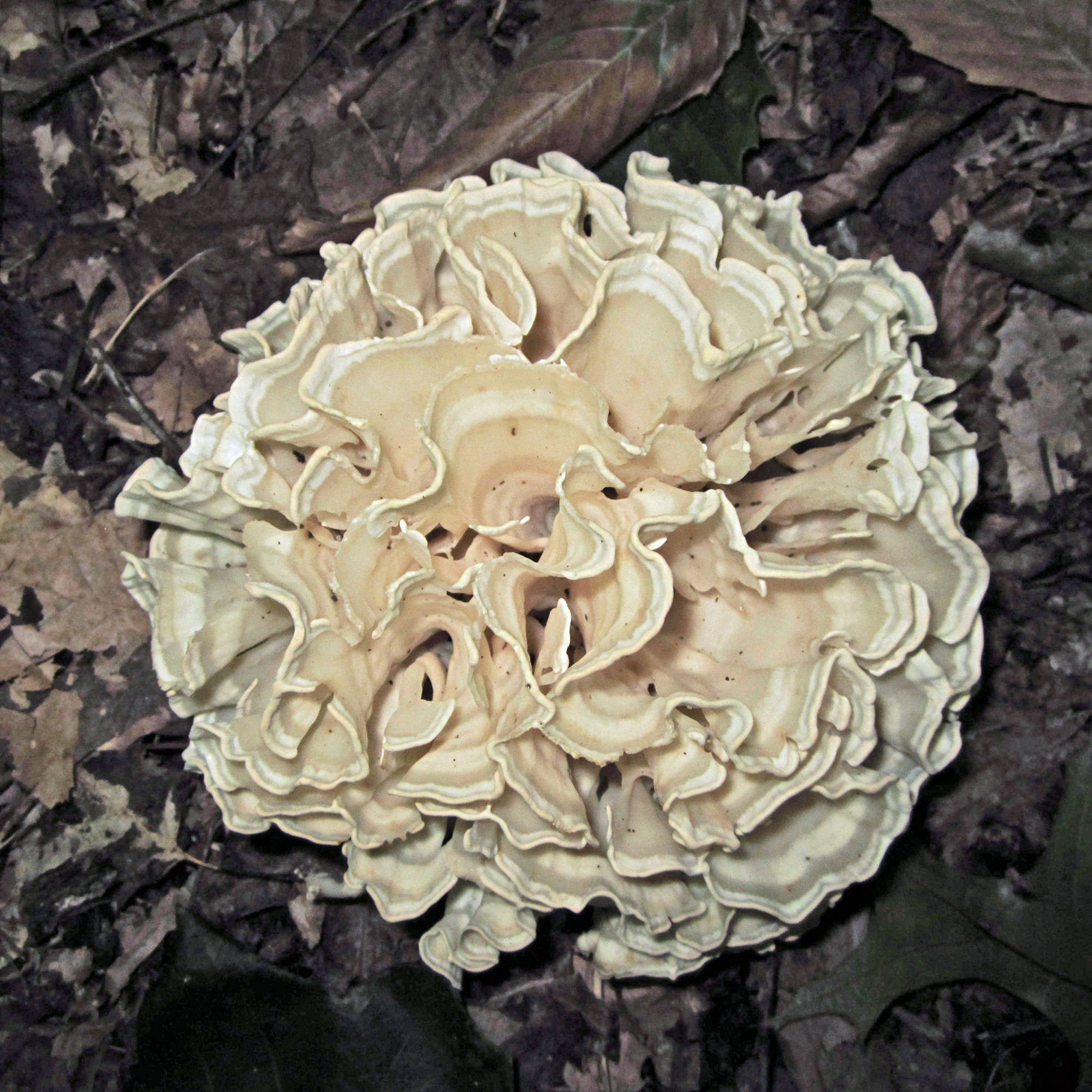
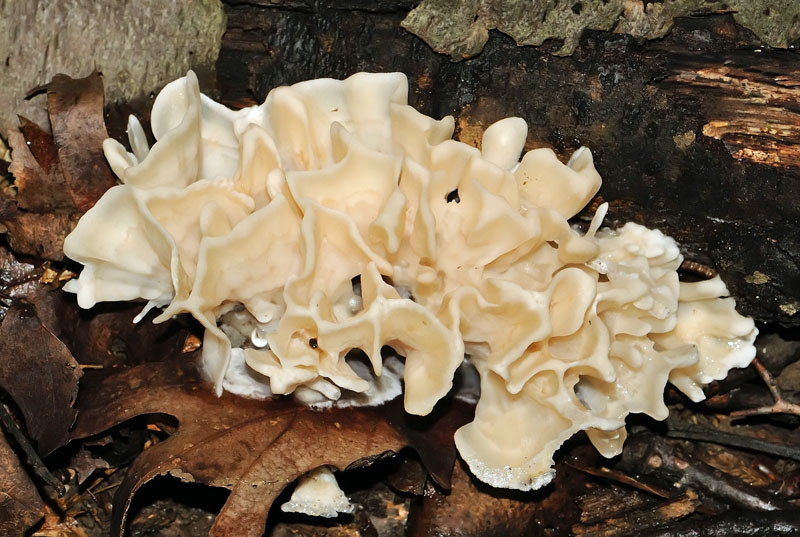
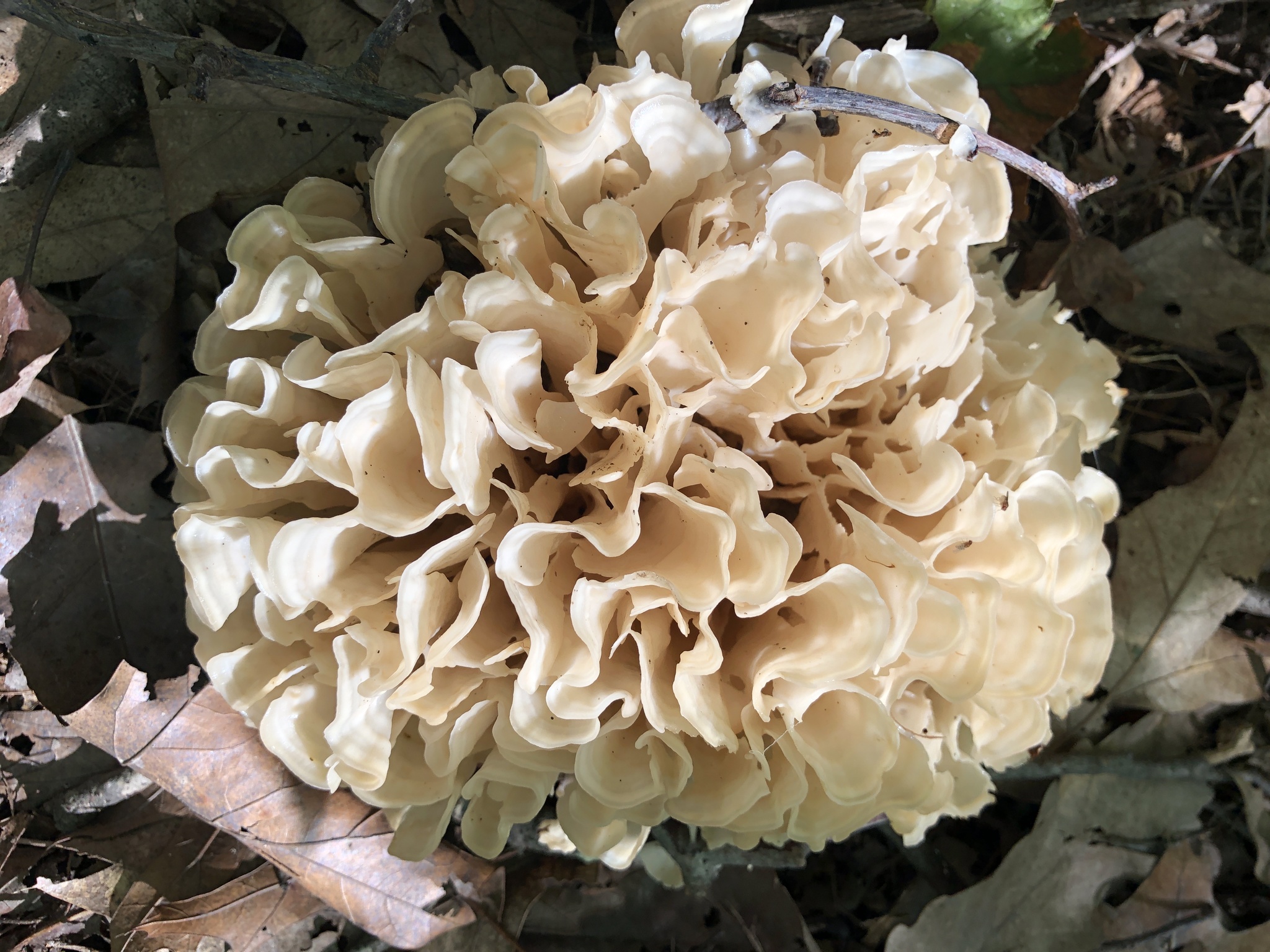
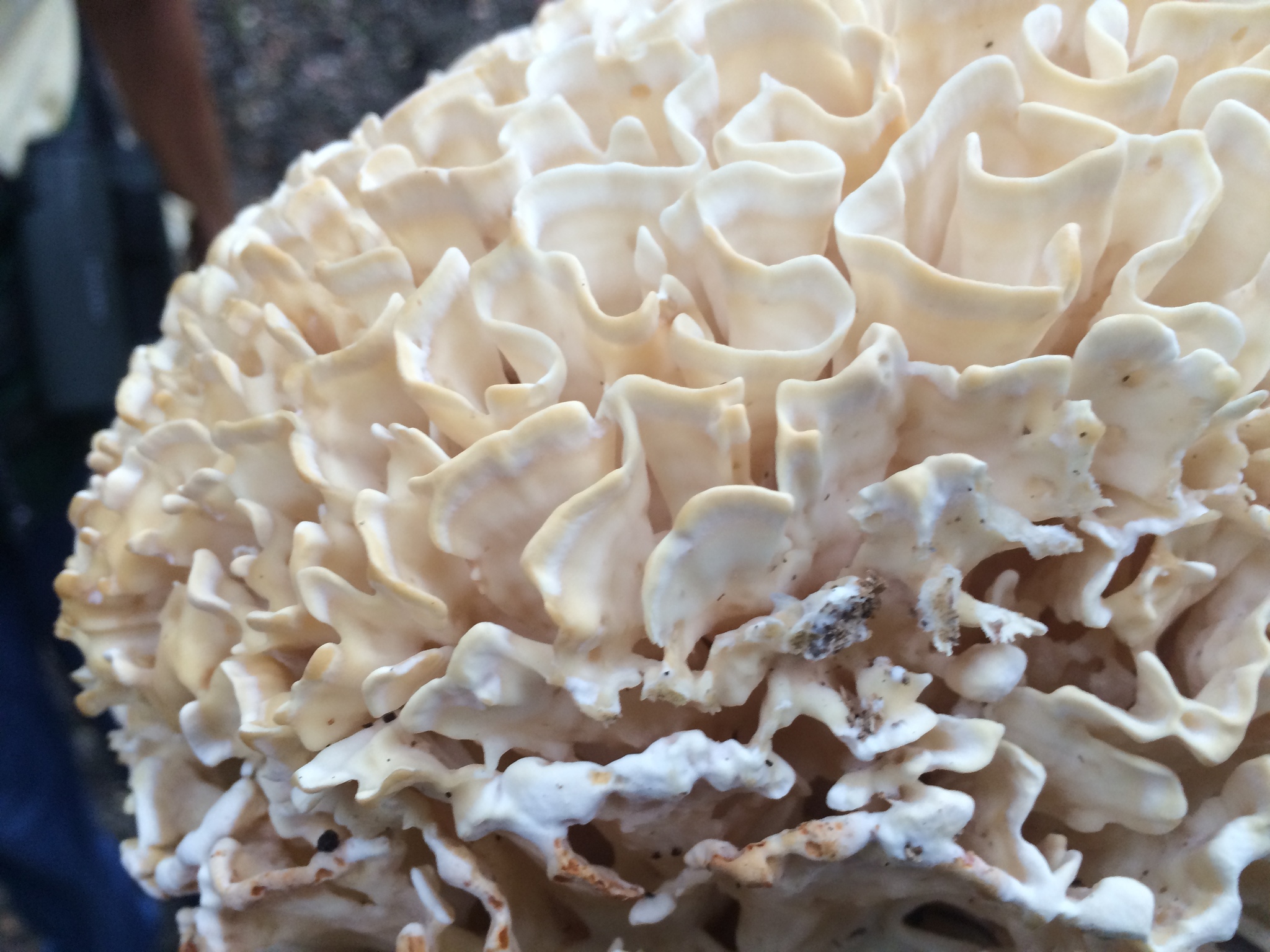
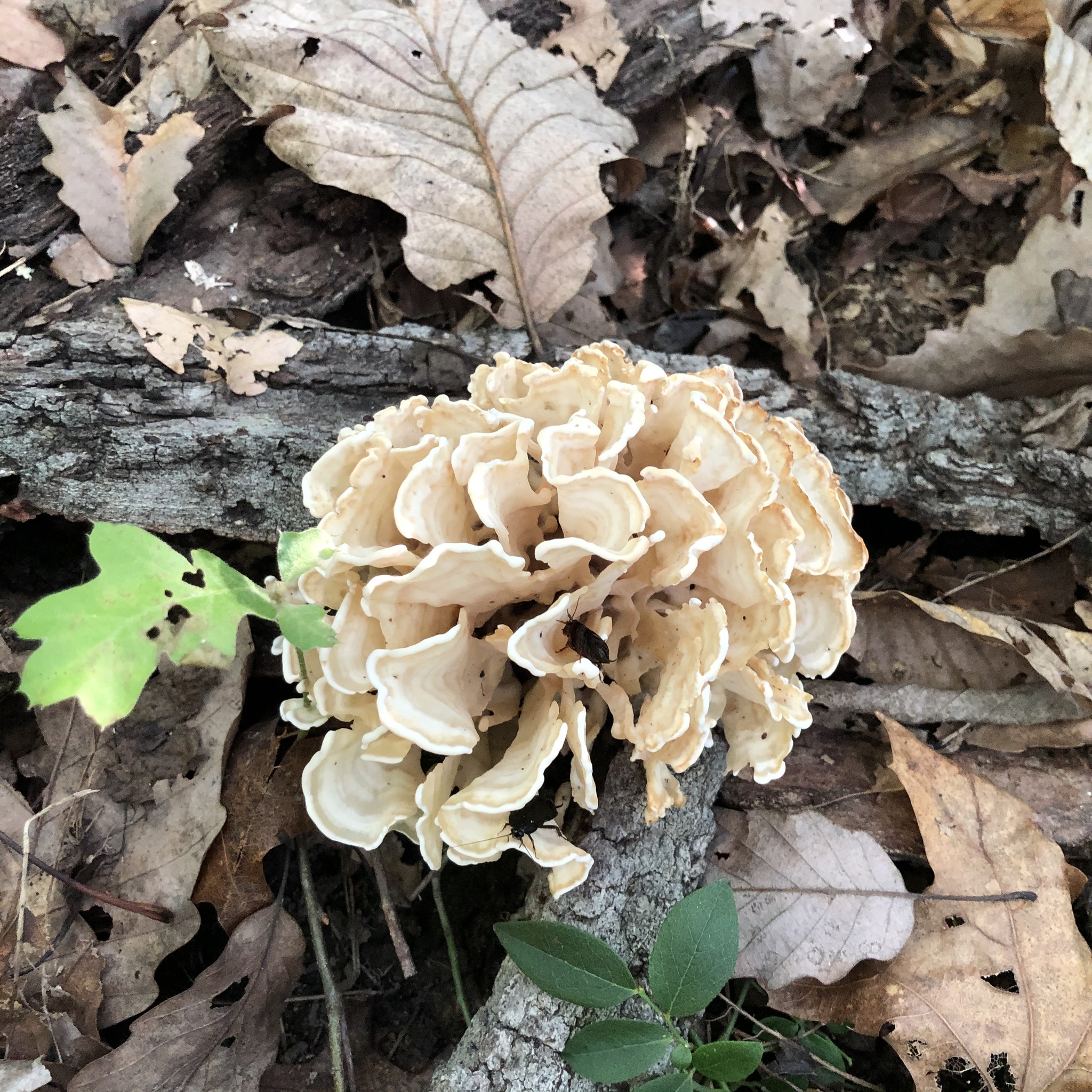
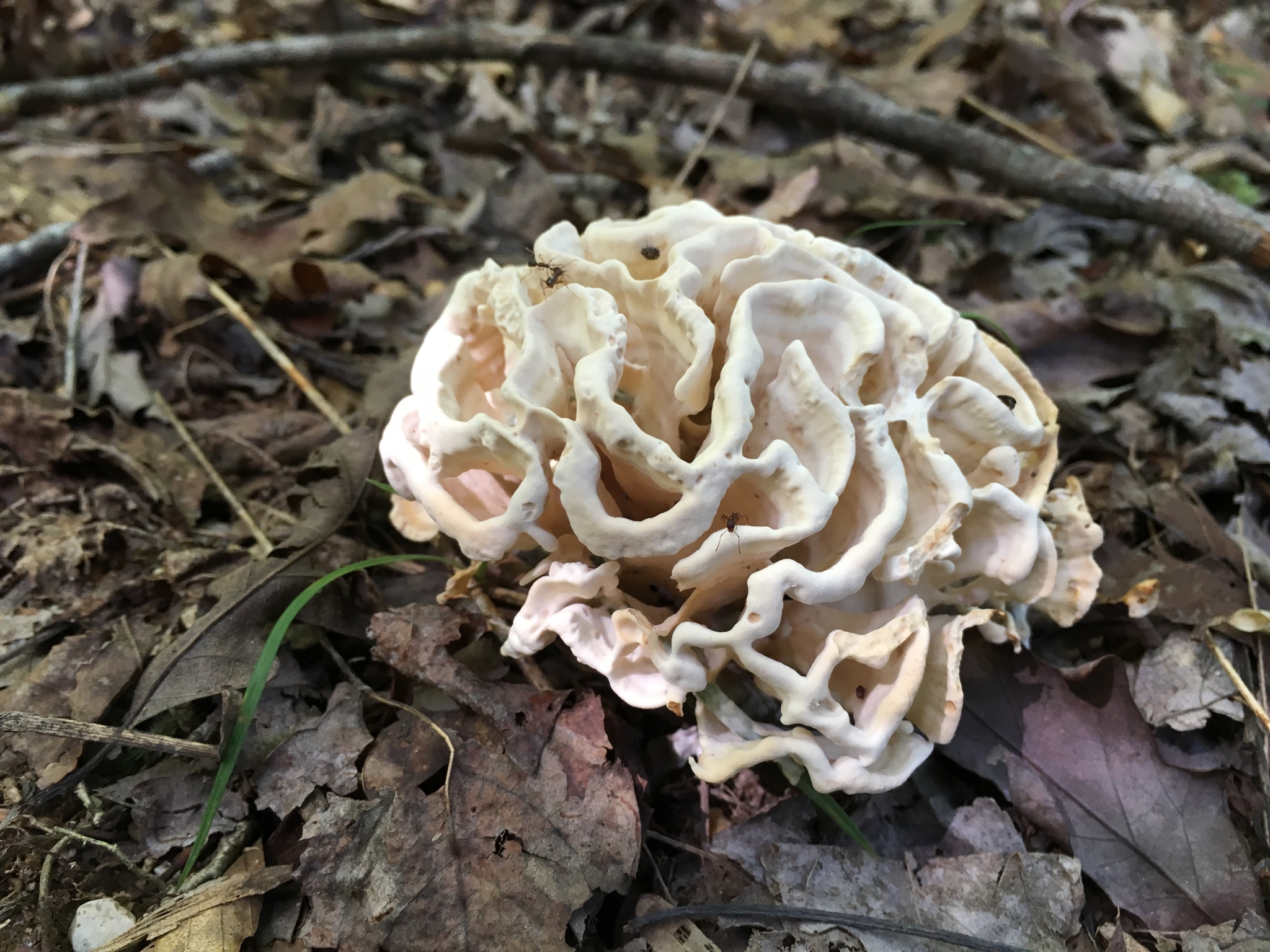
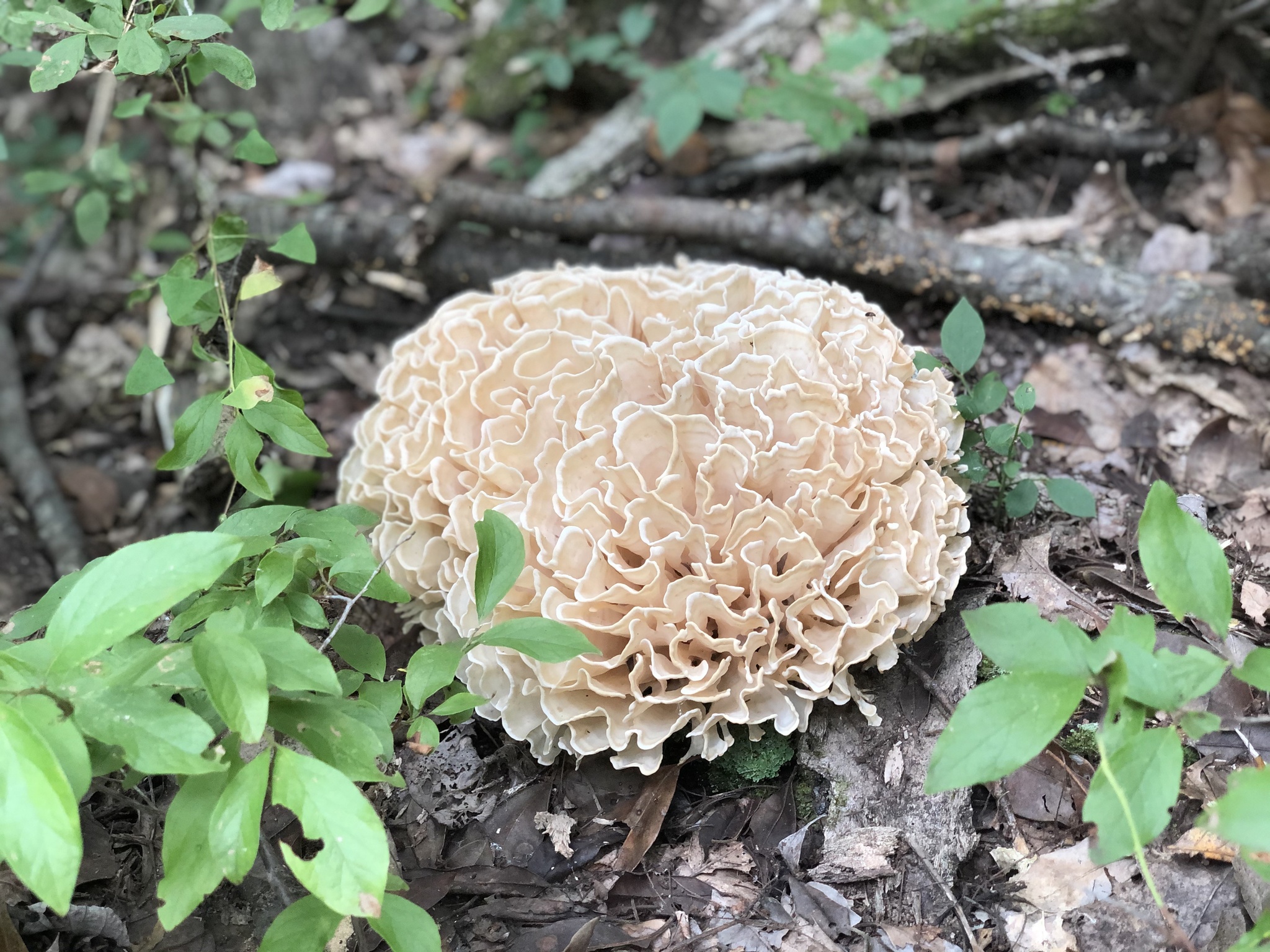
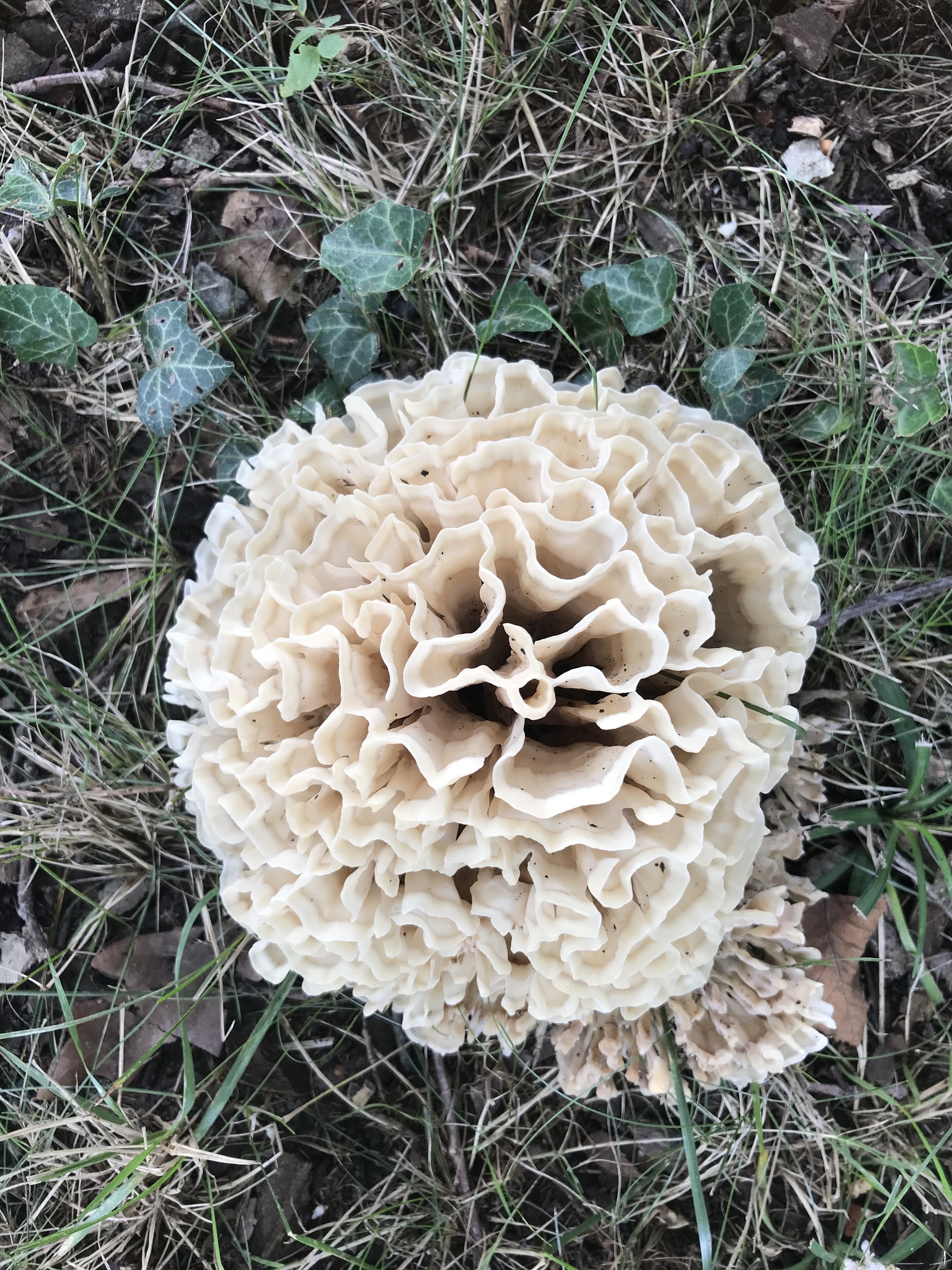
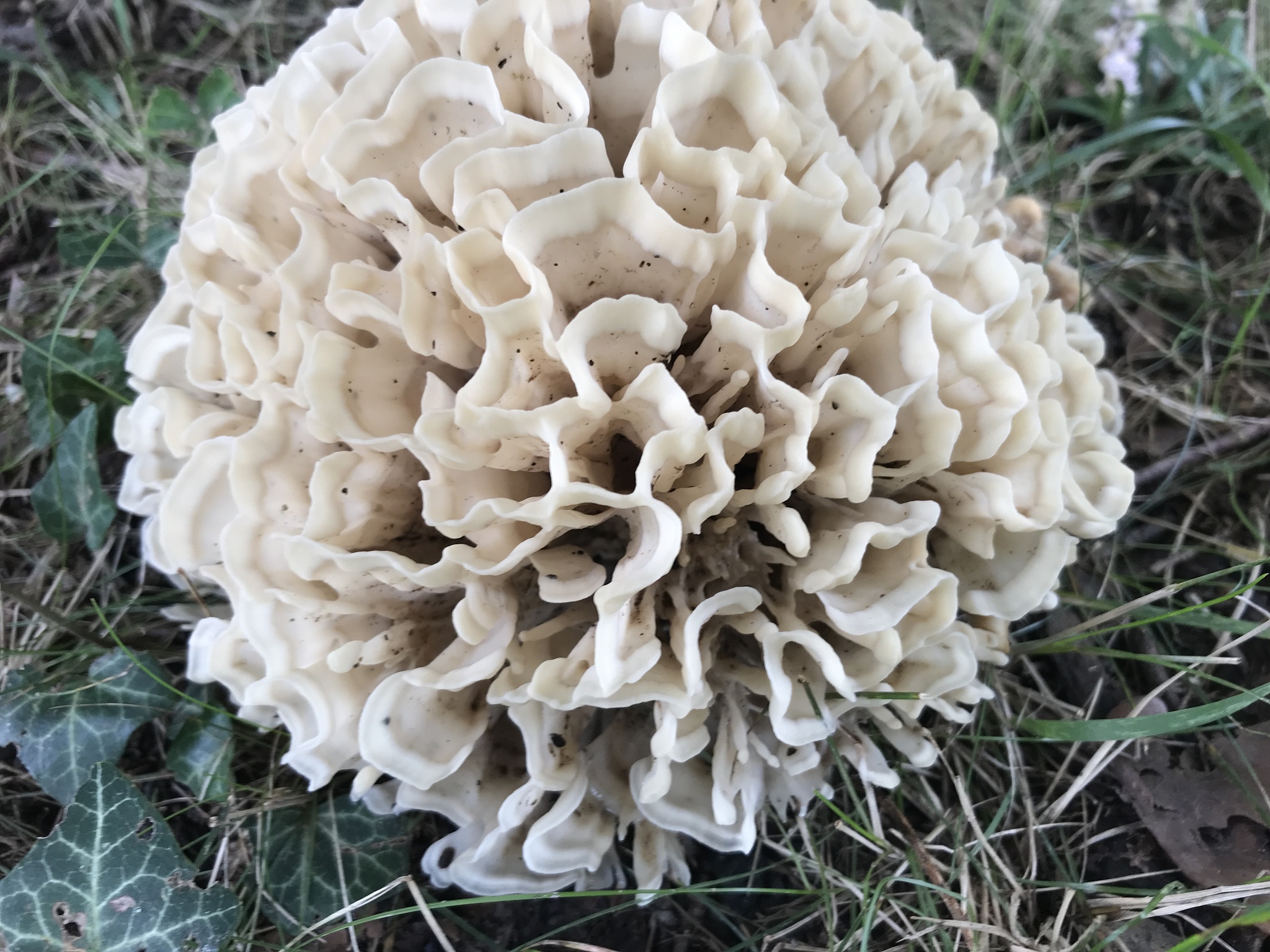
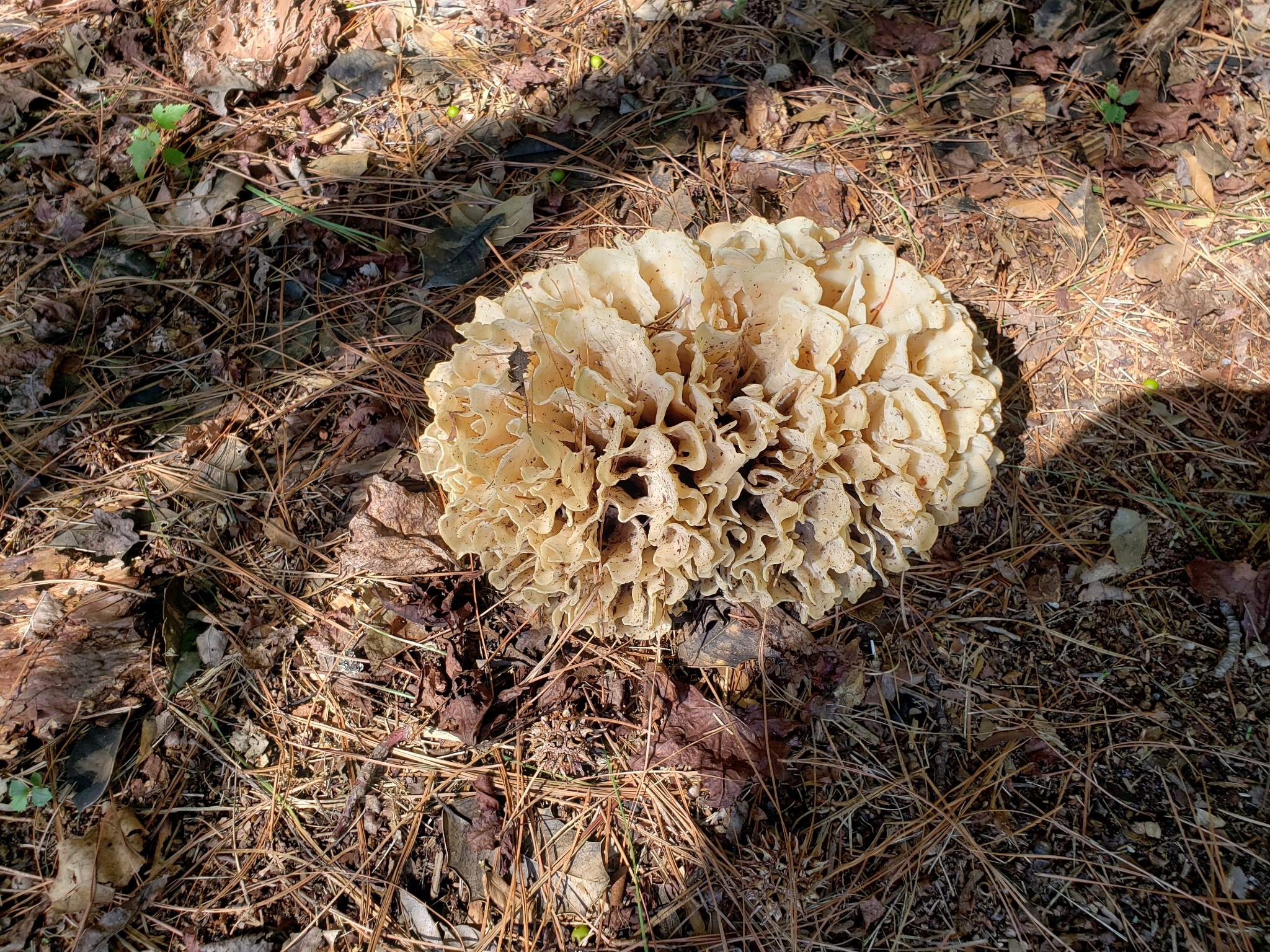
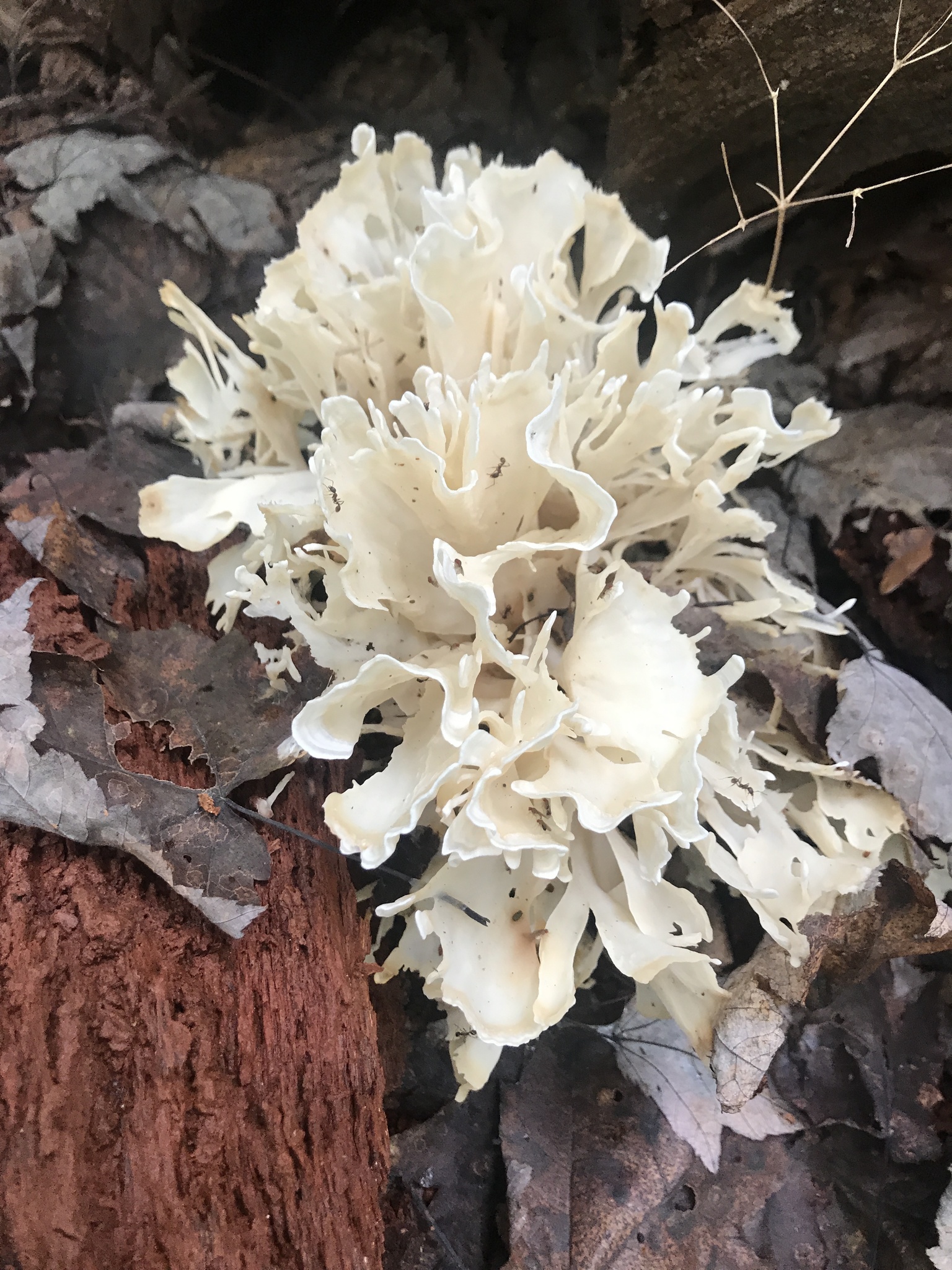
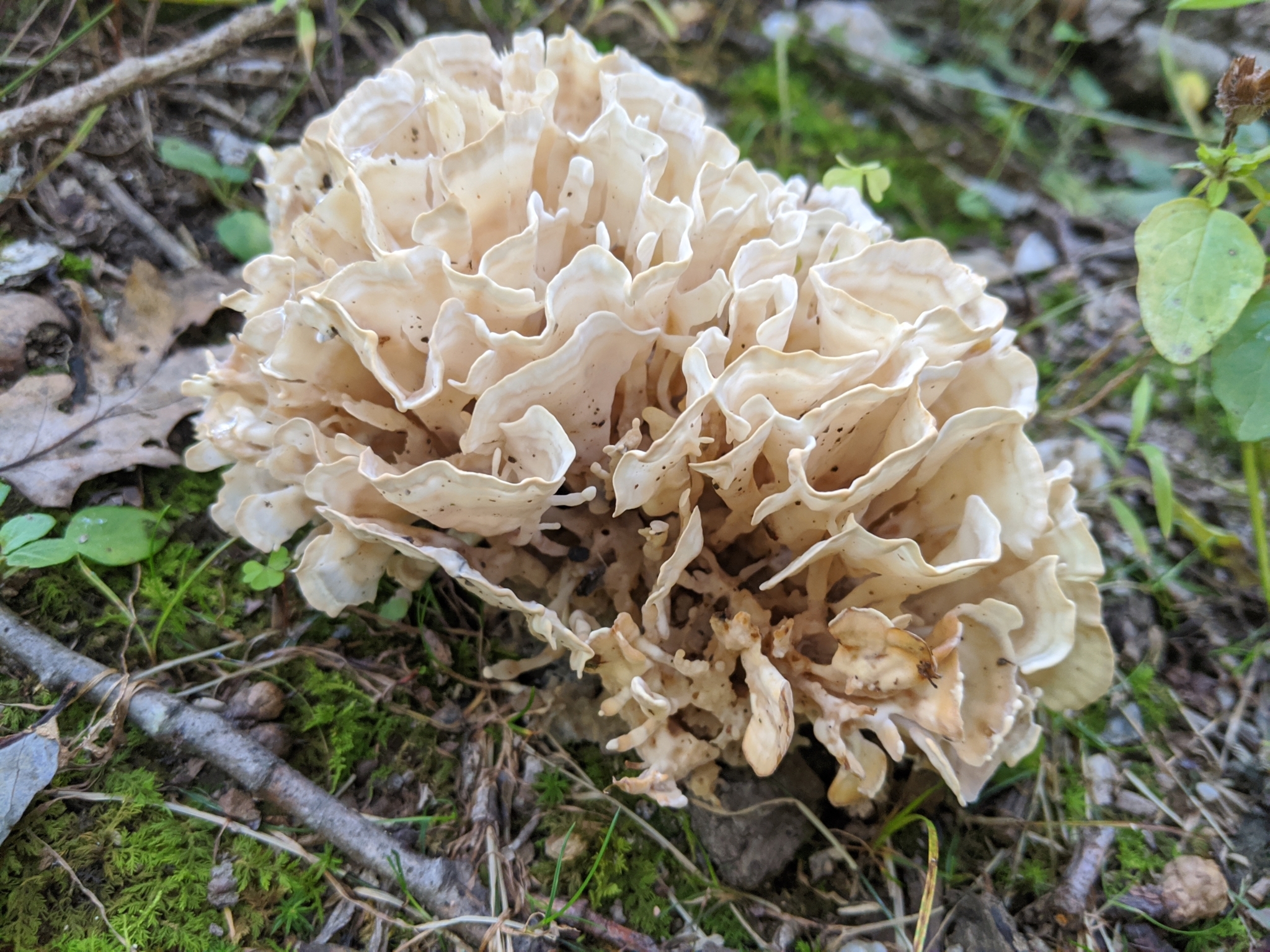
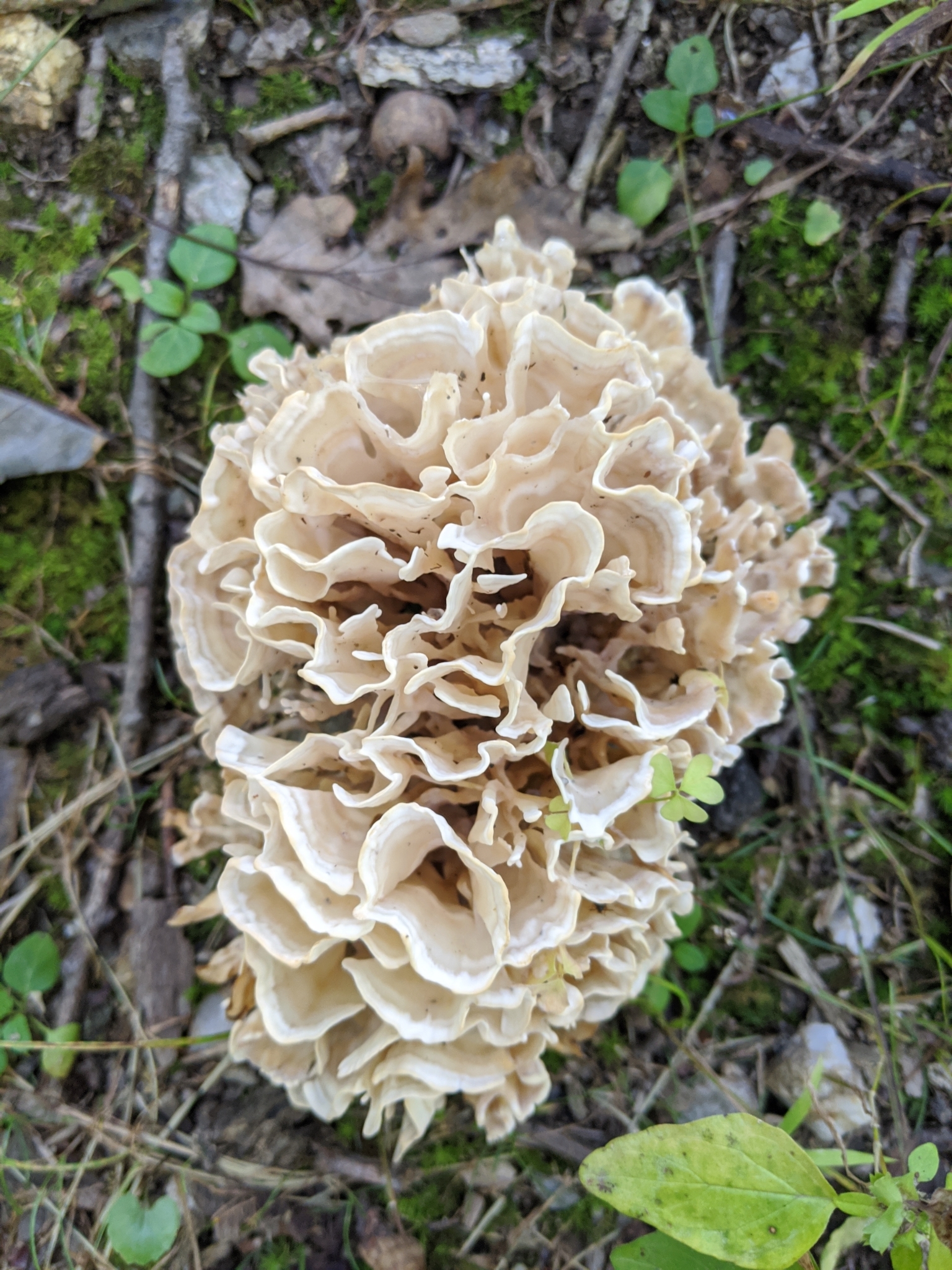
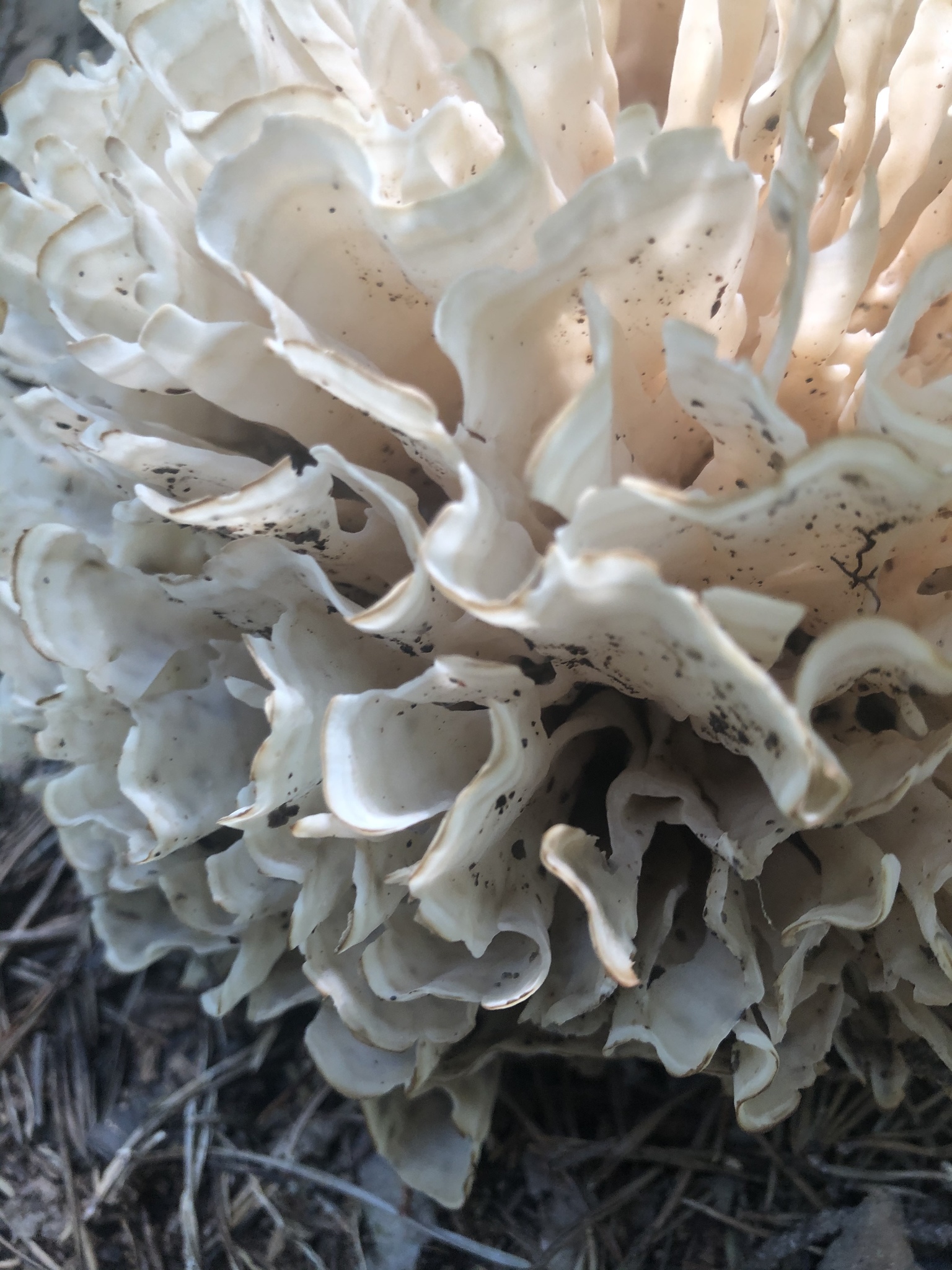
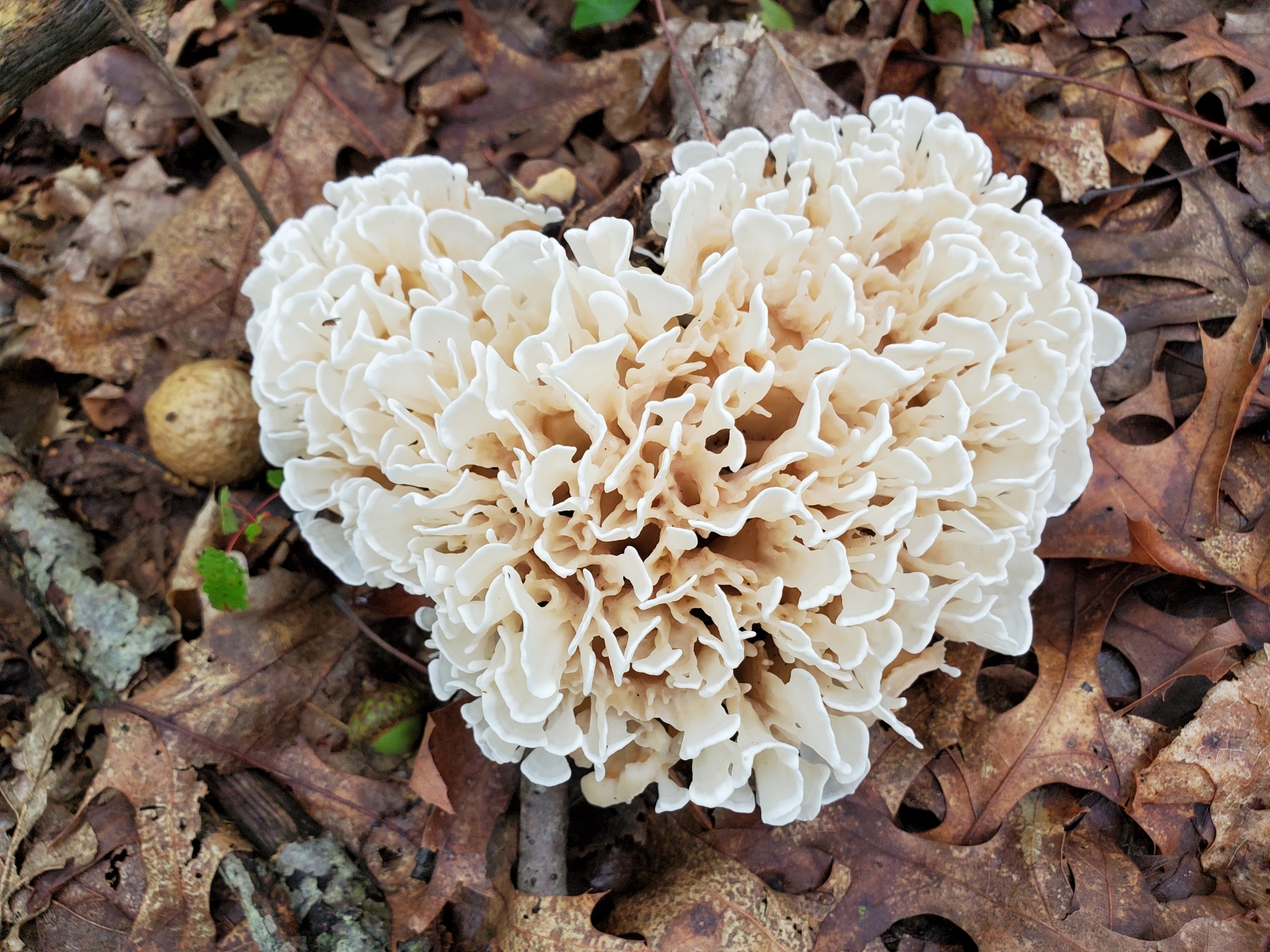
Fruiting body white to cream; lettuce-like folded, flattened, stiff lobes with light tips; lacks stalk and deep root. Lacks pores (J. Solem, pers. comm.).
Where To Find
Habitat: At or near base of decaying hardwoods (oaks) and conifers (pines).
Eating mushrooms can be dangerous. One should do so only with expert advice and great care. MBP accepts no liability for injury sustained in consuming fungi or other biodiversity.Use of media featured on Maryland
Biodiversity Project is only permitted with express permission of the
photographer.
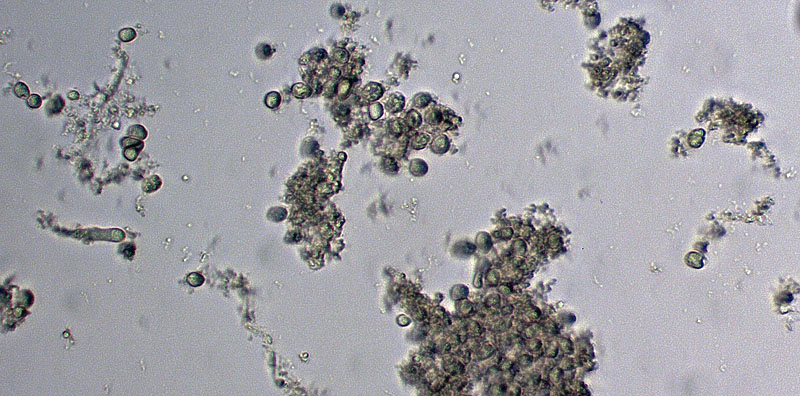
Cauliflower Mushroom spores in Howard Co., Maryland (9/14/2015). Oval, smooth; measured 4.9 – 6.0 X 4.0 – 4.8 microns.
View Record Details
Media by
Robert Solem.
Spores of Cauliflower Mushroom in Howard Co., Maryland (9/14/2015). (c) Joanne and Robert Solem, some rights reserved (CC BY-NC).
View Record Details
Media by
Joanne Solem.
Sparassis spathulata is a species of fungus in the genus Sparassis. It has the variant Sparassis spathulata f. herbstii. (previously considered S. herbstii).[2]
The fruiting body forms a dome 10–40 centimetres (4–15+1⁄2 in) wide, with many pale lobes, which are usually unruffled and can be faintly zonate. It grows from a rooted stem.[3]










_Fr_545832.jpg)


