

Map Snapshot


19 Records
Status
Citations
No citations linked for this taxon yet.
Source: Wikipedia
| Harperella | |
|---|---|

| |
Scientific classification 
| |
| Kingdom: | Plantae |
| Clade: | Tracheophytes |
| Clade: | Angiosperms |
| Clade: | Eudicots |
| Clade: | Asterids |
| Order: | Apiales |
| Family: | Apiaceae |
| Subfamily: | Apioideae |
| Tribe: | Oenantheae |
| Genus: | Harperella Rose[5] |
| Species: | H. nodosa
|
| Binomial name | |
| Harperella nodosa Rose (Rose)[4]
| |
| Synonyms | |
|
Genus:[6]
Species:[7]
| |


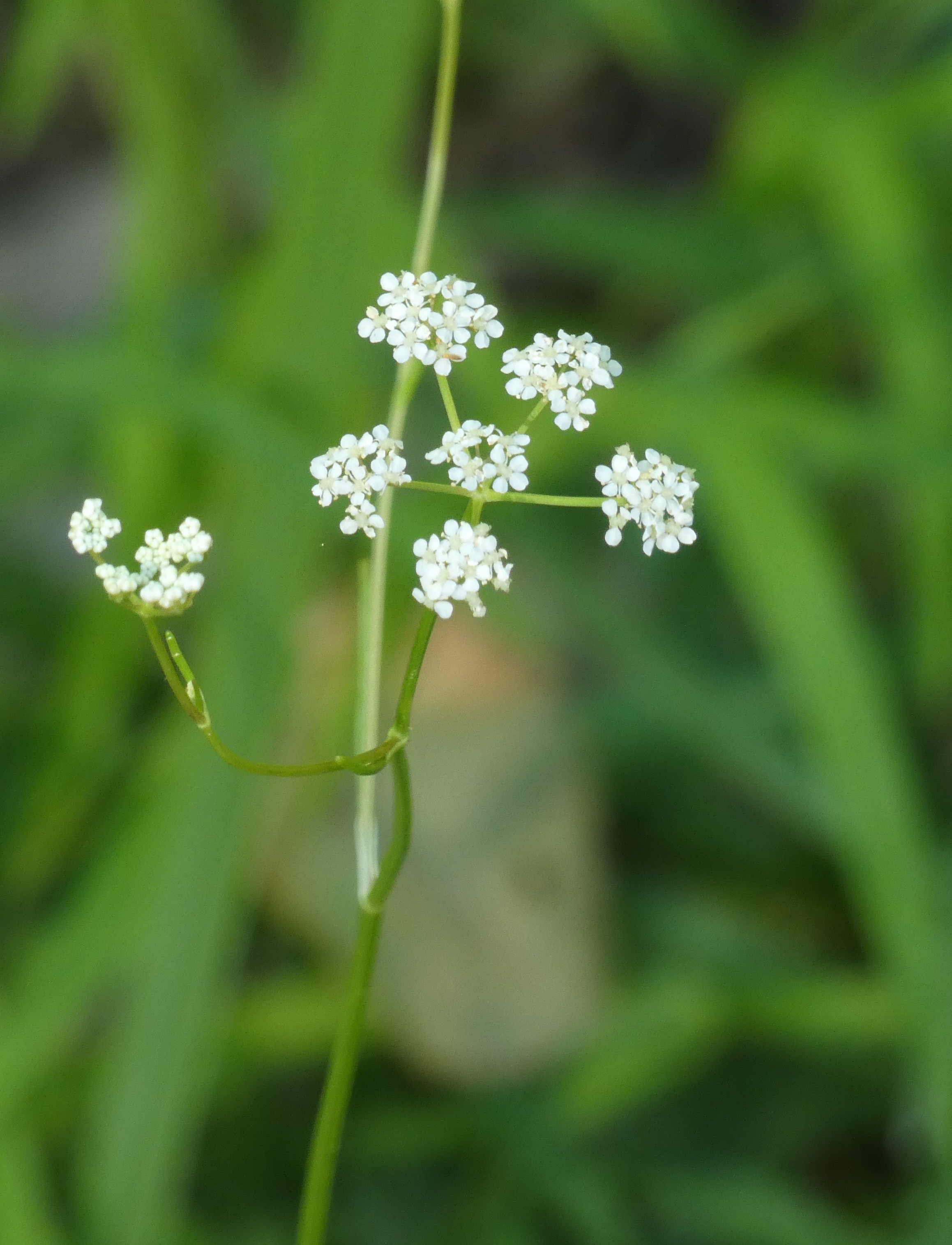
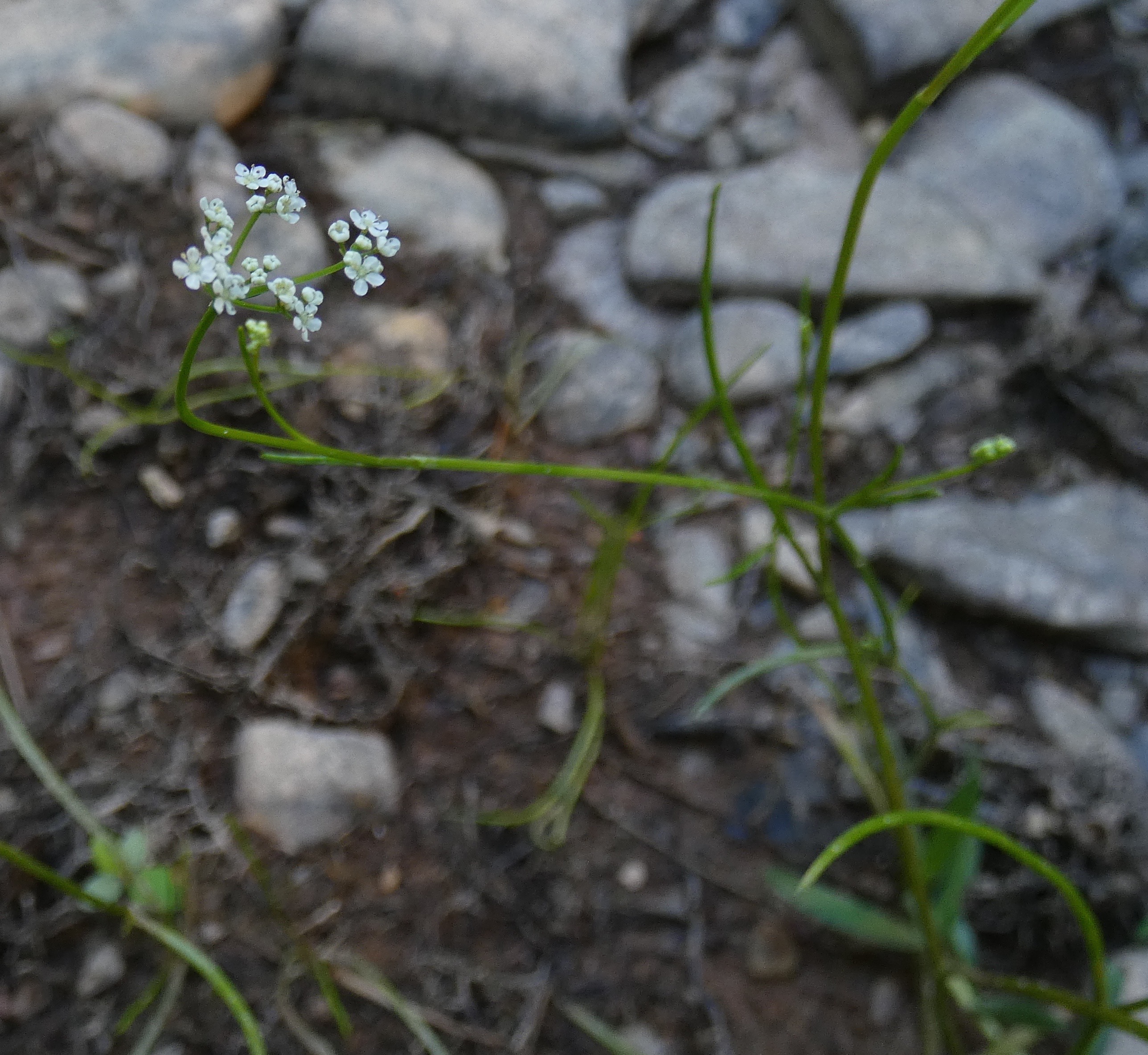
Harperella is a monotypic genus of flowering plants in the family Apiaceae. Its only species is Harperella nodosa (synonym Ptilimnium nodosum),[6] known as piedmont mock bishopweed[8] and harperella. It is native to riparian environments in the Southeastern United States, found at sites in West Virginia, Maryland, several Southeastern states such as Alabama and North Carolina, and the Ouachita National Forest in Arkansas and Oklahoma.[9][10][11][12][13] As Ptilimnium nodosum, it was placed on the United States' Endangered Species List in 1988.[14]
Taxonomy
[edit]The genus was first described by Joseph Nelson Rose in 1905 under the name Harperia. However, this was a later homonym of a genus in the family Restionaceae, and so illegitimate. In 1906, Rose published the replacement name Harperella.[5]
References
[edit]- ^ NatureServe (4 August 2023). "Ptilimnium nodosum". NatureServe Network Biodiversity Location Data accessed through NatureServe Explorer. Arlington, Virginia: NatureServe. Retrieved 19 August 2023.
- ^ "Harperella (Ptilimnium nodosum)". Environmental Conservation Online System. U.S. Fish & Wildlife Service. Retrieved 19 August 2023.
- ^ 53 FR 37978
- ^ "Harperella nodosa (Rose) Rose". The International Plant Names Index. Retrieved 2022-12-17.
- ^ a b "Harperella Rose". The International Plant Names Index. Retrieved 2022-12-17.
- ^ a b "Harperella Rose". Plants of the World Online. Royal Botanic Gardens, Kew. Retrieved 2022-12-17.
- ^ "Harperella nodosa (Rose) Rose". Plants of the World Online. Royal Botanic Gardens, Kew. Retrieved 2022-12-17.
- ^ NRCS. "Ptilimnium nodosum". PLANTS Database. United States Department of Agriculture (USDA). Retrieved 15 October 2015.
- ^ Godfrey, R. K. & J. W. Wooten. 1981. Aquatic and Wetland Plants of Southeastern United States Dicotyledons 1–944. Univ. Georgia Press, Athens
- ^ Mathias, M. E. 1936. Studies in the Umbelliferae. V. Brittonia 2(3): 239–245
- ^ Radford, A. E., H. E. Ahles & C. R. Bell. 1968. Manual of the Vascular Flora of the Carolinas i–lxi, 1–1183. University of North Carolina Press, Chapel Hill.
- ^ Feist, M.A.E., S.R. Downie, A.R. Magee & M. Liu. 2012. Revised generic delimitations for Oxypolis and Ptilimnium (Apiaceae) based on leaf morphology, comparative fruit anatomy, and phylogenetic analysis of nuclear rDNA Its and cpDNA "trnQ-trnK" intergenic spacer sequence data. Taxon 61(2): 402-418.
- ^ Buthod, A.K. and B.W. Hoagland. 2013. Noteworthy Collections: Oklahoma. Castanea 78(3): 213-215.
- ^ Center for Plant Conservation Archived 2015-09-07 at the Wayback Machine
External links
[edit]- U.S. Fish & Wildlife Service: Ptilimnium nodosum (Harperella) in North Carolina Archived 2005-12-14 at the Wayback Machine
 | This Apiaceae article is a stub. You can help Wikipedia by adding missing information. |