

Map Snapshot


52 Records
Citations
No citations linked for this taxon yet.
Source: Wikipedia
| Tephrosia spicata | |
|---|---|

| |
| Tephrosia spicata at the United States Botanic Garden, Washington D.C. | |
Scientific classification 
| |
| Kingdom: | Plantae |
| Clade: | Tracheophytes |
| Clade: | Angiosperms |
| Clade: | Eudicots |
| Clade: | Rosids |
| Order: | Fabales |
| Family: | Fabaceae |
| Subfamily: | Faboideae |
| Genus: | Tephrosia |
| Species: | T. spicata
|
| Binomial name | |
| Tephrosia spicata (Walter) Torr. & A. Gray
| |
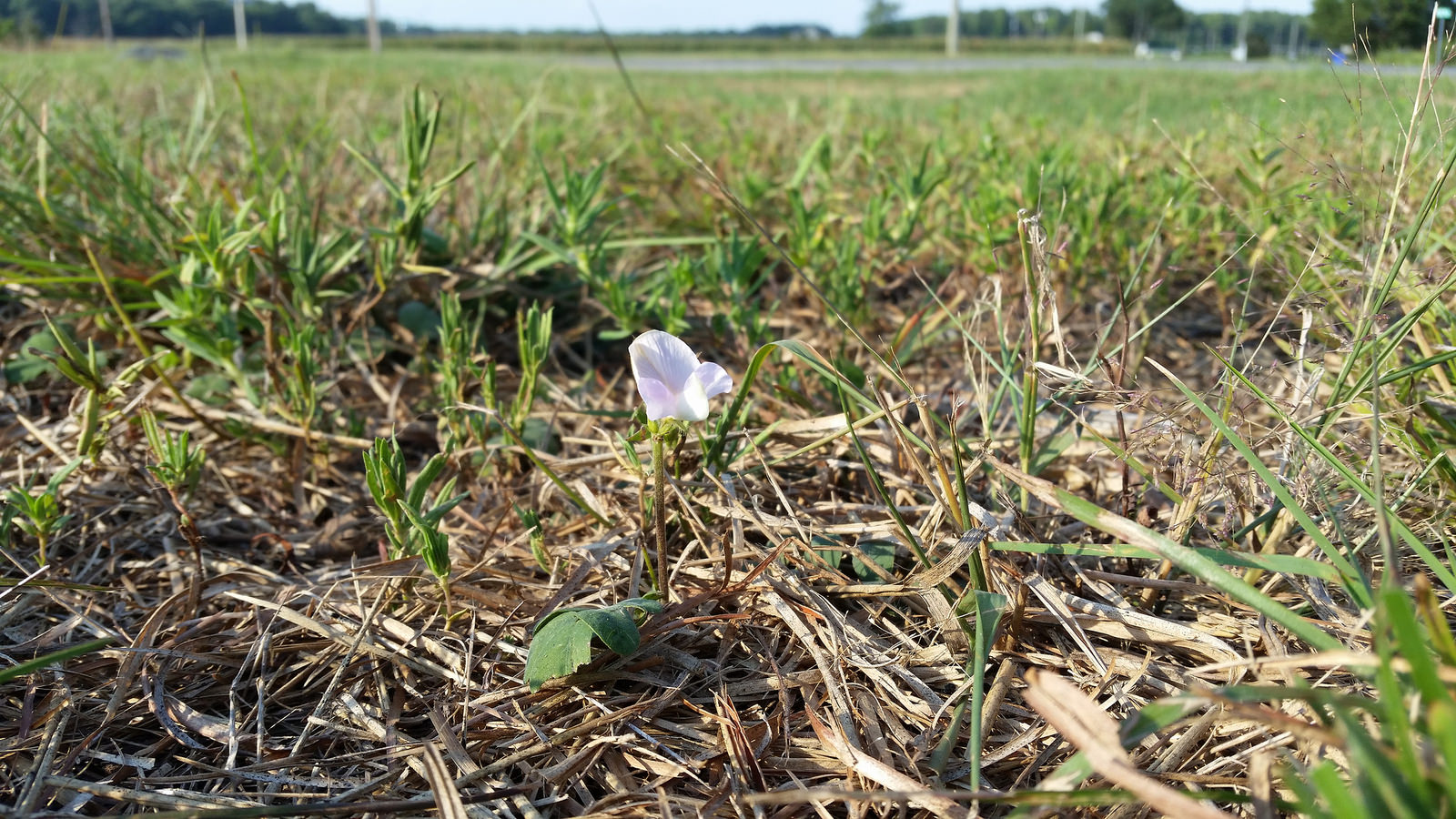
Tephrosia spicata, known commonly as spiked hoarypea, is a plant that grows in North America.[1]
Description
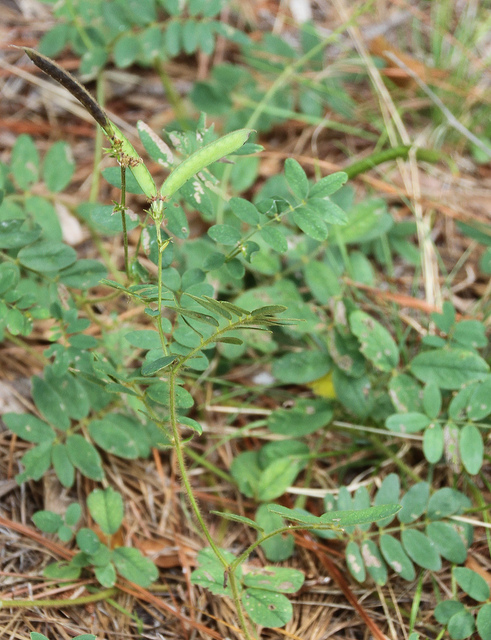
[edit]Tephrosia spicata is an herbaceous perennial that grows from a cylindric taproot. It has odd-pinnate leaves with 7 to 29 leaflets (or rarely 1 to 41). Leaves are 4 to 12 cm (1.6 to 4.7 in) long with oblong-obovate to obovate or elliptic leaflets. Leaflets are entire, glabrous or pubescent above and always pubescent beneath, often with prominent secondary veins parallel to each other.[2][3]
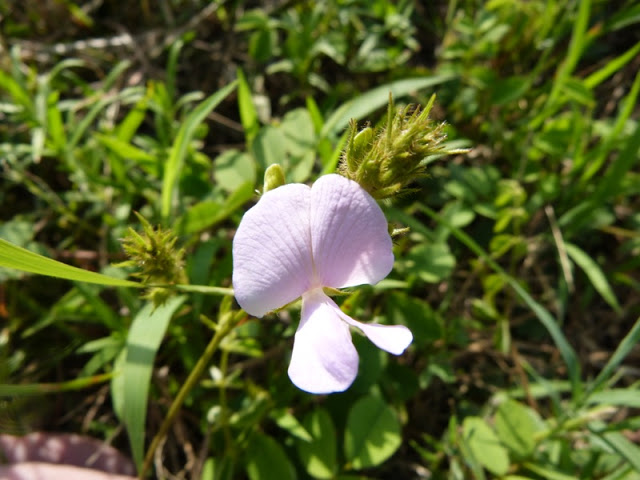
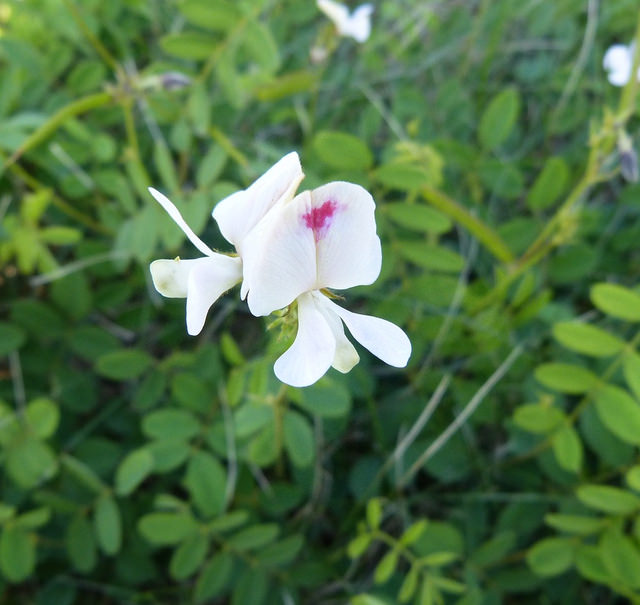
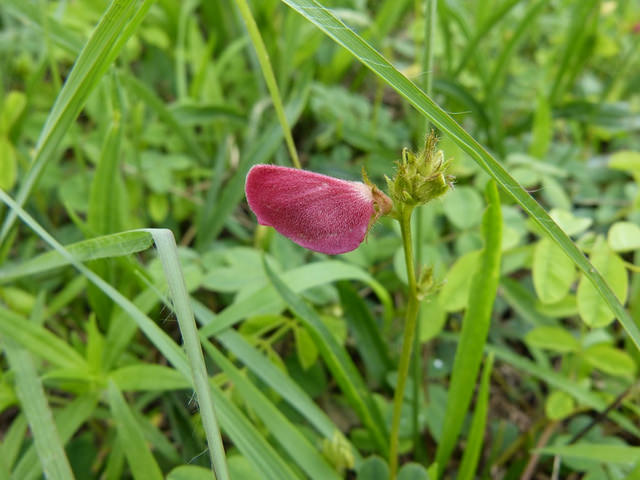
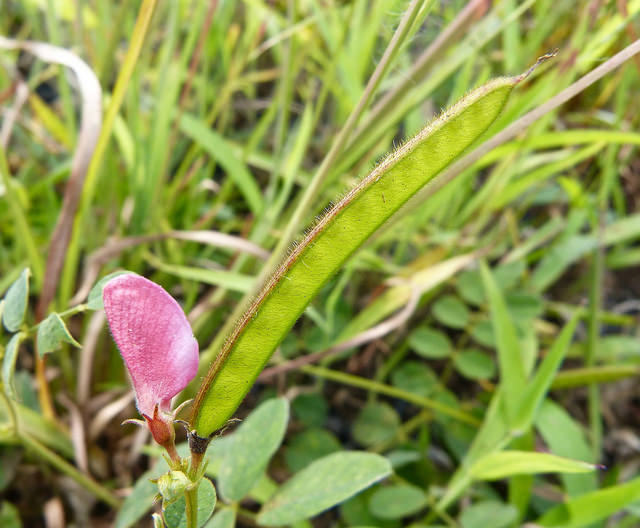
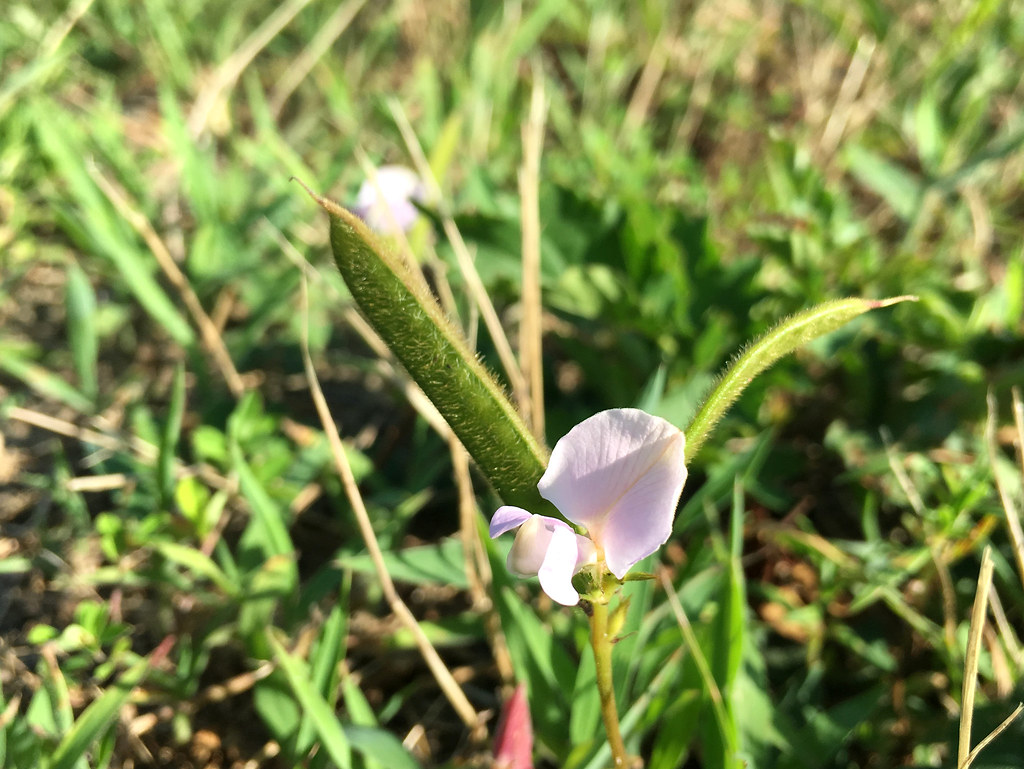
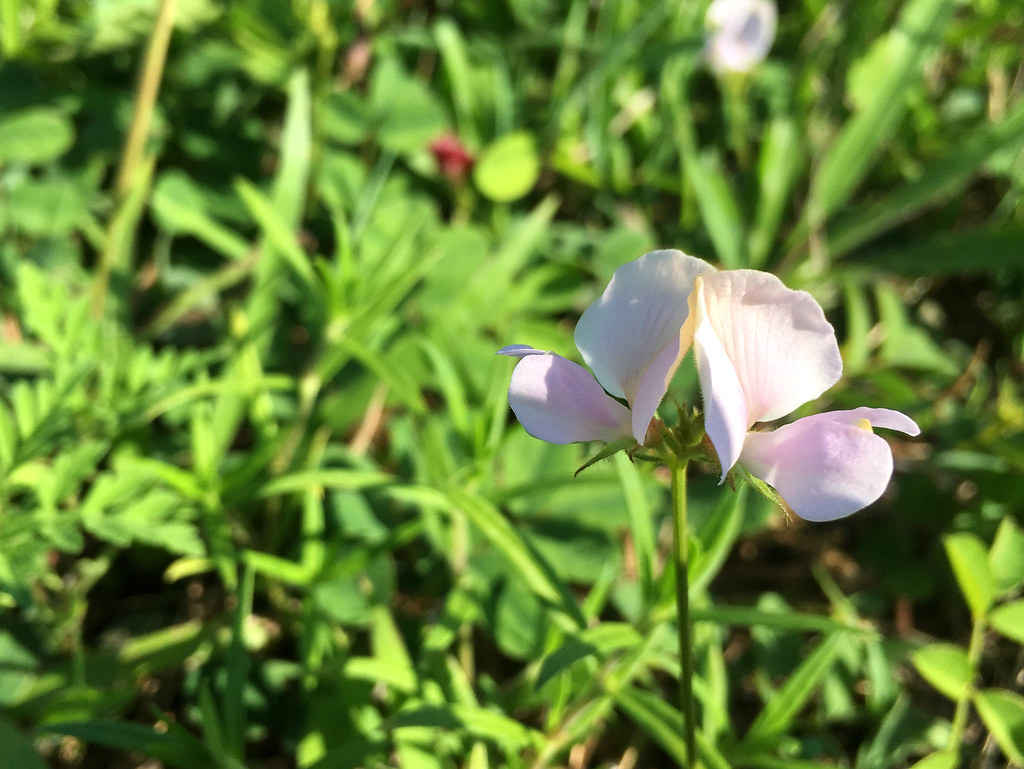
Inflorescences present opposite leaves or terminally,[2] blooming May through August.[4] They are generally 4 to 60 cm (1.6 to 23.6 in) long,[2] curling upward, beginning yellowish white and developing into a pinkish red.[4] Legumes grow 3 to 5 cm (1.2 to 2.0 in) long and 4 to 6 mm (0.16 to 0.24 in) broad with sparse to moderate pubescence and trichomes greater than 0.6 mm (0.024 in) long.[2] T. spicata can be differentiated from T. hispidula by its greater number of flowers and more conspicuous gray hairs.[5]
Distribution and habitat
[edit]Tephrosia spicata is native to the southeastern and mid-Atlantic United States, from southern Delaware to Florida and west to Louisiana and Kentucky.[5] It grows in habitats with dry soils, commonly pine/scrub oak sandhills,[6] longleaf pine sandhills, and other dry oak or mixed hardwood communities.[5]
It decreased in occurrence after agriculture-related soil disturbance in southwest Georgia.[7] However, it increased in frequency and biomass in response to soil disturbance by clearcutting and chopping in north Florida flatwoods forests.[8]
Tephrosia spicata is an indicator species for the Upper Florida Panhandle Savannas community type as described in Carr et al. (2010).[9] It has been known to persist through repeated annual burns.[10]
References
[edit]- ^ "USDA Plants Database". plants.usda.gov. Retrieved 2025-10-30.
- ^ a b c d Radford, Albert E. (December 21, 1968). Manual of the Vascular Flora of the Carolinas. University of North Carolina Press. ISBN 978-0807810873.
- ^ "Tephrosia spicata - FNA". floranorthamerica.org. Retrieved 2025-10-30.
- ^ a b "Lady Bird Johnson Wildflower Center - The University of Texas at Austin". www.wildflower.org. Retrieved 2025-10-30.
- ^ a b c "Tephrosia spicata (Spiked Hoarypea) - FSUS". fsus.ncbg.unc.edu. Retrieved 2025-10-30.
- ^ "Vascular Plants of North Carolina". auth1.dpr.ncparks.gov. Retrieved 2025-10-30.
- ^ Kirkman, L. K.; Coffey, K. L.; Mitchell, R. J.; Moser, E. B. (2004). "Ground cover recovery patterns and life-history traits: implications for restoration obstacles and opportunities in a species-rich savanna". Journal of Ecology. 92 (3): 409–421. Bibcode:2004JEcol..92..409K. doi:10.1111/j.0022-0477.2004.00883.x. ISSN 1365-2745.
- ^ Moore, William H.; Swindel, Benee F.; Terry, W. Stephen (March 1962). "Vegetative Response to Clearcutting and Chopping in a North Florida Flatwoods Forest". Journal of Range Management. 35 (2): 214–218. doi:10.2307/3898394. JSTOR 3898394.
- ^ Carr, Susan C.; Robertson, Kevin M.; Peet, Robert K. (June 2010). "A Vegetation Classification of Fire-Dependent Pinelands of Florida". Castanea. 75 (2): 153–189. doi:10.2179/09-016.1. ISSN 0008-7475.
- ^ Glitzenstein, Jeff S.; Streng, Donna R.; Masters, Ronald E.; Robertson, Kevin M.; Hermann, Sharon M. (2012-01-15). "Fire-frequency effects on vegetation in north Florida pinelands: Another look at the long-term Stoddard Fire Research Plots at Tall Timbers Research Station". Forest Ecology and Management. 264: 197–209. Bibcode:2012ForEM.264..197G. doi:10.1016/j.foreco.2011.10.014. ISSN 0378-1127.