





Map Snapshot


299 Records
Status
Description
Where To Find
Citations
No citations linked for this taxon yet.
Source: Wikipedia
 | This article includes a list of general references, but it lacks sufficient corresponding inline citations. (April 2026) |
| Hop Trefoil | |
|---|---|

| |
Scientific classification 
| |
| Kingdom: | Plantae |
| Clade: | Tracheophytes |
| Clade: | Angiosperms |
| Clade: | Eudicots |
| Clade: | Rosids |
| Order: | Fabales |
| Family: | Fabaceae |
| Subfamily: | Faboideae |
| Genus: | Trifolium |
| Species: | T. campestre
|
| Binomial name | |
| Trifolium campestre | |
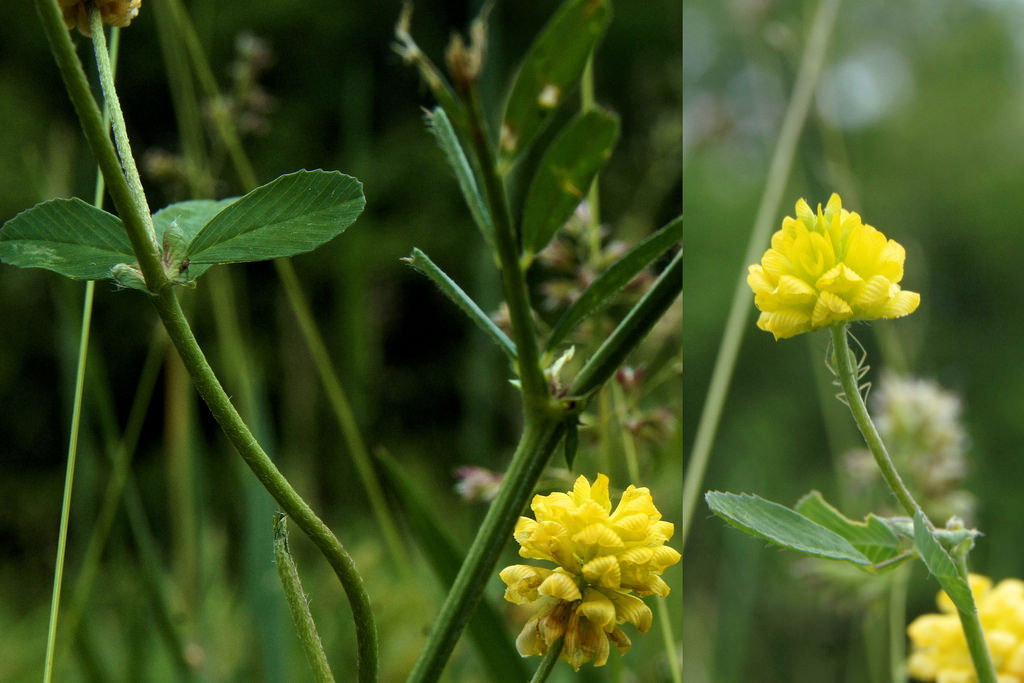
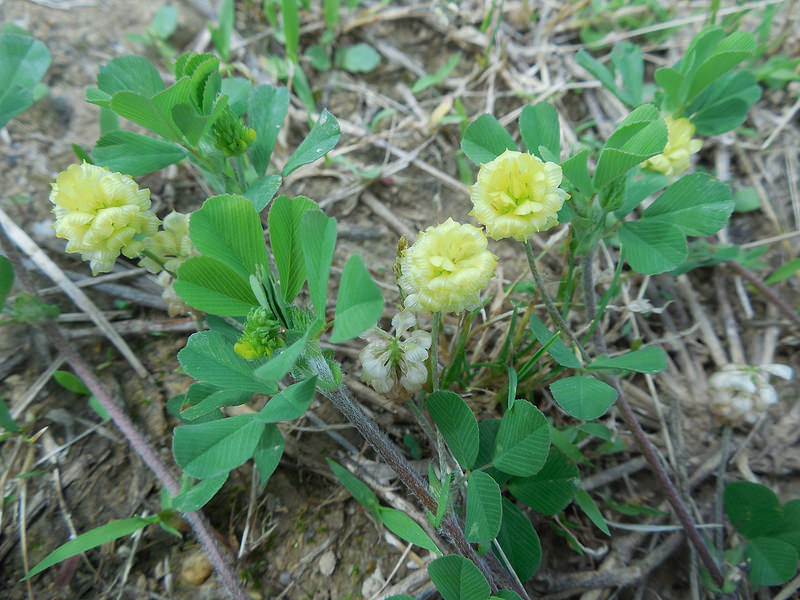
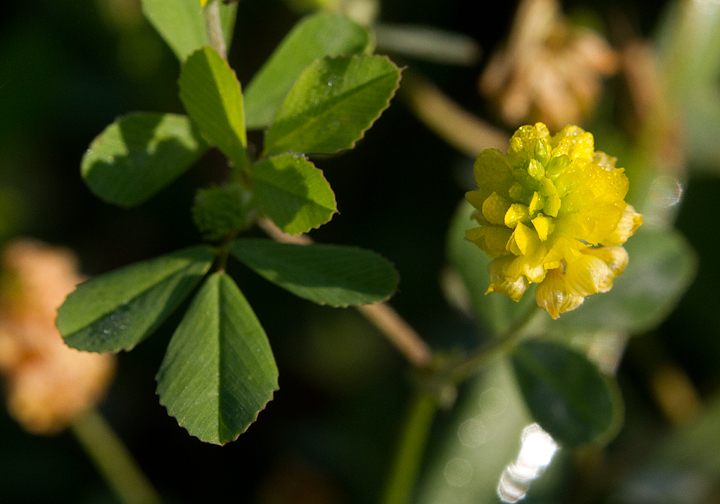
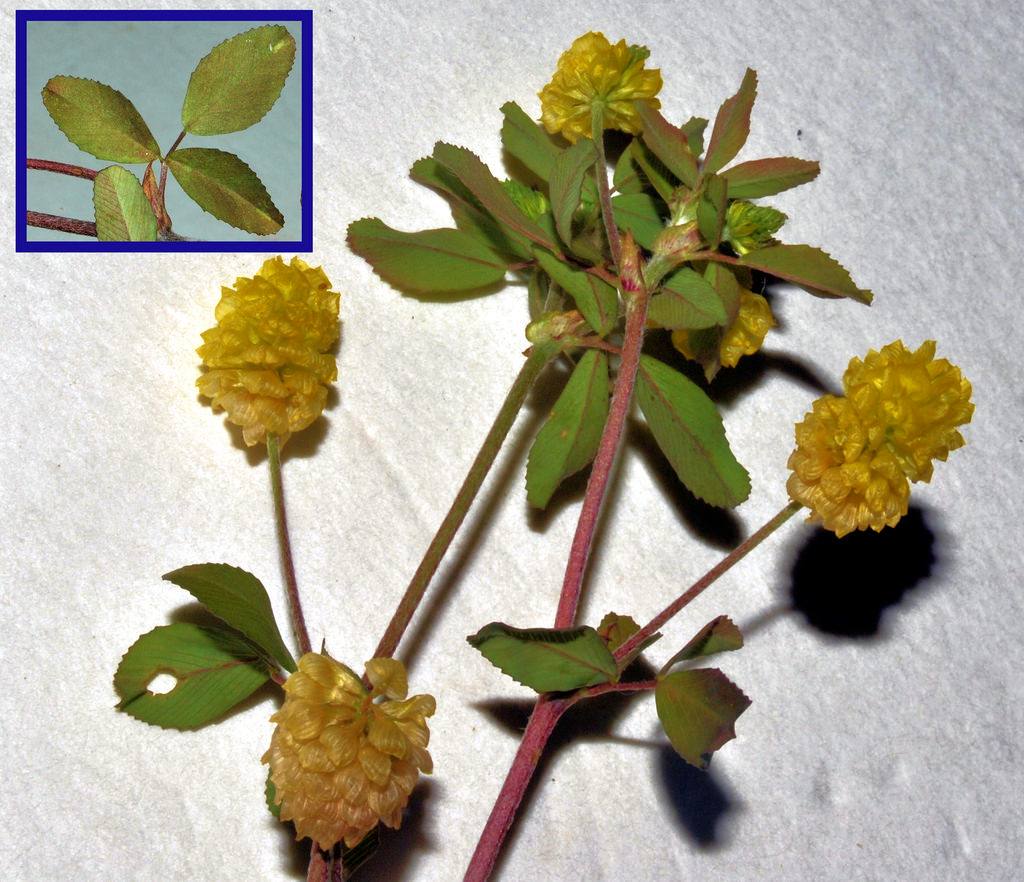
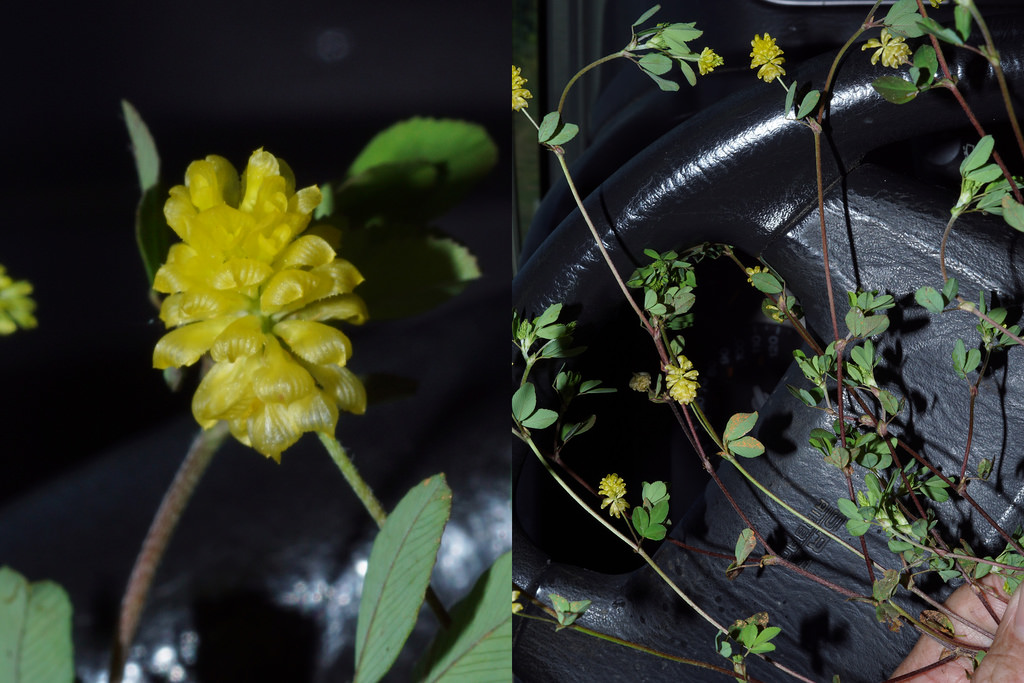
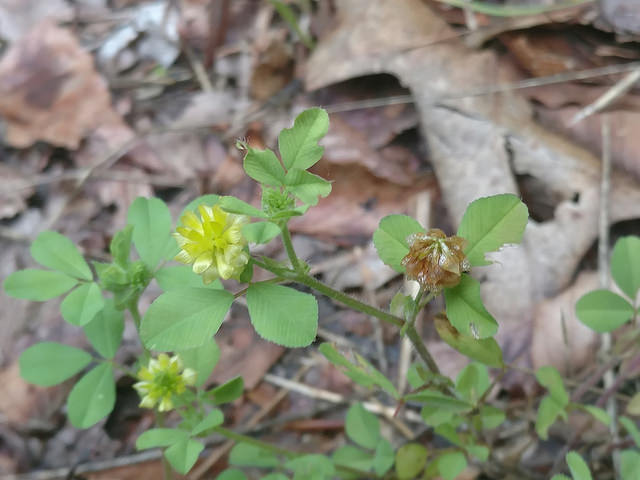
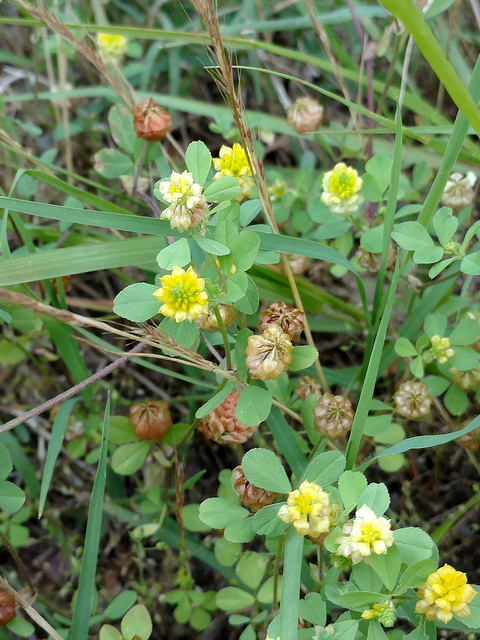
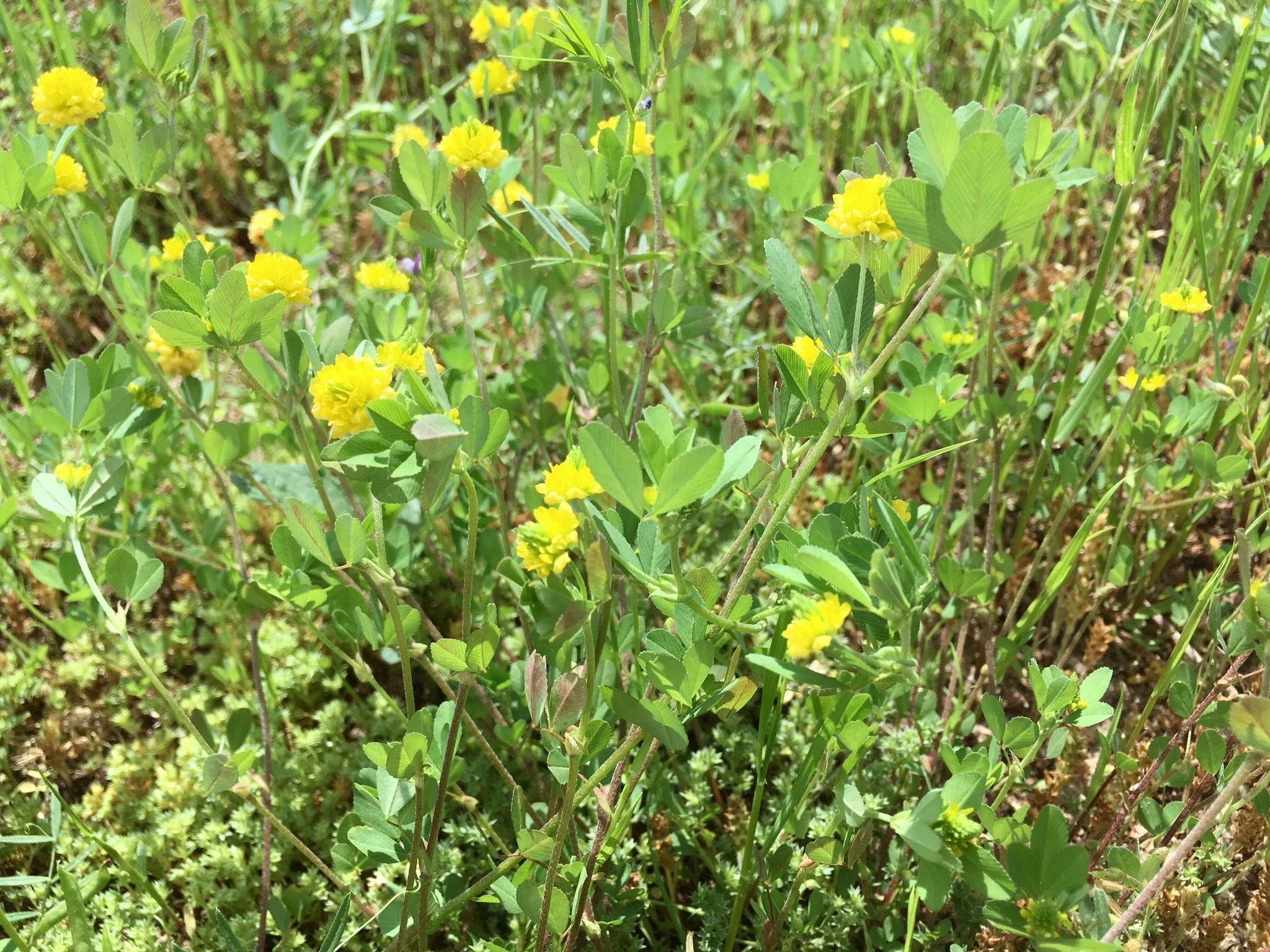
Trifolium campestre, commonly known as hop trefoil,[1] field clover[2] and low hop clover, is a species of flowering plant native to Europe and western Asia.
Description
[edit]
It is a herbaceous annual plant, growing to 10–30 centimetres (4–12 in) tall. The leaves are alternate and trifoliate, with three oblong or elliptical leaflets 4–10 millimetres (1⁄4–1⁄2 in) long.
The distinctive yellow flowerheads that superficially resemble hop flowers. Each flowerhead is a cylindrical or spherical collection of 20–40 individual flowers. The flowers become brown upon aging and drying, enclosing the fruit, a one-seeded pod.
Similar plants
[edit]The species may be confused with others that have three leaflets and small yellow flowers, such as T. aureum (large hop trefoil), T. dubium (lesser hop trefoil), Medicago lupulina (black medick), and Oxalis stricta (yellow woodsorrel).
Etymology
[edit]The species name campestre means "of the fields".
Distribution and habitat
[edit]
It is native to Europe and western Asia, growing in dry, sandy grassland habitats, fields, woodland margins, roadsides, wastelands and cultivated land.[citation needed]
It has become naturalised in North America, particularly in the west and south of the continent.
Uses
[edit]Hop trefoil is an important clover in agriculture because its foliage is good for feeding livestock and replenishing soil. It is not generally planted, but is considered a valuable herb when found growing in a pasture.[citation needed]
References
[edit]- ^ BSBI List 2007 (xls). Botanical Society of Britain and Ireland. Archived from the original (xls) on 2015-06-26. Retrieved 2014-10-17.
- ^ NRCS. "Trifolium campestre". PLANTS Database. United States Department of Agriculture (USDA). Retrieved 15 December 2015.
Further reading
[edit]- Ajilvsgi, Geyata. (2003). Wildflowers of Texas. Shearer Publishing, Fredericksburg, Texas. ISBN 0-940672-73-1.
External links
[edit] Media related to Trifolium campestre at Wikimedia Commons
- Washington Burke Museum
- Jepson Manual Treatment
- Illinois Wildflowers
- Discover Life: Trifolium campestre
- Purdue New Crops: Hop clovers

 | This Trifolieae-related article is a stub. You can help Wikipedia by adding missing information. |