
Map Snapshot


48 Records
Citations
No citations linked for this taxon yet.
Source: Wikipedia
| Cladonia macilenta | |
|---|---|
.jpg)
| |
Scientific classification 
| |
| Kingdom: | Fungi |
| Division: | Ascomycota |
| Class: | Lecanoromycetes |
| Order: | Lecanorales |
| Family: | Cladoniaceae |
| Genus: | Cladonia |
| Species: | C. macilenta
|
| Binomial name | |
| Cladonia macilenta Hoffm. (1796)
| |
| Synonyms | |
| |

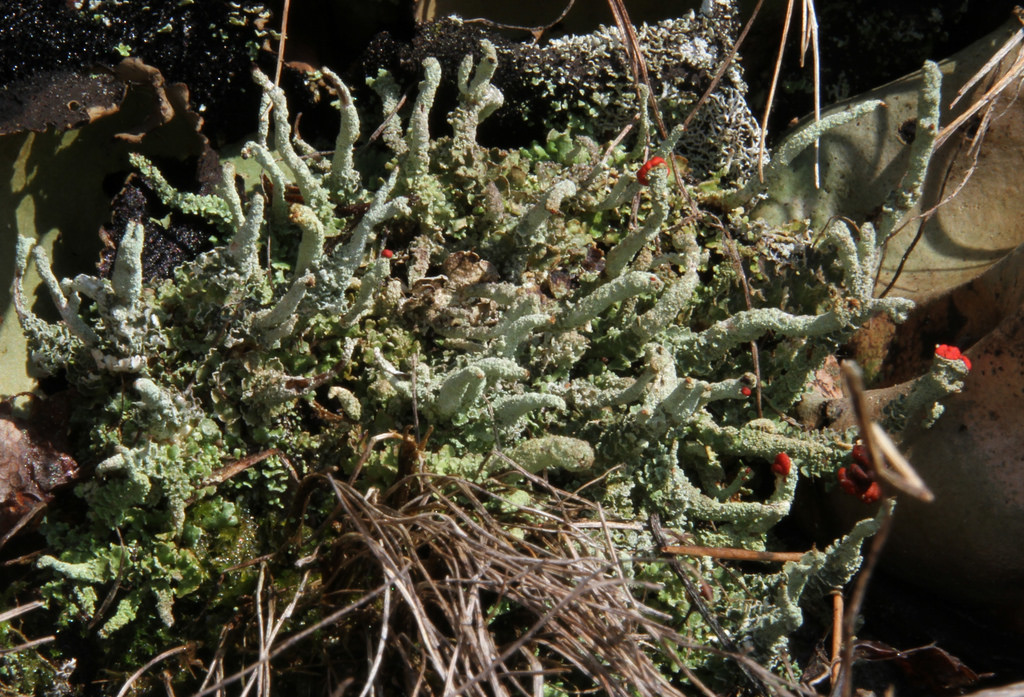
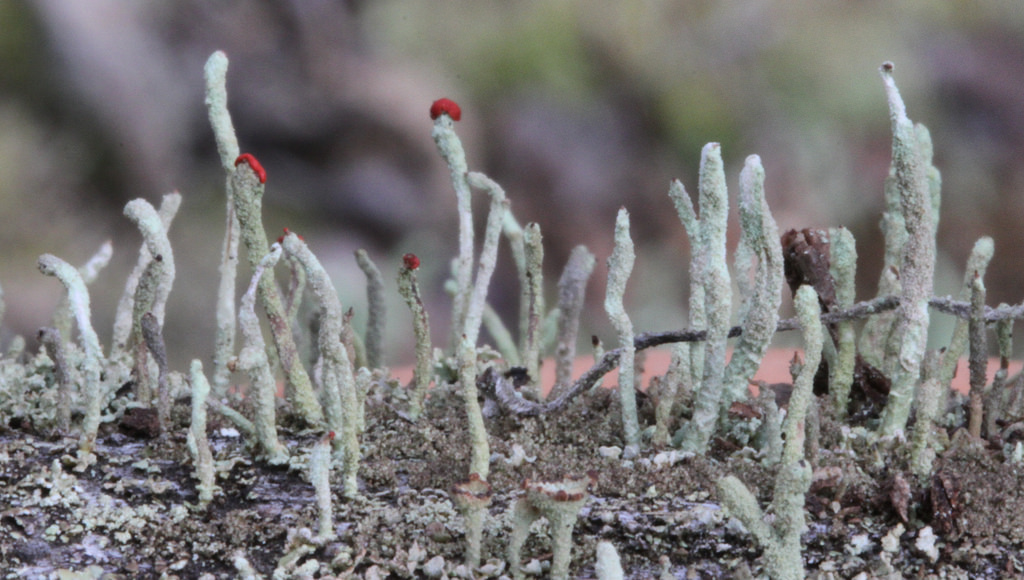
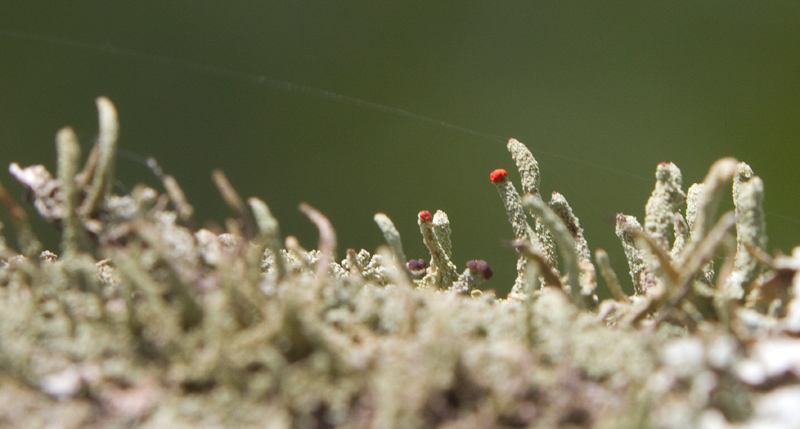
Cladonia macilenta or the lipstick cup lichen[2] is a species of cup lichen in the family Cladoniaceae.[3]
The species is red listed in Iceland as an endangered species (EN).[4] While it is found in various regions of the UK, it is considered potentially threatened in parts of the lowlands due to habitat loss.[5]
Verrucaster lichenicola, described by Friedrich Tobler in 1913,[6] was proposed to be a fungus with waxy pycnidia and hyaline conidia lacking septa. It was, however, a little-known taxon, as the type specimen was lost and not collected again. The rediscovery of the type material more than a century later revealed that what Tobler thought to be a lichenicolous fungus was instead pycnidia of Cladonia macilenta, and thus the two taxa are placed in synonymy.[7]
Description
[edit]Cladonia macilenta is small- to medium-sized amongst other Cladonia species and lacks cups even at maturity.[5] It is often mistaken for Cladonia polydactyla,[5] because some morphs of that species can lack cups, particularly when pollution-stressed, shaded, or juvenile. But C. macilenta can be differentiated by coloration (C. macilenta is typically white or grey, while C. polydactyla is typically blue-grey) or by the reproductive structures (soredia) which are granular in C. polydactyla and more mealy (farinose) in C. macilenta.[5]
Habitat and distribution
[edit]Typically, Cladonia macilenta is found in open or well-lit wooded areas and heathlands growing on strongly acidic wood and soil.[5] In Nepal, the lichen has been reported from 1,500 to 3,800 m elevation in a compilation of published records.[8]
References
[edit]- ^ NatureServe. "Cladonia macilenta". NatureServe Explorer. Arlington, Virginia. Retrieved 23 August 2025.
- ^ "Standardized Common Names for Wild Species in Canada". National General Status Working Group. 2020.
- ^ "Cladonia macilenta Hoffm". Catalogue of Life. Species 2000: Leiden, the Netherlands. Retrieved 14 April 2021.
- ^ Náttúrufræðistofnun Íslands [Icelandic Institute of Natural History] (1996). Válisti 1: Plöntur. (in Icelandic) Reykjavík: Náttúrufræðistofnun Íslands.
- ^ a b c d e "Cladonia macilenta | The British Lichen Society". britishlichensociety.org.uk.
- ^ Tobler, F. (1913). "Verrucaster lichenicola nov. gen., nov. spec". Abhandlungen des Naturwissenschaftlichen Vereins zu Bremen. 21 (2): 383–384.
- ^ Diederich, Paul; Schultz, Matthias (2021). "The identity of Verrucaster lichenicola Tobler". Herzogia. 34 (1): 203–207. doi:10.13158/heia.34.1.2021.203.
- ^ Baniya, Chitra Bahadur; Solhøy, Torstein; Gauslaa, Yngvar; Palmer, Michael W. (2010). "The elevation gradient of lichen species richness in Nepal". The Lichenologist. 42 (1): 83–96. doi:10.1017/S0024282909008627.
.jpg) | This Lecanorales-related article is a stub. You can help Wikipedia by adding missing information. |