
Map Snapshot


14 Records
Description
Where To Find
Citations
No citations linked for this taxon yet.
Source: Wikipedia
| Hohenbuehelia petaloides | |
|---|---|
.jpg)
| |
Scientific classification 
| |
| Kingdom: | Fungi |
| Division: | Basidiomycota |
| Class: | Agaricomycetes |
| Order: | Agaricales |
| Family: | Pleurotaceae |
| Genus: | Hohenbuehelia |
| Species: | H. petaloides
|
| Binomial name | |
| Hohenbuehelia petaloides | |
| Synonyms[1] | |
|
Agaricus petaloides Bull. | |
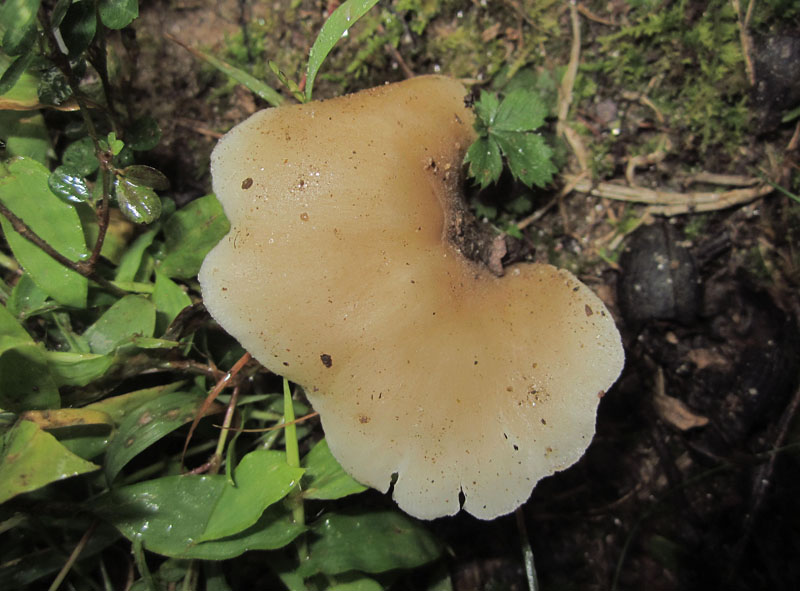
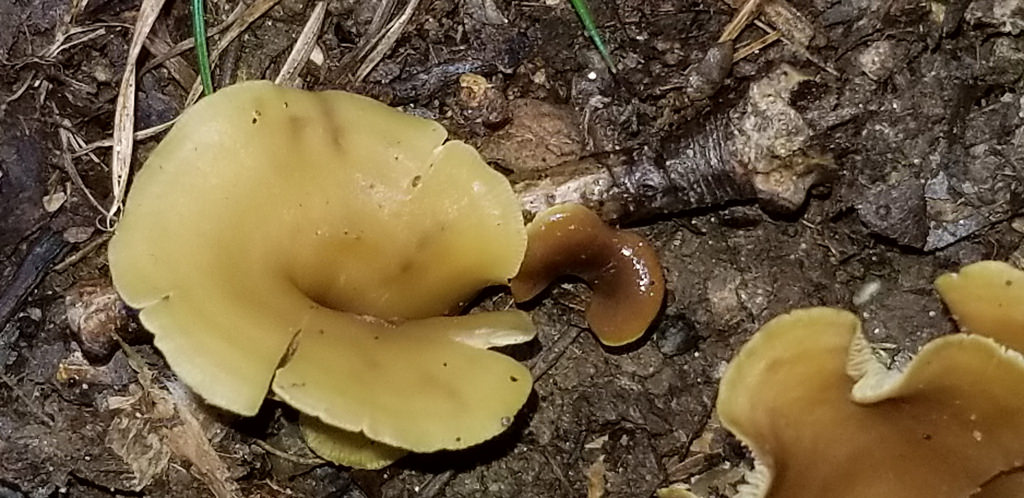
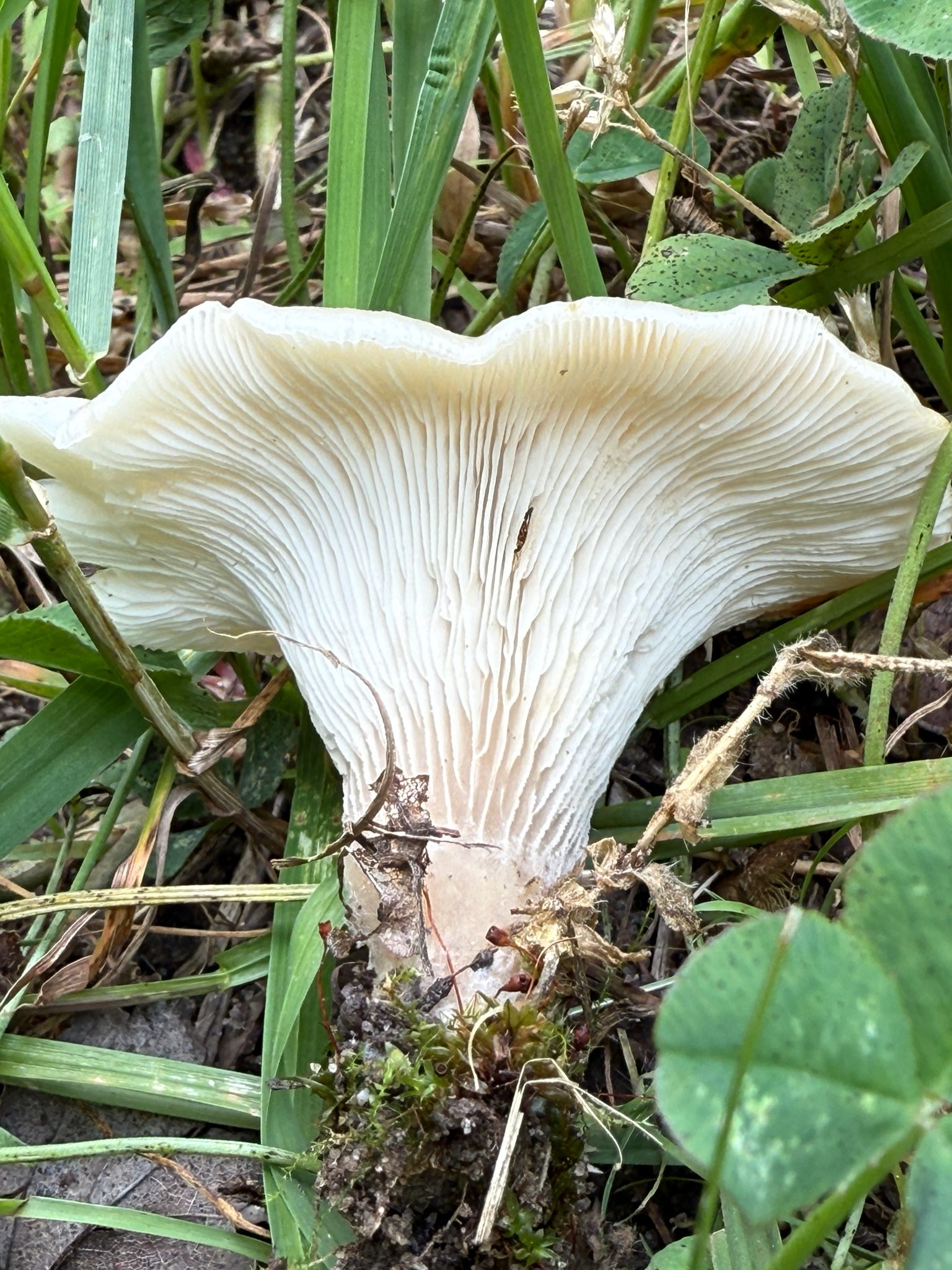
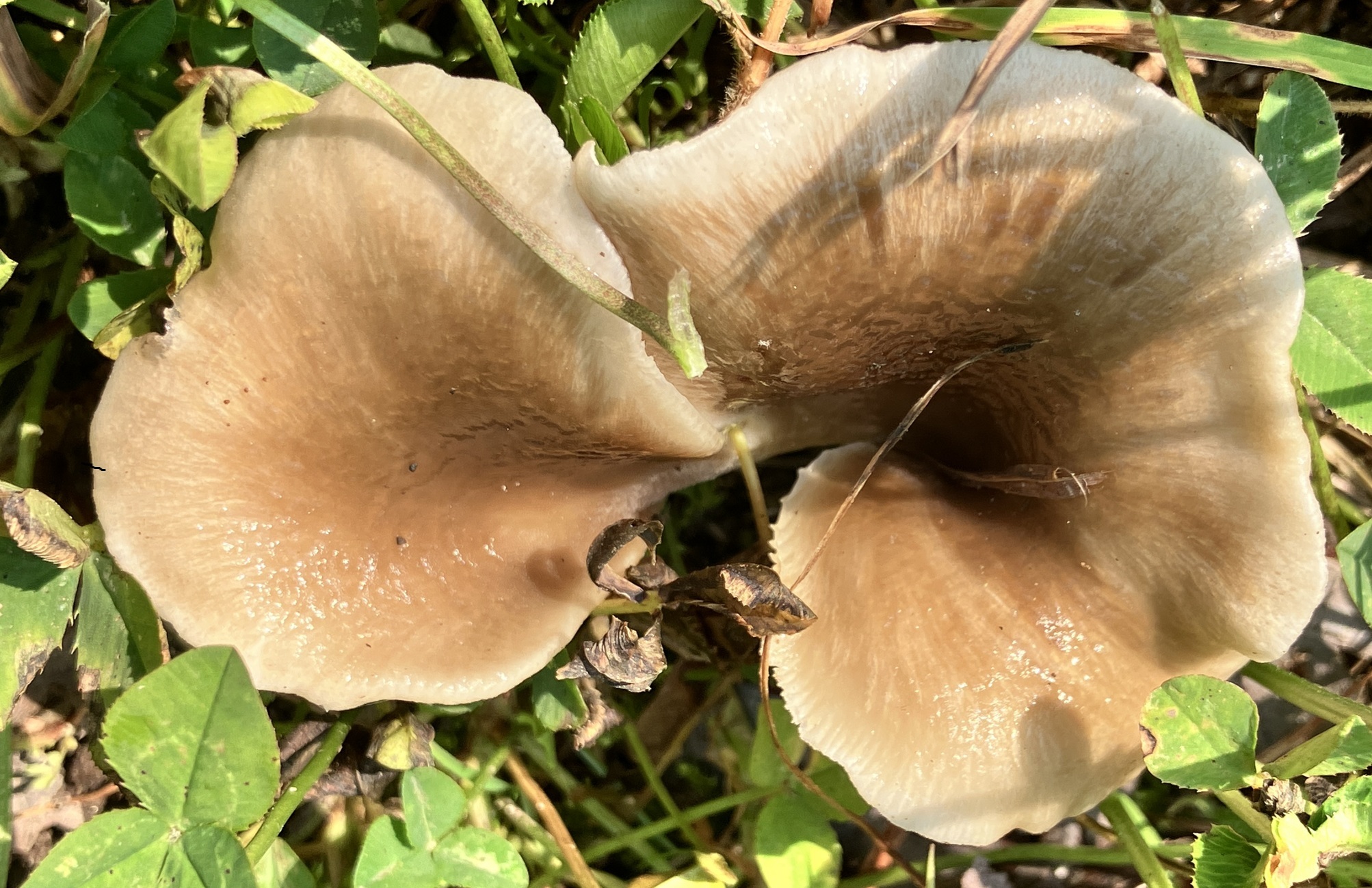
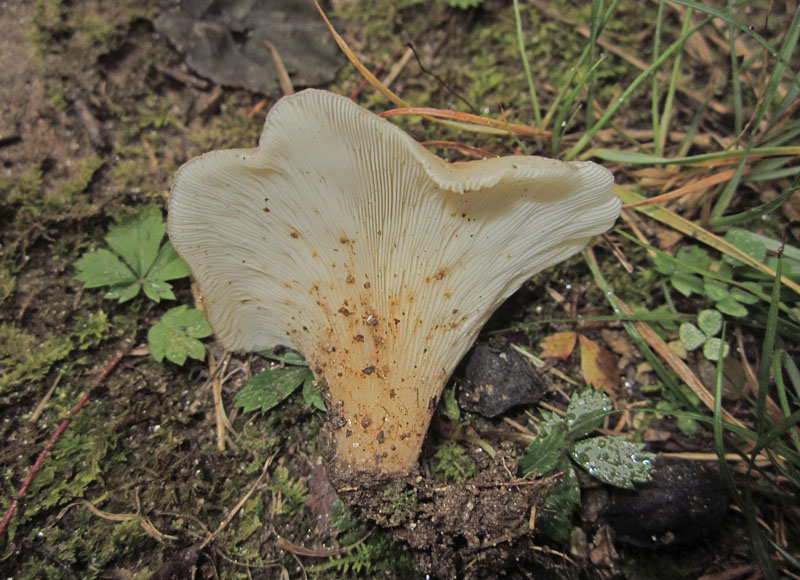
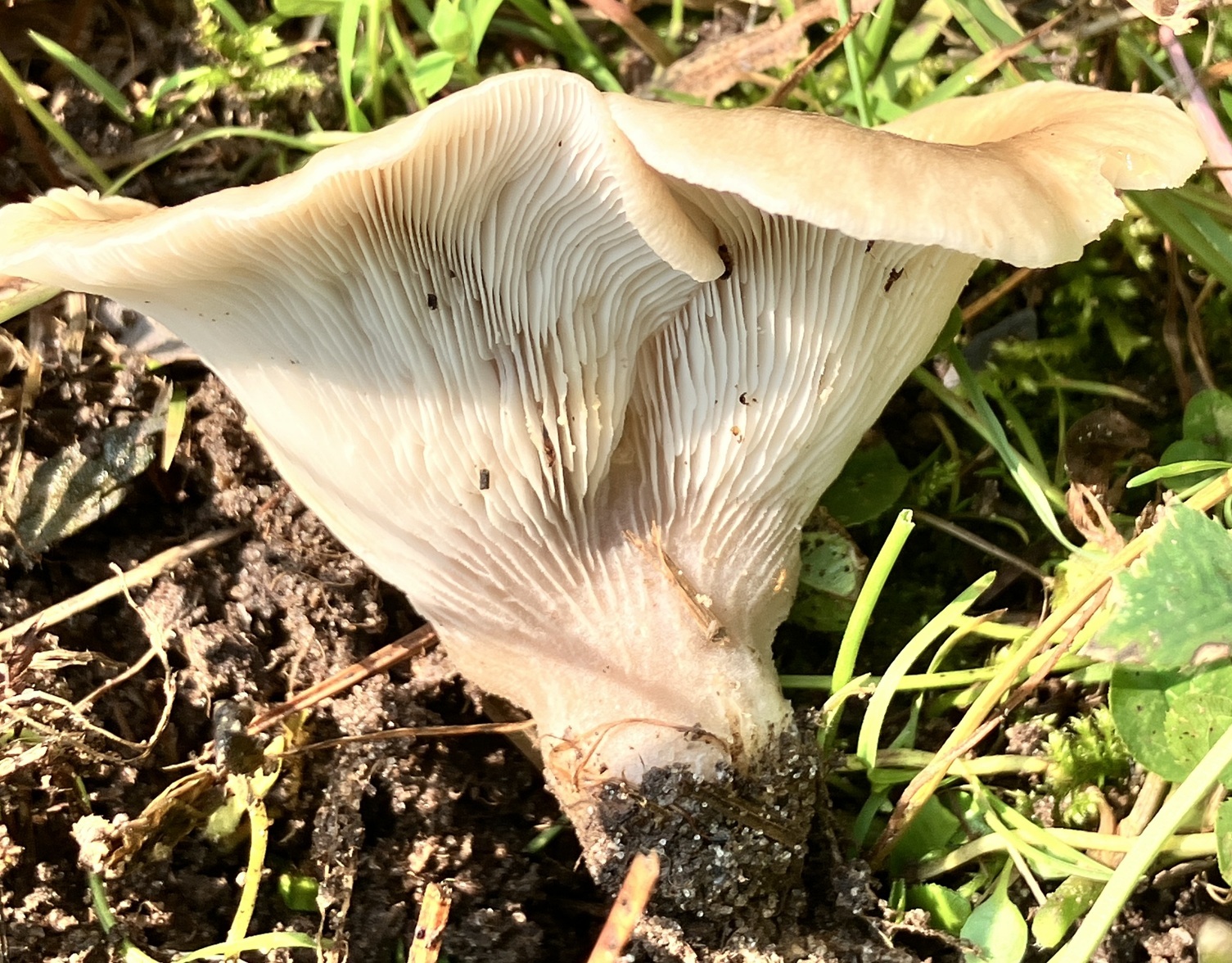
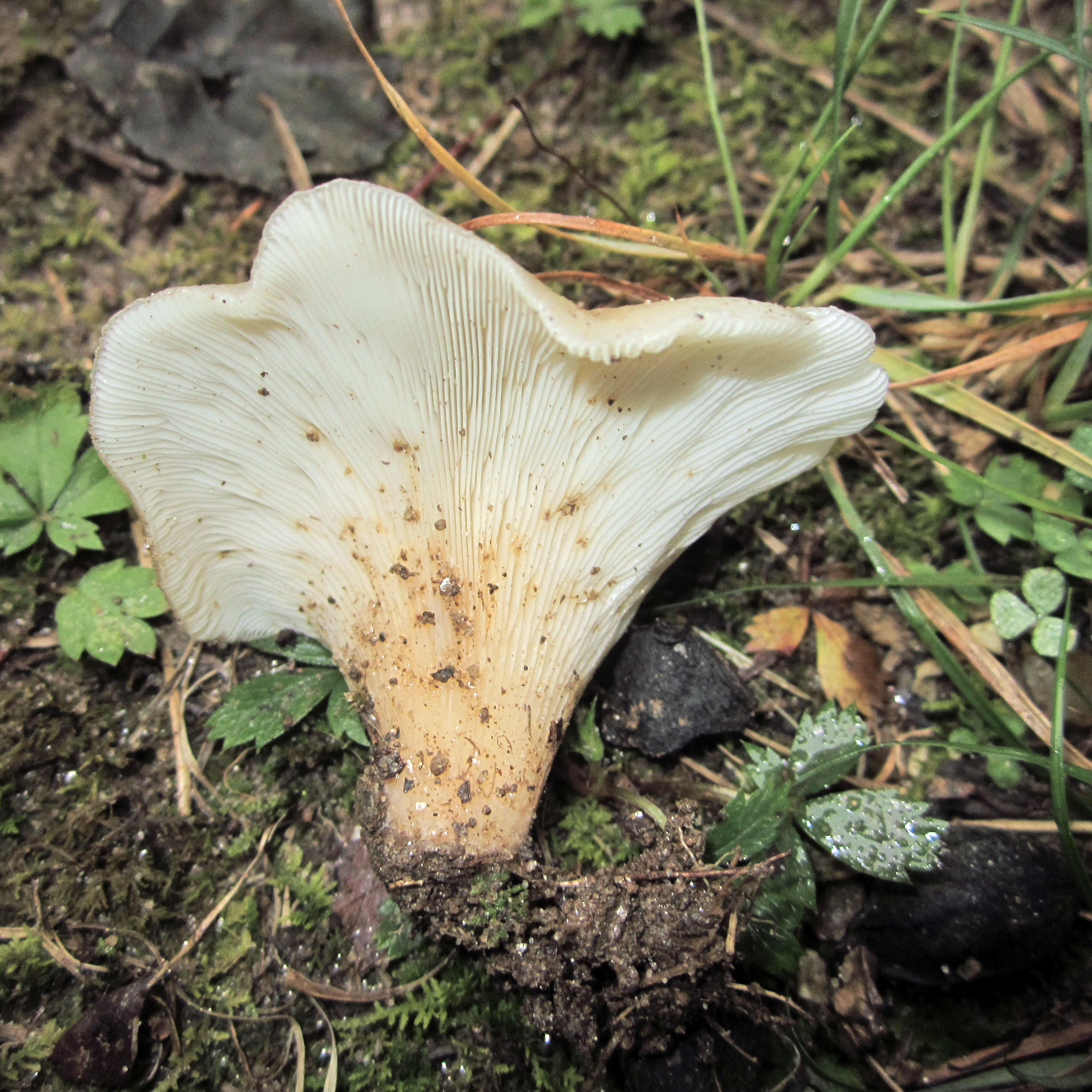
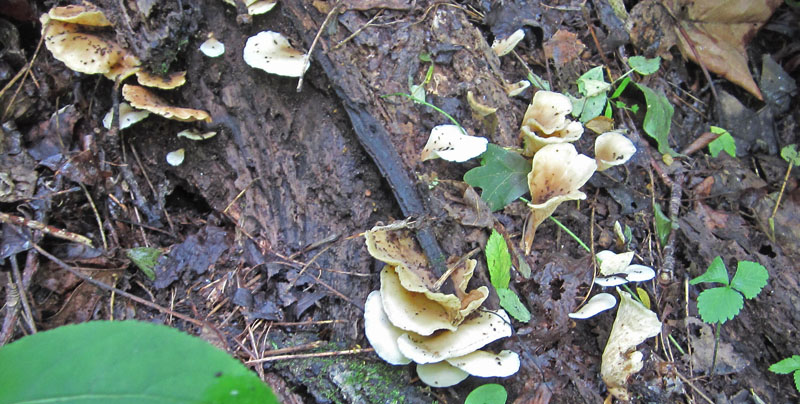
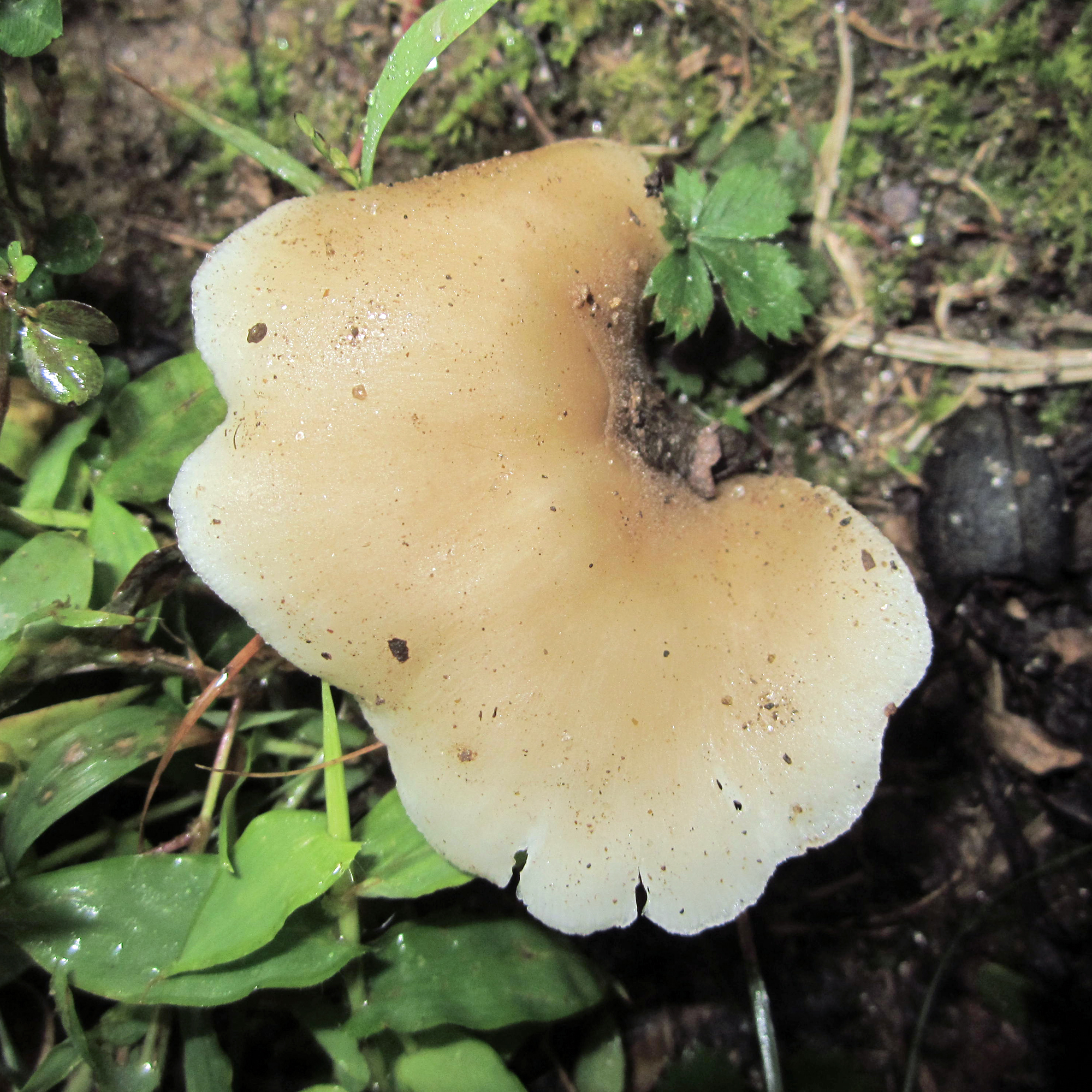
Hohenbuehelia petaloides, commonly known as the leaflike oyster[2] or the shoehorn oyster mushroom,[3] is a species of agaric fungus belonging to the family Pleurotaceae.[4] The fruit bodies have pale to brown funnel-shaped caps with decurrent gills. The species has a cosmopolitan distribution and is found near the decaying wood it feeds on. It is reputedly edible but not choice.
Taxonomy
[edit]The species was first described in 1785 by Jean Baptiste François Pierre Bulliard.[5] It was later assigned to the new genus, Hohenbuehelia, in 1866 by Stephan Schulzer von Müggenburg.[5][6] Synonyms include Hohenbuehelia geogenia[4] and Pleurotus petaloides.[2]
Description
[edit]The cap ranges from fan-shaped to funnel-shaped, growing up to 10 centimetres (4 in) wide.[7] The cap surface is smooth or microscopically hairy and ranges in color from pale or whitish (often when young) to brown.[2] The gills are decurrent and are often crowded and narrow.[8] The stem is either absent or short and attached laterally.[8] The texture is tough or rubbery due to the gelatinous layer under the cuticle.[2] The mushroom has a mild to mealy taste and odor.[7][9]
Similar species
[edit]Outside of its genus, it can resemble members of Crepidotus.[7]
Habitat and distribution
[edit]The species is saprobic, feeding on decaying wood.[2] It can be found either alone or clustering in small groups around woody debris or the occasional stump.[2] The species is considered to have a cosmopolitan distribution[4] and is known to be found in regions including North America, Venezuela, Europe, Japan, and New Zealand.[10] Like most Pleurotaceae, it is nematophagous.[11]
Uses
[edit]The species is considered edible, although the tough texture may not be appealing.[8]
References
[edit]| Hohenbuehelia petaloides | |
|---|---|
| Mycological characteristics | |
 | Gills on hymenium |

 | Cap is convex or depressed |
 | Hymenium is decurrent |
 | Stipe is bare |
 | Spore print is white |
 | Ecology is saprotrophic |
 | Edibility is edible |
- ^ "Index Fungorum: Hohenbuehelia petaloides".
- ^ a b c d e f "Hohenbuehelia petaloides". www.messiah.edu. Retrieved 2023-10-08.[better source needed]
- ^ Arora, David (1986) [1979]. Mushrooms Demystified: A Comprehensive Guide to the Fleshy Fungi (2nd ed.). Berkeley, CA: Ten Speed Press. pp. 136–137. ISBN 978-0-89815-170-1.
- ^ a b c "Hohenbuehelia petaloides (Bull.) Schulzer". www.gbif.org. Retrieved 11 February 2021.
- ^ a b "Index Fungorum: Hohenbuehelia petaloides".
- ^ Schulzer von Müggenburg, S. (1866). "Hohenbuehelia petaloides". Verhandlungen der Kaiserlich-Königlichen Zoologisch-Botanischen Gesellschaft in Wien (in German). 16: 45.
- ^ a b c Audubon (2023). Mushrooms of North America. Knopf. p. 412. ISBN 978-0-593-31998-7.
- ^ a b c "Hohenbuehelia petaloides, a wood decay fungus that eats nematodes, Tom Volk's Fungus of the Month for August 2000". botit.botany.wisc.edu. Retrieved 2023-10-17.
- ^ "April Foraging Forecast". Central Texas Mycological Society. 2021-04-01. Retrieved 2023-10-17.
- ^ "NatureServe Explorer 2.0". explorer.natureserve.org. Retrieved 2023-10-17.
- ^ Consiglio, G.; Setti, L.; Thorn, R.G. (2018-12-18). "New species of Hohenbuehelia, with comments on the Hohenbuehelia atrocoerulea – Nematoctonus robustus species complex". Persoonia - Molecular Phylogeny and Evolution of Fungi. 41 (1): 202–212. doi:10.3767/persoonia.2018.41.10. ISSN 0031-5850. PMC 6344808. PMID 30728605.