Map Snapshot


1 Record
Status
Description
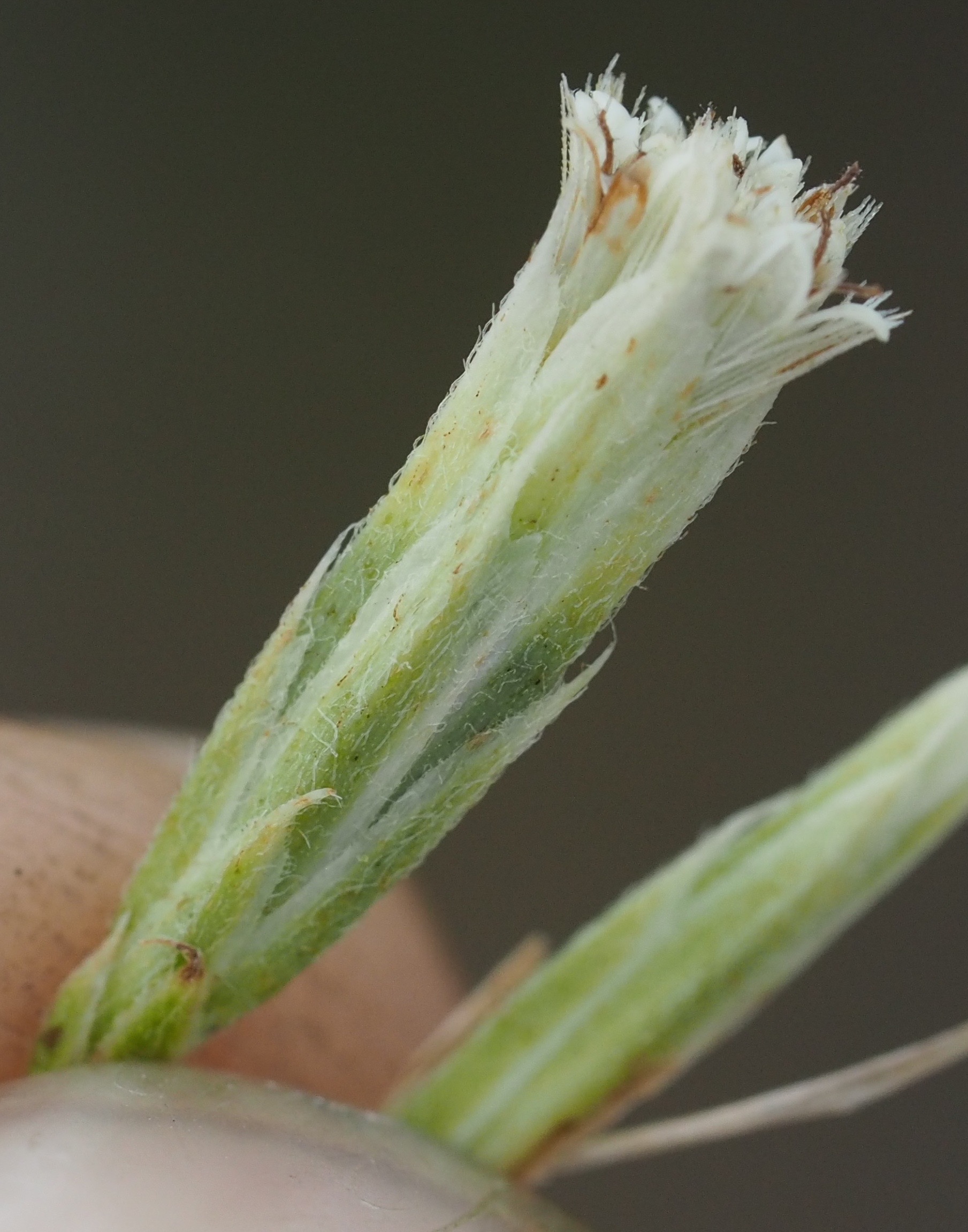
Vasey’s Boneset is very similar to Eupatorium album and E. fernaldii. The leaves of Vasey’s Boneset have few resin glands; the hairs of the lower stem are more than 1 mm long and appressed; and the phyllaries are acute-acuminate. Eupatorium fernaldii (not yet reported from Maryland) is very similar but has abundant resin glands on the leaves. Eupatorium album is also similar and may have few to many resin glands, however the lower stem has shorter (0.5-1 mm), spreading hairs and the inner phyllaries are long-attenuate (Weakley FSUS).
Citations
No citations linked for this taxon yet.
Source: Wikipedia
| Upland boneset | |
|---|---|

| |
Scientific classification 
| |
| Kingdom: | Plantae |
| Clade: | Tracheophytes |
| Clade: | Angiosperms |
| Clade: | Eudicots |
| Clade: | Asterids |
| Order: | Asterales |
| Family: | Asteraceae |
| Genus: | Eupatorium |
| Species: | E. sessilifolium
|
| Binomial name | |
| Eupatorium sessilifolium | |
| Synonyms[2][3] | |
| |

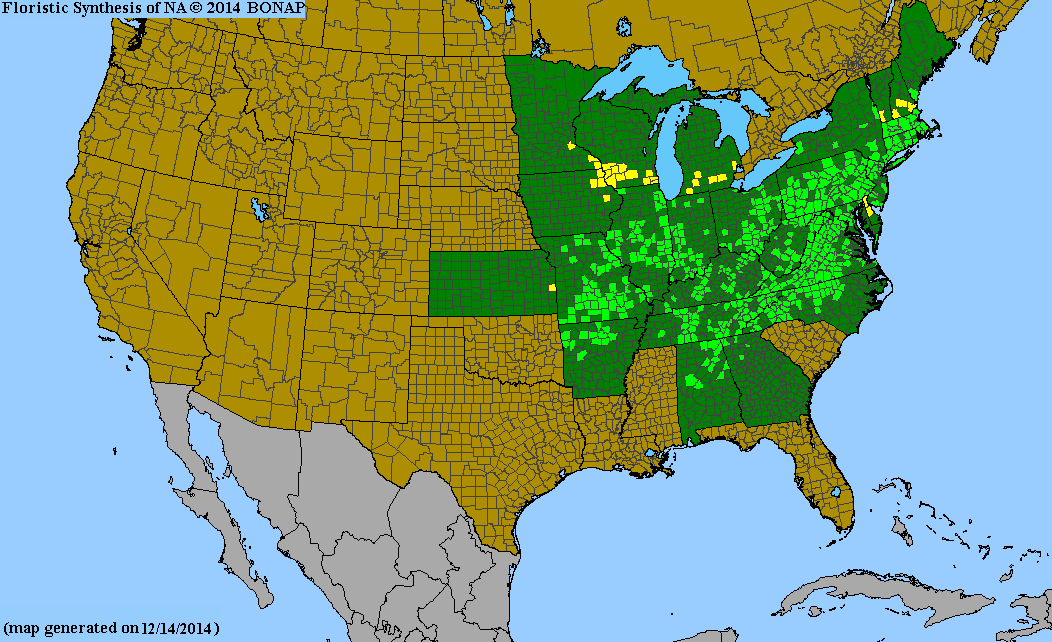
Eupatorium sessilifolium, commonly called upland boneset or sessile-leaved boneset, is a North American plant species in the family Asteraceae. It is native to the eastern and central United States, found from Maine south to North Carolina and Alabama, and west as far as Arkansas, Kansas, and Minnesota.[4]
Description
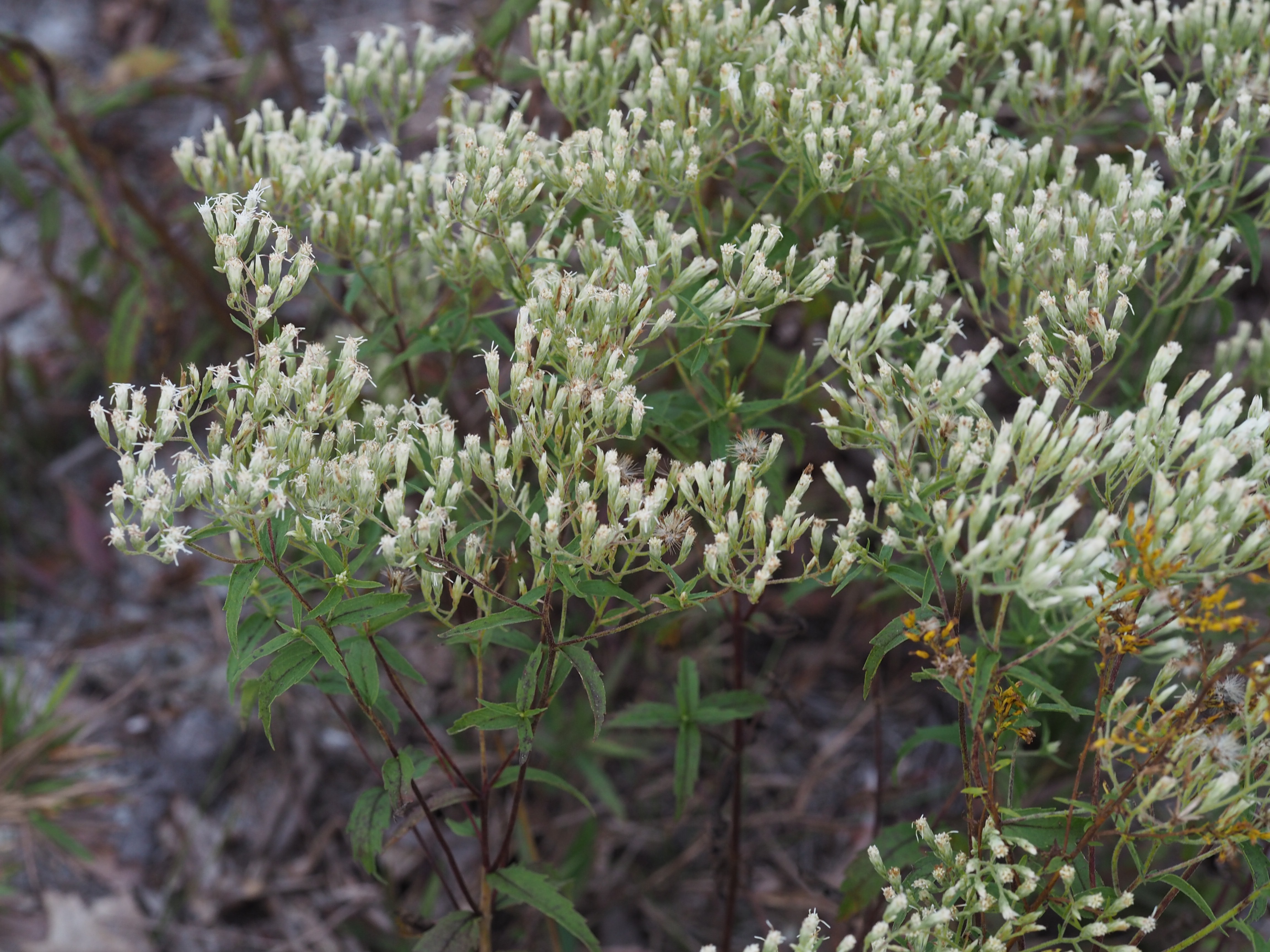
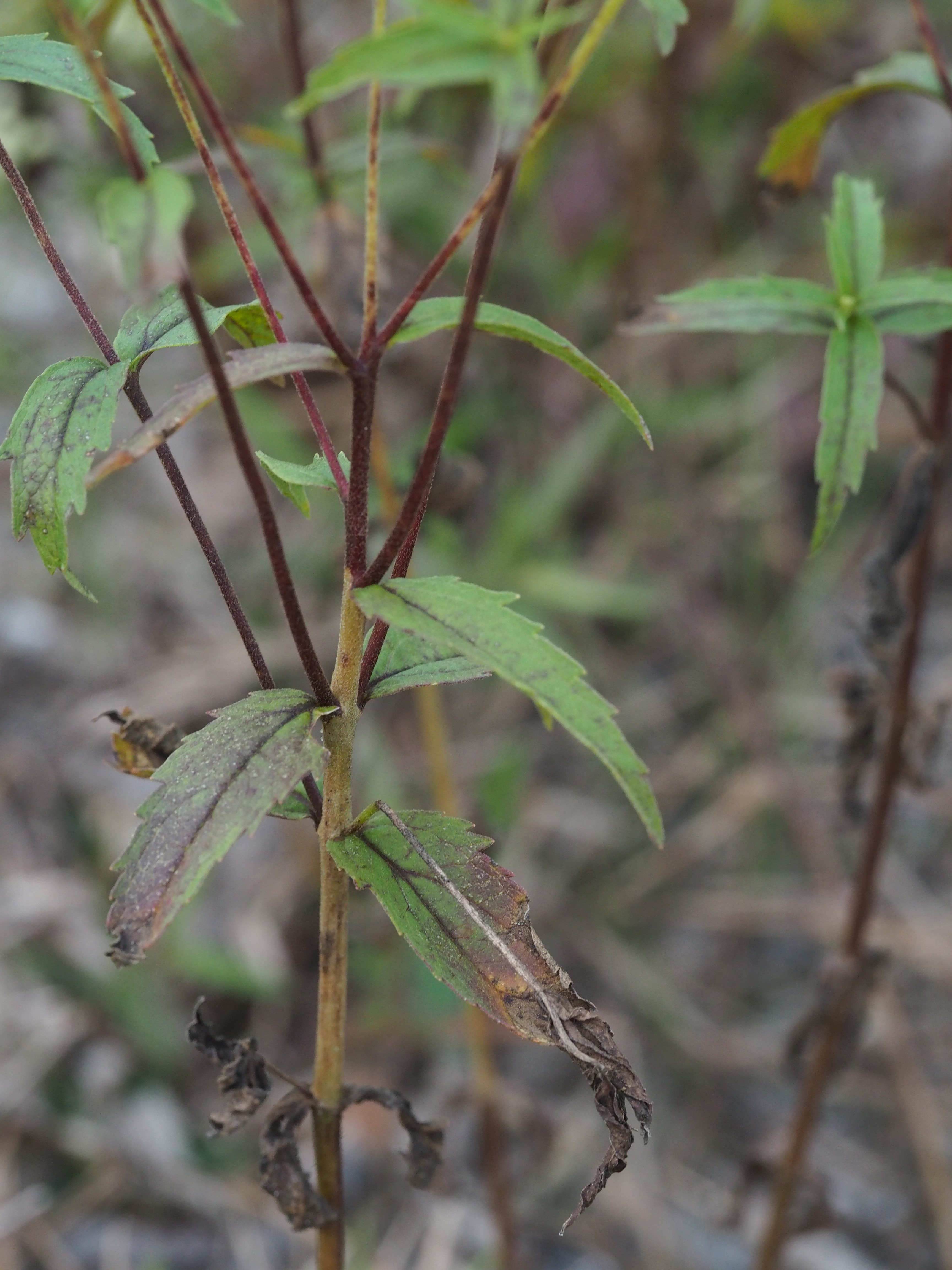
[edit]Eupatorium sessilifolium is a perennial herb with stems that are sometimes more than 100 centimeters (40 inches) tall. They are produced from a woody underground caudice or short rhizome. The top of the stems, where the branching begins to the flower heads, have short hairs, while the lower part of the stems have no hairs. The leaves are arranged in opposite pairs and are toothed. The leaf bases are rounded and the leaves are sessile (lacking stalks), but they do not clasp around the stem. The foliage is dotted with glands. Eupatorium sessilifolium blooms in August and September (July in the southern part of its range), and the small inflorescences are branched and composed of widely spaced, tiny white flower heads in corymbiform (flat topped) arrays. The heads typically have five or six disc florets per head, but no ray florets.[5][6]
Habitat and distribution
[edit]Eupatorium sessilifolium is found growing in open woods or edges of woods with soils that have good drainage and it is found uncommonly in prairie remnants.[7]
Upland boneset is a threatened species in Michigan, and legally protected in that state.[8] It is also a threatened species in Minnesota, where only a few populations exist in the extreme south eastern part of the state.[9]
Hybrids
[edit]As is common in Eupatorium, E. sessilifolium can form hybrids with other species in the genus. In particular, Eupatorium godfreyanum is a hybrid of E. sessilifolium and Eupatorium rotundifolium (although it reproduces by apomixis and thus can be found outside the range of the two parent species).[10]
References
[edit]- ^ "Eupatorium sessilifolium". NatureServe Explorer. NatureServe. Retrieved September 12, 2010.
{{cite web}}: CS1 maint: deprecated archival service (link) - ^ The Plant List, Eupatorium sessilifolium L.
- ^ "Eupatorium sessilifolium L." www.worldfloraonline.org. Retrieved January 4, 2021.
- ^ Biota of North America Program 2014 county distribution map
- ^ "Eupatorium sessilifolium: UW-Stevens Point Freckmann Herbarium: Plant Details Page". Archived from the original on July 2, 2007. Retrieved September 20, 2008.
- ^ "Eupatorium". Flora of North America.
- ^ Barbara Coffin; Lee Pfannmuller (1988). Minnesota's Endangered Flora and Fauna. U of Minnesota Press. p. 98. ISBN 978-0-8166-1689-3.
- ^ "Eupatorium sessilifolium (Upland Boneset) - MNFI Rare Species Explorer". Archived from the original on January 5, 2009. Retrieved September 20, 2008.
- ^ "Eupatorium sessilifolium : Upland Boneset | Rare Species Guide". Minnesota Department of Natural Resources. Retrieved January 4, 2021.
- ^ Kunsiri Chaw Siripun and Edward E. Schilling (2006). "Molecular confirmation of the hybrid origin of Eupatorium godfreyanum (Asteraceae)". American Journal of Botany. 93 (2): 319–325. doi:10.3732/ajb.93.2.319. PMID 21646192.