Map Snapshot


7 Records
Description
Citations
No citations linked for this taxon yet.
Source: Wikipedia
| Trichoglossum | |
|---|---|

| |
| Trichoglossum hirsutum | |
Scientific classification 
| |
| Kingdom: | Fungi |
| Division: | Ascomycota |
| Class: | Geoglossomycetes |
| Order: | Geoglossales |
| Family: | Geoglossaceae |
| Genus: | Trichoglossum Boud. (1885) |
| Type species | |
| Trichoglossum hirsutum (Pers.) Boud. (1907)
| |
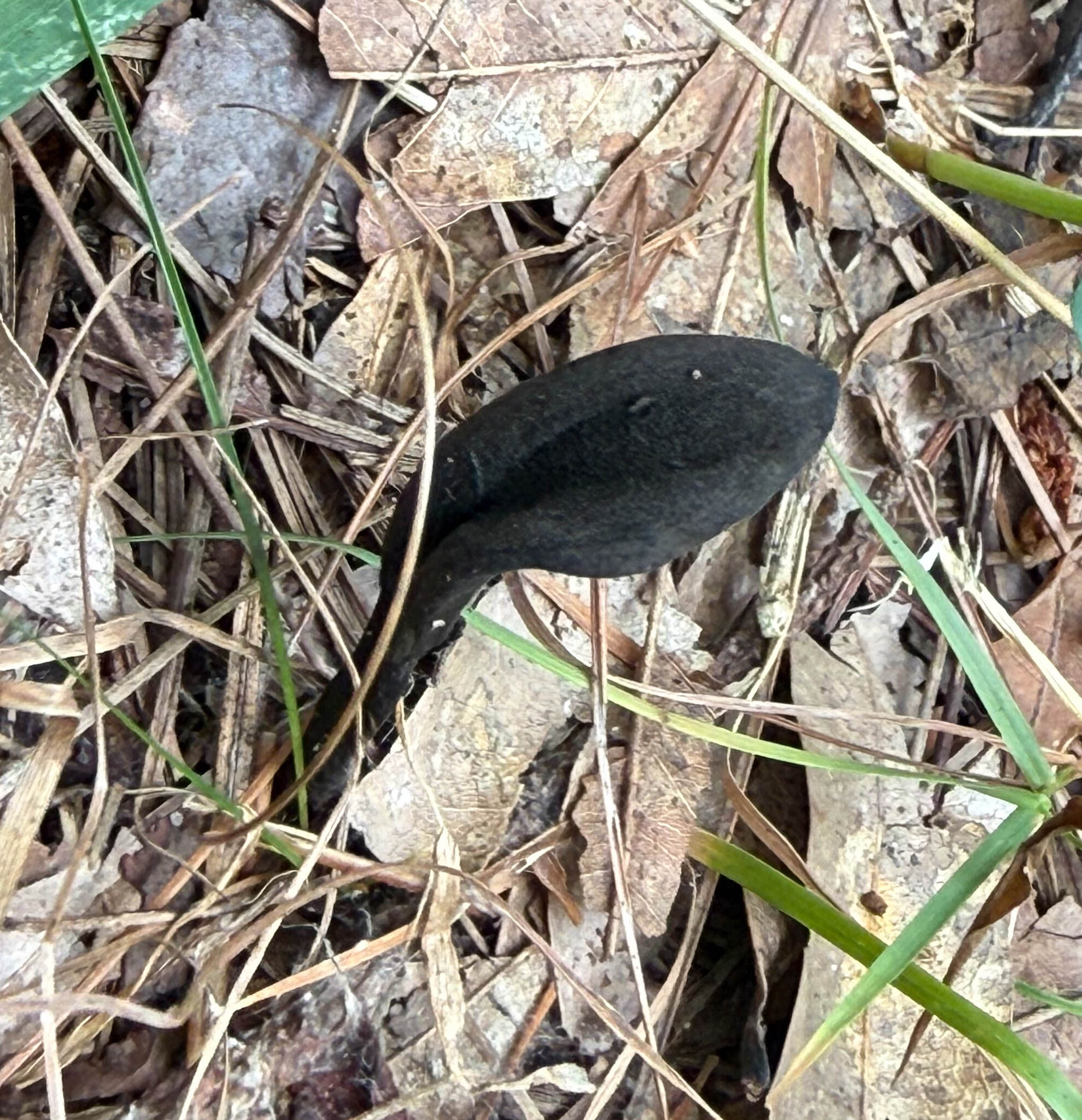
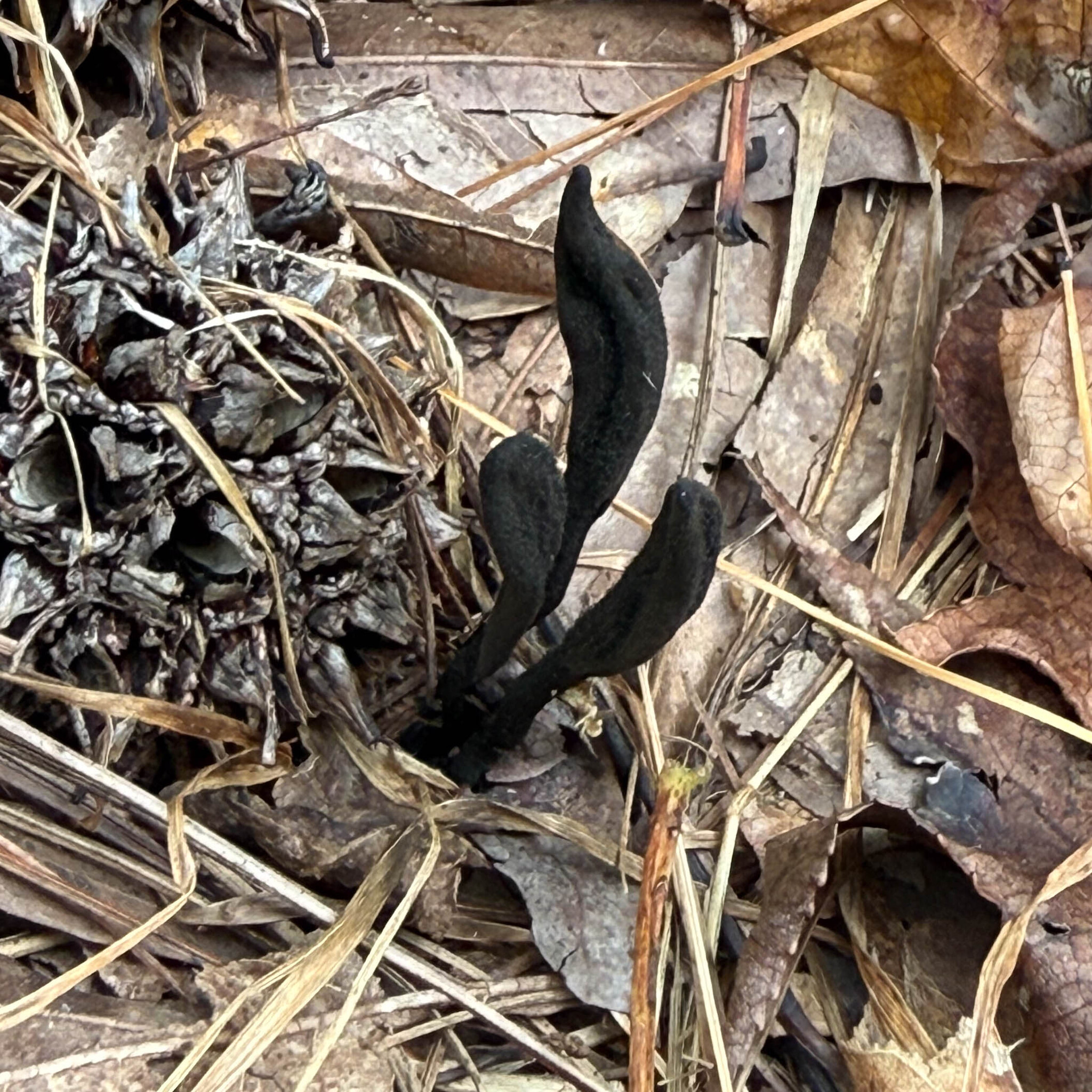
Trichoglossum is a genus of fungi in the family Geoglossaceae. They are commonly called hairy earth tongues. The type species is Trichoglossum hirsutum.[1]
Members of the genus Trichoglossum have tiny hairs known as setae on the spore bearing surface. The related genus Geoglossum lacks hairs on the spore bearing surface.
History
[edit]The genus Trichoglossum was created by Émile Boudier,[2] who constructed the new genus to include species of Geoglossum bearing prominent setae. Numerous authors have examined this genus since its creation,[3][4][5] with many new species and varieties described. Index Fungorum currently lists 47 names, including forms and varieties, while Kirk et al. (2008)[6] acknowledge 19 species. Published molecular phylogenetic research also supports the genus as a well-supported clade.[7][8][9]
Location
[edit]Trichoglossum species are found in woodlands in North America and Europe, as well as Asia,[4] Australasia,[10] India,[11] and South America.[12][13]
-
 Trichoglossum hirsutum spores 400x phase contrast
 -
 Trichoglossum hirsutum spores 400x brightfield


Species
[edit]- Trichoglossum cheliense F.L.Tai 1944
- Trichoglossum confusum E.J.Durand 1921
- Trichoglossum farlowii (Cooke) E.J.Durand 1908
- Trichoglossum gracile Pat. 1909
- Trichoglossum hirsutum (Pers.) Boud. 1907
- Trichoglossum kunmingense F.L.Tai 1944
- Trichoglossum leucosporum Benkert & Hardtke 1988
- Trichoglossum octopartitum Mains 1940
- Trichoglossum persoonii F.L.Tai 1944
- Trichoglossum peruvianum E.K.Cash 1958
- Trichoglossum qingchengense W.Y.Zhuang 1997
- Trichoglossum rasum Pat. 1909
- Trichoglossum rehmianum (Henn.) E.J. Durand 1908
- Trichoglossum sinicum F.L.Tai 1944
- Trichoglossum tetrasporum Sinden & Fitzp. 1930
- Trichoglossum variabile (E.J.Durand) Nannf. 1942
- Trichoglossum velutipes (Peck) E.J.Durand 1908
- Trichoglossum walteri (Berk.) E.J.Durand 1908
- Trichoglossum wrightii (E.J.Durand) E.J.Durand 1921
References
[edit]- ^ "Index Fungorum - Trichoglossum Genus".
- ^ Boudier, É. (1885). "Nouvelle classification naturelle des Discomycetese charnus connus generalement sous le nom de Pezizales". Bulletin de la Société Mycologique de France. 1: 91–120.
- ^ Durand, E.J. (1908). "The Geoglossaceae of North America". Annales Mycologici. 6: 387–477. OCLC 1481332.
- ^ a b Imai, S. (1941). "Geoglossaceae Japoniae". Journal of the Faculty of Agriculture. 45. Hokkaido Imperial University: 155–264.
- ^ Mains, E.B. (1954). "North American Species of Geoglossum and Trichoglossum". Mycologia. 46 (5): 586–631. doi:10.1080/00275514.1954.12024398. JSTOR 4547871.
- ^ Kirk PM, Cannon PF, Minter DW, Stalpers JA (2008). Dictionary of the Fungi (10th ed.). Wallingford, UK: CAB International. ISBN 978-0-85199-826-8.
- ^ Sandnes, A.C.S. (2006). Phylogenetic relationships among species and genera of Geoglossaceae (Helotiales) based on ITS and LSU nrDNA sequences (Masters). University of Oslo.
- ^ Schoch CL, Wang Z, Townsend JP, Spatafora JW (2009). "Geoglossomycetes cl. nov., Geoglossales ord. nov. and taxa above class rank in the Ascomycota Tree of Life". Persoonia. 22: 129–38. doi:10.3767/003158509X461486. PMC 2776753. PMID 19915689.
- ^ Hustad VP, Miller AN, Moingeon JM, Priou JP (2011). "Inclusion of Nothomitra in Geoglossomycetes". Mycosphere. 2 (6): 646–654. doi:10.5943/mycosphere/2/6/5.
- ^ Spooner BM (1987). "Helotiales of Australasia: Geoglossaceae, Orbiliaceae, Sclerotiniaceae, Hyaloscyphaceae". Bibliotheca Mycologica. 116: 1–711. ISSN 0067-8066. Maas Geesteranus RA (1965). "Geoglossaceae of India and Adjacent Countries". Persoonia. 4 (1): 19–46. ISSN 0031-5850. oai:ARNO:532470.
- ^ Maas Geesteranus, RA (1965). "Geoglossaceae of India and Adjacent Countries". Persoonia. 4 (1): 19–46.
- ^ Gamundi I (1979). "Subantarctic Geoglossaceae II". Sydowia. 32: 86–98. ISSN 0082-0598.
- ^ Hladki AI, Romero AI (2009). "La familia Geoglossaceae s. str. (Helotiales) en la provincia de Tucumán (Argentina)". Boletín de la Sociedad Argentina de Botánica. 44 (3–4): 249–255. ISSN 1851-2372.
External links
[edit]- Trichoglossum at Mushroom Observer
- California Fungi – Trichoglossum hirsutum
- Key to Club Fungi in the PNW