

Map Snapshot


72 Records
Citations
No citations linked for this taxon yet.
Source: Wikipedia
| Darters or Meadowhawks | |
|---|---|

| |
| Sympetrum fonscolombii | |

| |
| White-faced Meadowhawks (Sympetrum obtrusum) in "wheel position", Shirleys Bay, Ottawa | |
Scientific classification 
| |
| Kingdom: | Animalia |
| Phylum: | Arthropoda |
| Clade: | Pancrustacea |
| Class: | Insecta |
| Order: | Odonata |
| Infraorder: | Anisoptera |
| Family: | Libellulidae |
| Subfamily: | Sympetrinae |
| Genus: | Sympetrum Newman, 1833 |


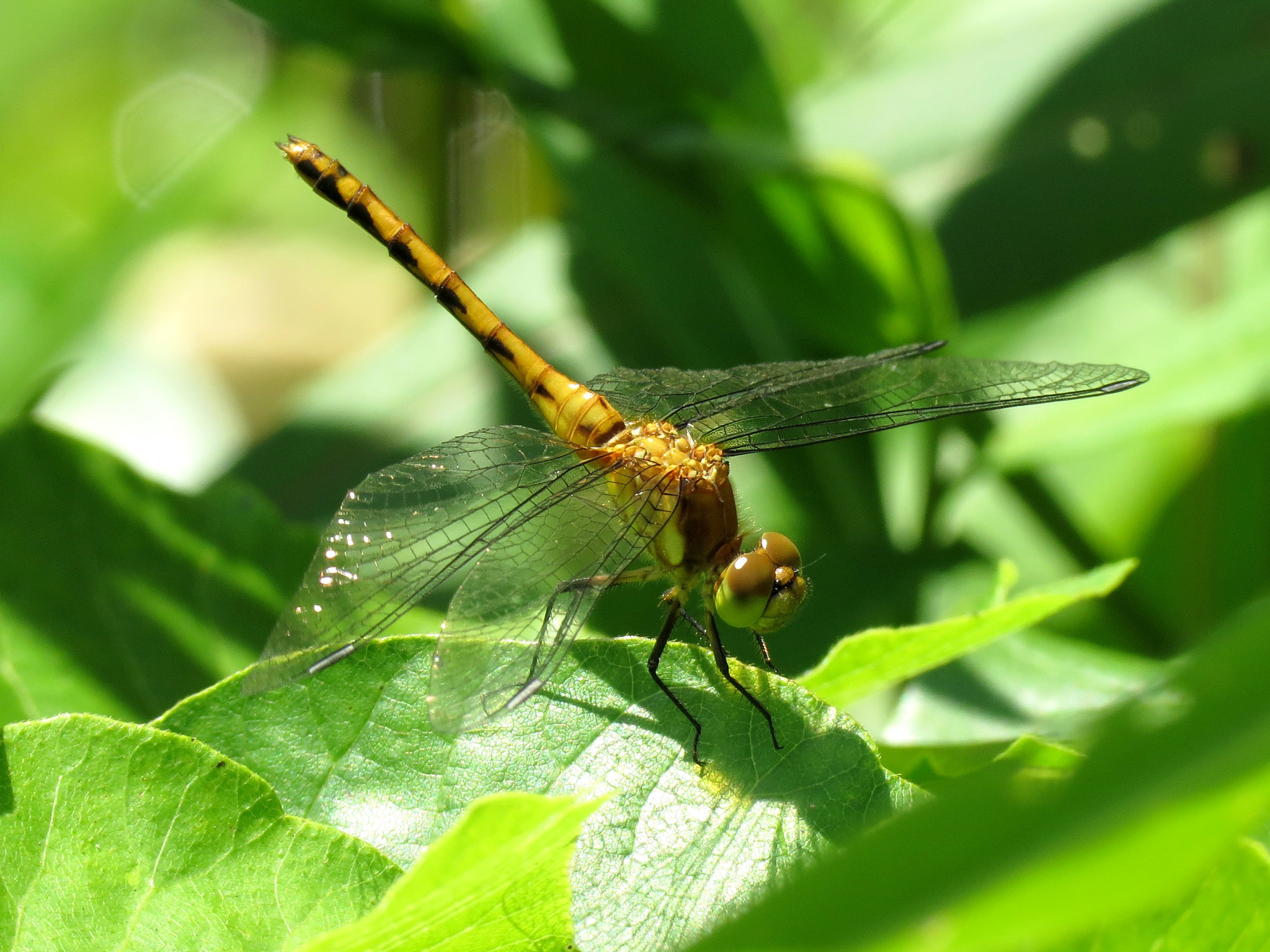
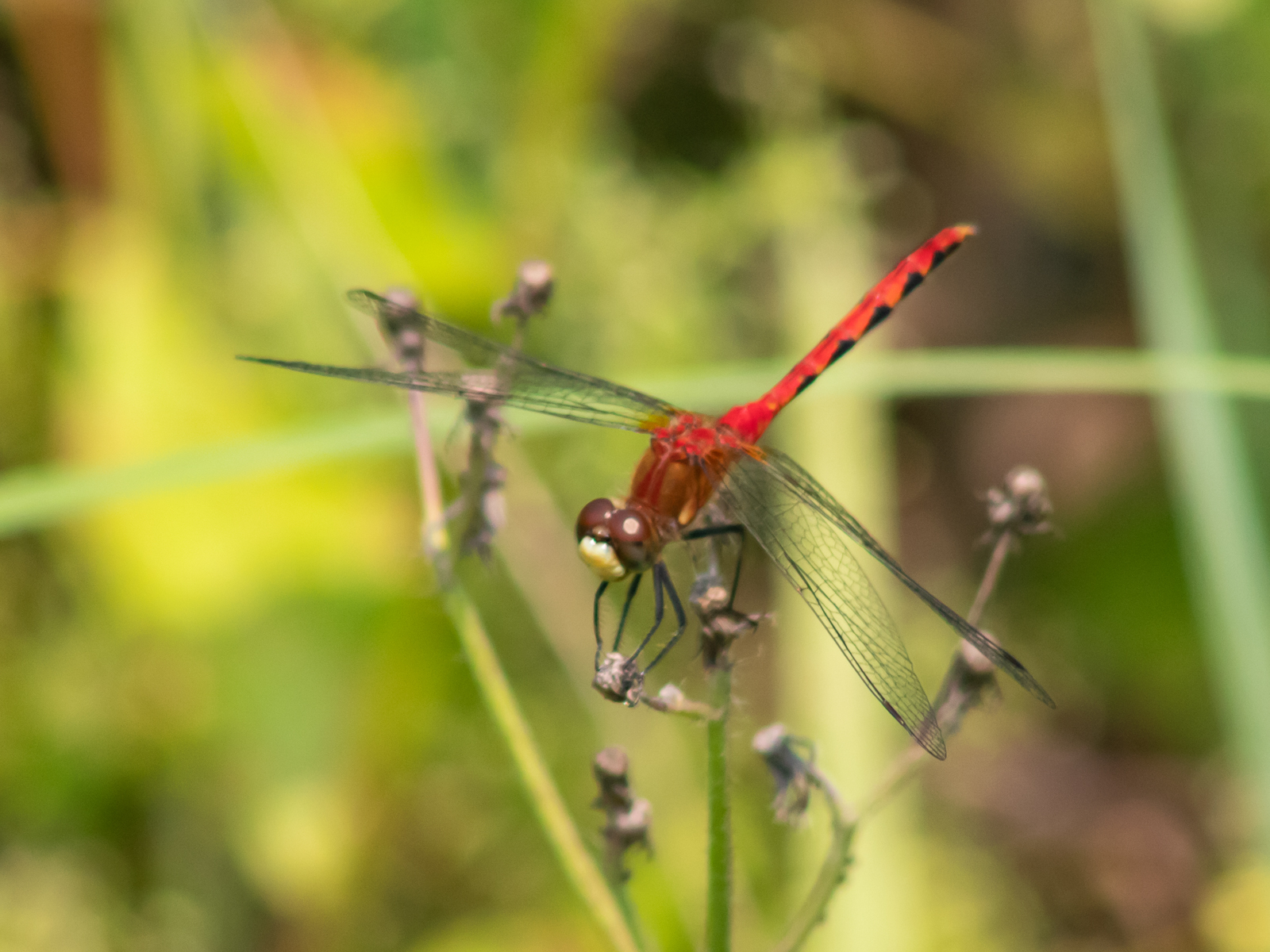
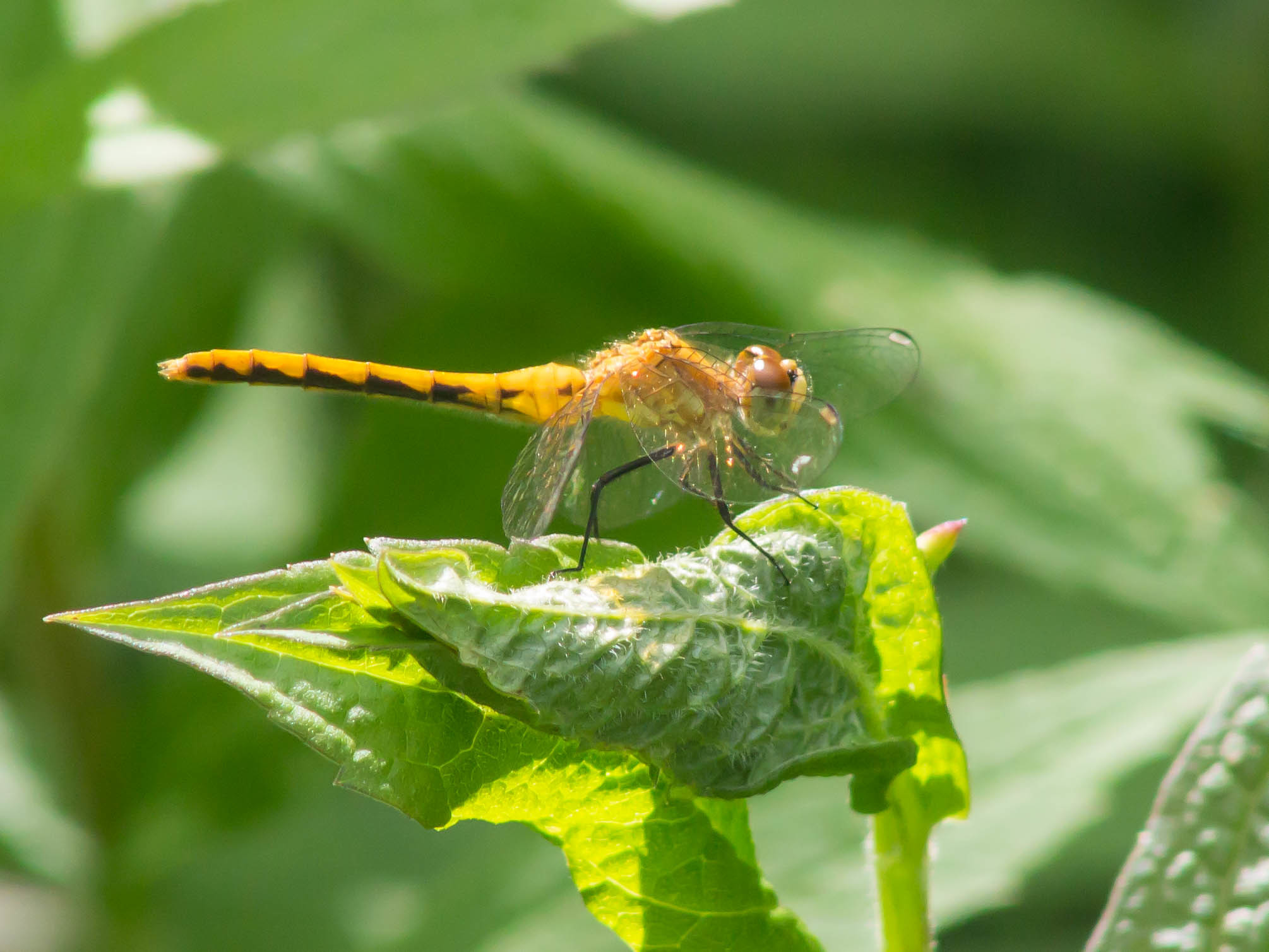
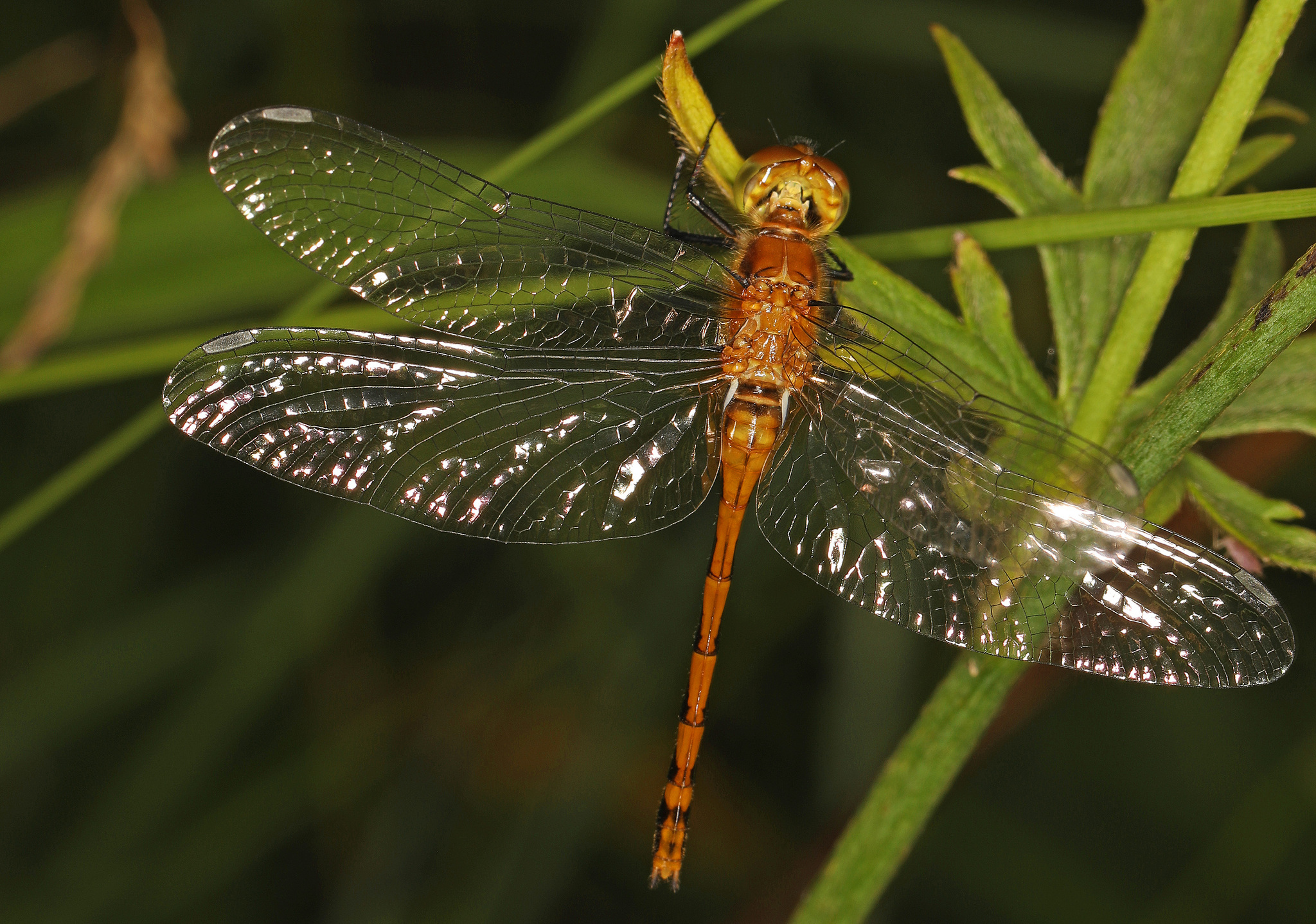
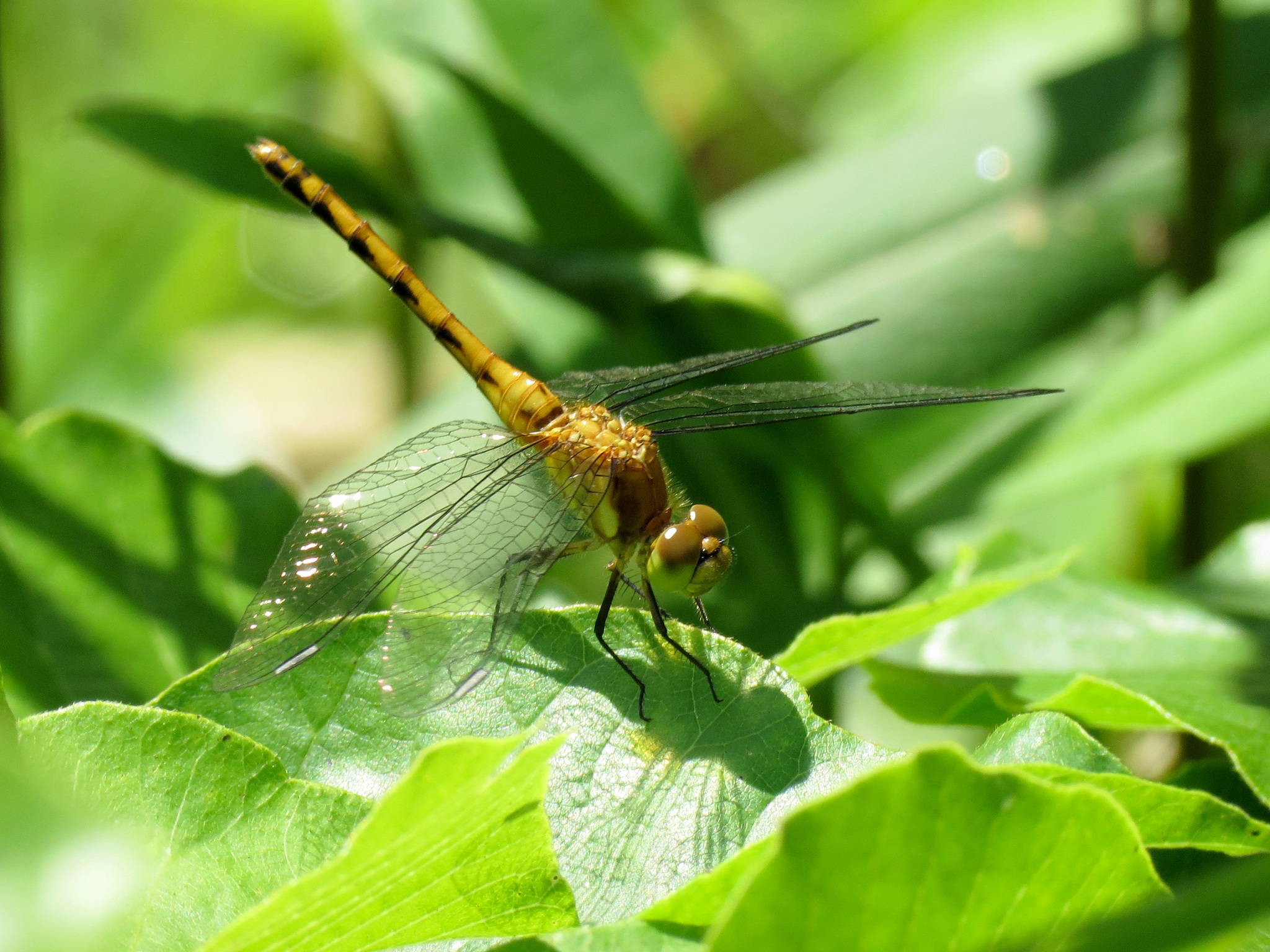
Sympetrum is a genus of small to medium-sized skimmer dragonflies, known as darters in Europe and as meadowhawks in North America. The more than 50 species predominantly live in the temperate zone of the Northern Hemisphere; 11 species are native to Europe and 15 species native to North America, and most of the rest in Asia. A few species also occur in tropical and southern Africa (S. fonscolombii) and in South America (S. evanescens, S. gilvum, S. roraimae, S. villosum), but none is native to Australasia.[1]
Most species fly in late summer and autumn, breeding in ponds and foraging over meadows. Commonly, they are yellow-gold as juveniles, with mature males and some females becoming bright red or orange-red on part or all of their bodies. An exception to this scheme is the Holarctic black darter or black meadowhawk (Sympetrum danae), which has black males with no red.[2][3]
The genus includes the following species:[1]
- Sympetrum ambiguum (Rambur, 1842) – blue-faced meadowhawk[4]
- Sympetrum anomalum Needham, 1930
- Sympetrum arenicolor Jödicke, 1994
- Sympetrum baccha (Selys, 1884)
- Sympetrum chaconi De Marmels, 1994
- Sympetrum commixtum (Selys, 1884)
- Sympetrum cordulegaster (Selys, 1883)
- Sympetrum corruptum (Hagen, 1861) – variegated meadowhawk[4]
- Sympetrum costiferum (Hagen, 1861) – saffron-winged meadowhawk[4]
- Sympetrum croceolum (Selys, 1883)
- Sympetrum daliensis Zhu, 1999
- Sympetrum danae (Sulzer, 1776) – black darter,[5] black meadowhawk[4]
- Sympetrum darwinianum Selys, 1883
- Sympetrum depressiusculum (Selys, 1841) – spotted darter[6]
- Sympetrum dilatatum (Calvert, 1892) – St. Helena darter[7]
- Sympetrum durum Bartenev, 1916
- Sympetrum eroticum (Selys, 1883)
- Sympetrum evanescens De Marmels, 1992
- Sympetrum flaveolum (Linnaeus, 1758) – yellow-winged darter[5]
- Sympetrum fonscolombii (Selys, 1840) – red-veined darter,[5] nomad[8]
- Sympetrum frequens (Selys, 1883)[9]
- Sympetrum gilvum (Selys, 1884)
- Sympetrum gracile Oguma, 1915
- Sympetrum haematoneura Fraser, 1924
- Sympetrum haritonovi Borisov, 1983 – dwarf darter[10]
- Sympetrum himalayanum Navás, 1934
- Sympetrum hypomelas (Selys, 1884)
- Sympetrum illotum (Hagen, 1861) – cardinal meadowhawk[4]
- Sympetrum imitans (Selys, 1886)
- Sympetrum infuscatum (Selys, 1883)
- Sympetrum internum Montgomery, 1943 – cherry-faced meadowhawk[4]
- Sympetrum kunckeli (Selys, 1884)
- Sympetrum maculatum Oguma, 1922
- Sympetrum madidum (Hagen, 1861) – red-veined meadowhawk[4]
- Sympetrum meridionale (Selys, 1841) – southern darter[6]
- Sympetrum nigrifemur (Selys, 1884) – island darter[11]
- Sympetrum nigrocreatum Calvert, 1920 – Talamanca meadowhawk[12]
- Sympetrum nomurai Asahina, 1997
- Sympetrum obtrusum (Hagen, 1861) – white-faced meadowhawk[4]
- Sympetrum orientale (Selys, 1883)
- Sympetrum pallipes (Hagen, 1874) – striped meadowhawk[4]
- Sympetrum paramo De Marmels, 2001
- Sympetrum parvulum (Bartenev, 1912)
- Sympetrum pedemontanum (Müller, 1766) – banded darter[5]
- Sympetrum risi Bartenev, 1914
- Sympetrum roraimae De Marmels, 1988
- Sympetrum rubicundulum (Say, 1840) – ruby meadowhawk[4]
- Sympetrum ruptum Needham, 1930
- Sympetrum sanguineum (Müller, 1764) – ruddy darter[5]
- Sympetrum semicinctum (Say, 1840) – band-winged meadowhawk[4]
- Sympetrum signiferum Cannings & Garrison, 1991
- Sympetrum sinaiticum Dumont, 1977 – desert darter[6]
- Sympetrum speciosum Oguma, 1915
- Sympetrum striolatum (Charpentier, 1840) – common darter[5]
- Sympetrum tibiale (Ris, 1897)
- Sympetrum uniforme (Selys, 1883)
- Sympetrum verum Bartenev, 1916
- Sympetrum vicinum (Hagen, 1861) – yellow-legged meadowhawk,[13] autumn meadowhawk[4]
- Sympetrum villosum Ris, 1911
- Sympetrum vulgatum (Linnaeus, 1758) – vagrant darter,[5] moustached darter[6]
- Sympetrum xiaoi Han & Zhu, 1997
References
[edit]- ^ a b Paulson, D.; Schorr, M.; Abbott, J.; Bota-Sierra, C.; Deliry, C.; Dijkstra, K.-D.; Lozano, F. "World Odonata List". OdonataCentral. University of Alabama.
- ^ Smallshire, Dave; Swash, Andy (14 July 2020). Europe's Dragonflies. Princeton, New Jersey: Princeton University Press. pp. 300–301. ISBN 978-0-691-16895-1.
- ^ Needham, James G.; Minter J. Westfall Jr.; Michael L. May (2000). Dragonflies of North America (rev. ed.). Gainesville, FL: Scientific Publishers. p. 795. ISBN 0-945417-94-2.
- ^ a b c d e f g h i j k l "North American Odonata". University of Puget Sound. 2009. Retrieved 5 August 2010.
- ^ a b c d e f g "British Dragonfly Society Species Checklist". British Dragonfly Society. Retrieved 25 March 2026.
- ^ a b c d "Checklist, English common names". DragonflyPix.com. Retrieved 5 August 2010.
{{cite web}}: CS1 maint: deprecated archival service (link) - ^ Suhling, F. & Martens, A. (2011). "Sympetrum dilatatum". IUCN Red List of Threatened Species. 2011 e.T21226A9259879. doi:10.2305/IUCN.UK.2011-1.RLTS.T21226A9259879.en.
- ^ Samways, Michael J. (2008). Dragonflies and damselflies of South Africa (1st ed.). Sofia: Pensoft. ISBN 978-954-642-330-6.
- ^ Autumn Darter, Kochi
- ^ Clausnitzer, V. (2009). "Sympetrum haritonovi". IUCN Red List of Threatened Species. 2009 e.T158697A5261939. doi:10.2305/IUCN.UK.2009-2.RLTS.T158697A5261939.en.
- ^ Clausnitzer, V.; Kalkman, V.J. (2020). "Sympetrum nigrifemur". IUCN Red List of Threatened Species. 2020 e.T60292A140601430. doi:10.2305/IUCN.UK.2020-3.RLTS.T60292A140601430.en.
- ^ Paulson, D. R. (2009). "Sympetrum nigrocreatum". IUCN Red List of Threatened Species. 2009 e.T164924A5939416. doi:10.2305/IUCN.UK.2009-2.RLTS.T164924A5939416.en.
- ^ Dunkle, S. W. (2000). Dragonflies through Binoculars. OUP.
External links
[edit] Media related to Sympetrum at Wikimedia Commons

| National | |
|---|---|
| Other | |

 | This article related to Libellulidae is a stub. You can help Wikipedia by adding missing information. |