

Map Snapshot


3 Records
Status
Description
Citations
No citations linked for this taxon yet.
Source: Wikipedia
| Lichenomphalia umbellifera | |
|---|---|

| |
Scientific classification 
| |
| Kingdom: | Fungi |
| Division: | Basidiomycota |
| Class: | Agaricomycetes |
| Order: | Agaricales |
| Family: | Hygrophoraceae |
| Genus: | Lichenomphalia |
| Species: | L. umbellifera
|
| Binomial name | |
| Lichenomphalia umbellifera (L.) Redhead, Lutzoni, Moncalvo & Vilgalys (2002)
| |
| Synonyms[1] | |
|
List
| |
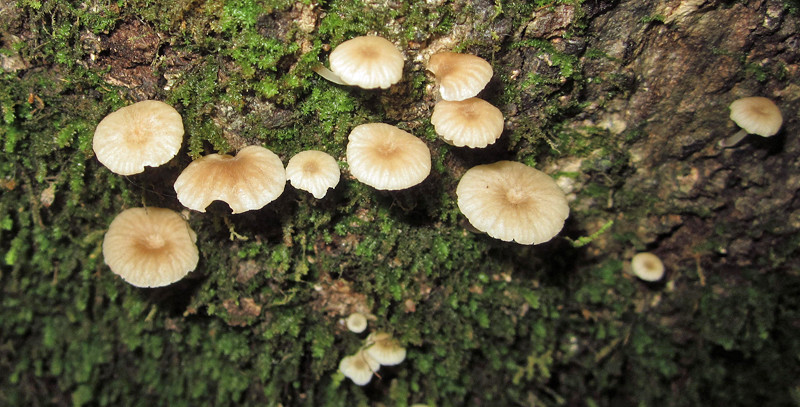
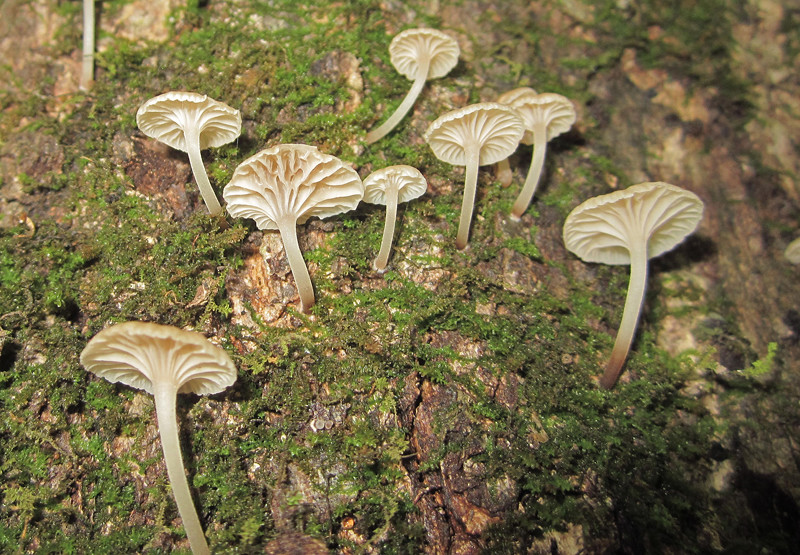
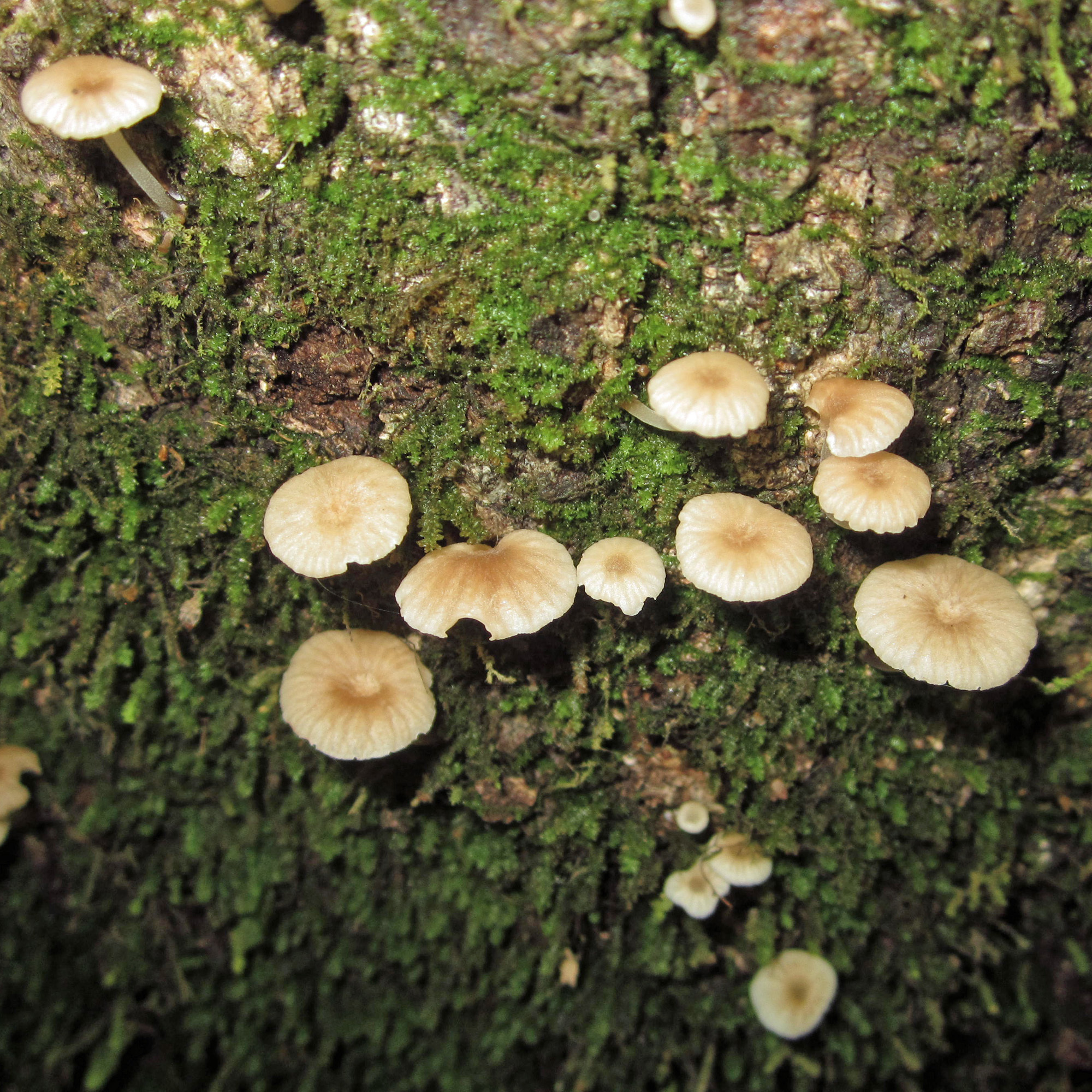
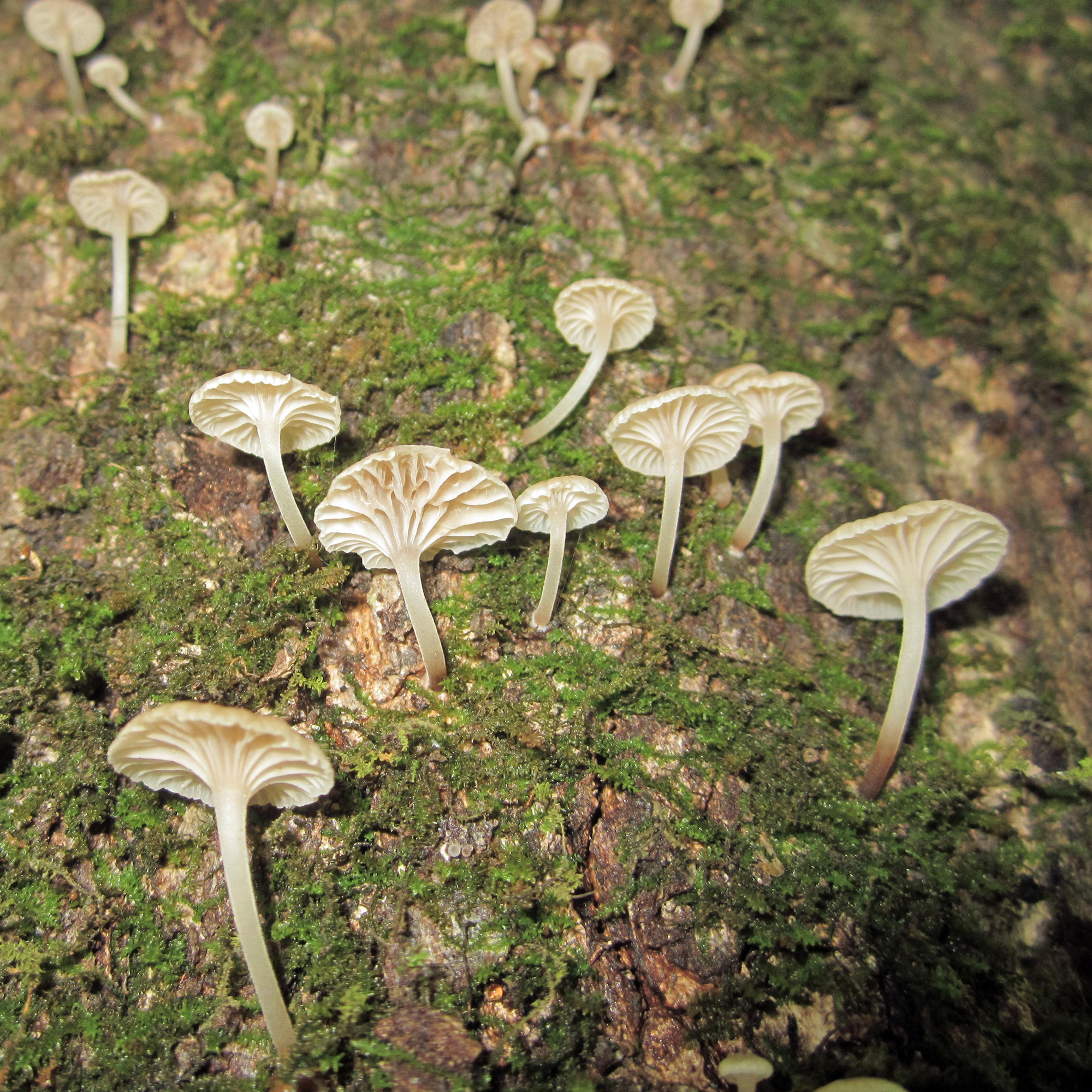
Lichenomphalia umbellifera, also known as the lichen agaric or the green-pea mushroom lichen,[2][3] is a species of basidiolichen in the family Hygrophoraceae. It forms a symbiotic relationship with unicellular algae in the genus Coccomyxa.[2][4]
Taxonomy
[edit]The species was first described by Carl Linnaeus in 1753 as Agaricus umbelliferus.[5] It was transferred to Lichenomphalia in 2002.[6]
L. umbellifera has a wide geographic range and displays a considerable amount of phenotypic plasticity, but phylogenetic research has confirmed that these populations represent a single species. Two related taxa have been described in the genus Lichenomphalia, but are yet unnamed.[4]
Description
[edit]The mushroom is white to yellowish-tan and hygrophanous, and occurs throughout most of the year on damp soil and rotting wood. Its cap grows up to 3 cm wide. Its stalk is 1–3 cm tall and 1–3 mm wide. The spores are white or yellowish,[7] producing a white spore print.[8]
It is regarded as nonpoisonous[9] but its small size incites little culinary interest.[10]
Similar species
[edit]L. grisella is uncommon and has a brown cap.[8]
Other similar species include Chromosera cyanophylla, Chrysomphalina aurantiaca, Chrysomphalina chrysophylla, Contumyces rosellus, and Rickenella fibula.[7]
Distribution and habitat
[edit]It can be found in the Northern Hemisphere, particularly in the region of the Arctic.[11] In the North American Pacific Northwest, it is common and can be found northward from Santa Cruz.[2]
See also
[edit]References
[edit]- ^ "Lichenomphalia umbellifera (L.) Redhead, Lutzoni, Moncalvo & Vilgalys, Mycotaxon 83: 38 (2002)". CAB International. Retrieved 2013-10-01.
- ^ a b c Siegel, Noah; Schwarz, Christian (2016). Mushrooms of the redwood coast : a comprehensive guide to the fungi of coastal northern California (First ed.). Berkeley: Ten Speed Press. ISBN 978-1-60774-817-5. OCLC 914339418.
- ^ "Standardized Common Names for Wild Species in Canada". National General Status Working Group. 2020.
- ^ a b Geml, József; Kauff, Frank; Brochmann, Christian; Lutzoni, François; Laursen, Gary A.; Redhead, Scott A.; Taylor, D. Lee (March 2012). "Frequent circumarctic and rare transequatorial dispersals in the lichenised agaric genus Lichenomphalia (Hygrophoraceae, Basidiomycota)". Fungal Biology. 116 (3): 388–400. doi:10.1016/j.funbio.2011.12.009. PMID 22385621.
- ^ Linnaeus C. (1753). Species Plantarum (in Latin). Stockholm: Salvius. p. 1175.
- ^ Redhead SA, Lutzoni F, Moncalvo JM, Vilgalys R (2002). "Phylogeny of agarics: Partial systematics solutions for core omphalinoid genera in the Agaricales (euagarics)". Mycotaxon. 83: 19–57.
- ^ a b Davis, R. Michael; Sommer, Robert; Menge, John A. (2012). Field Guide to Mushrooms of Western North America. Berkeley: University of California Press. p. 171. ISBN 978-0-520-95360-4. OCLC 797915861.
- ^ a b Audubon (2023). Mushrooms of North America. Knopf. p. 408. ISBN 978-0-593-31998-7.
- ^ Miller Jr., Orson K.; Miller, Hope H. (2006). North American Mushrooms: A Field Guide to Edible and Inedible Fungi. Guilford, CN: FalconGuide. p. 188. ISBN 978-0-7627-3109-1.
- ^ Arora, David (1986) [1979]. Mushrooms Demystified: A Comprehensive Guide to the Fleshy Fungi (2nd ed.). Berkeley, CA: Ten Speed Press. p. 223. ISBN 978-0-89815-170-1.
- ^ Trudell, Steve; Ammirati, Joe (2009). Mushrooms of the Pacific Northwest. Timber Press Field Guides. Portland, OR: Timber Press. pp. 131–132. ISBN 978-0-88192-935-5.