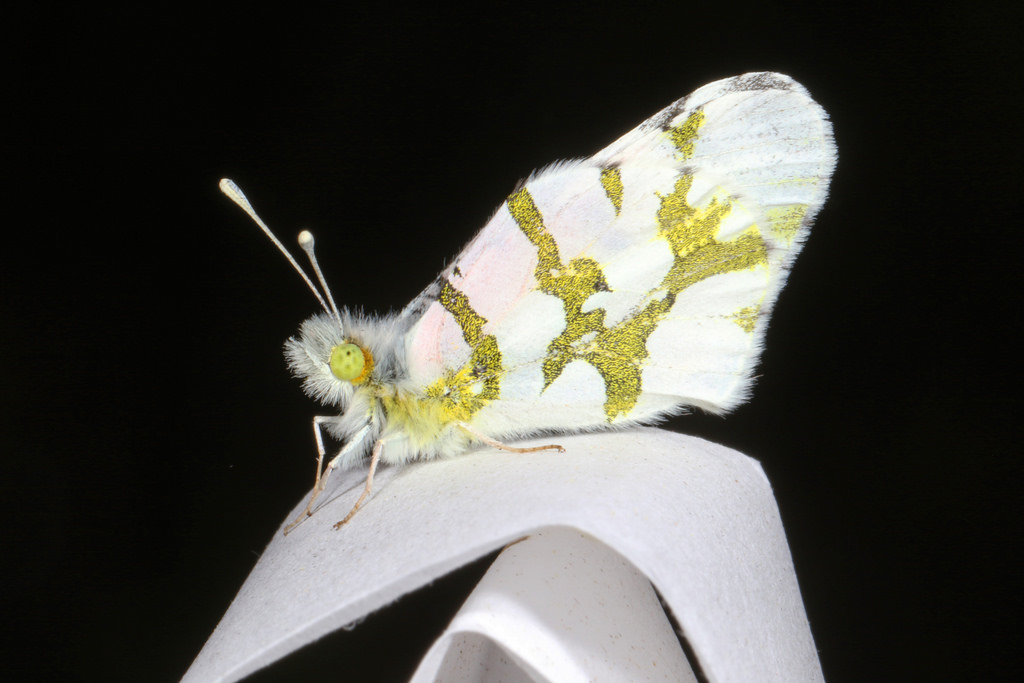
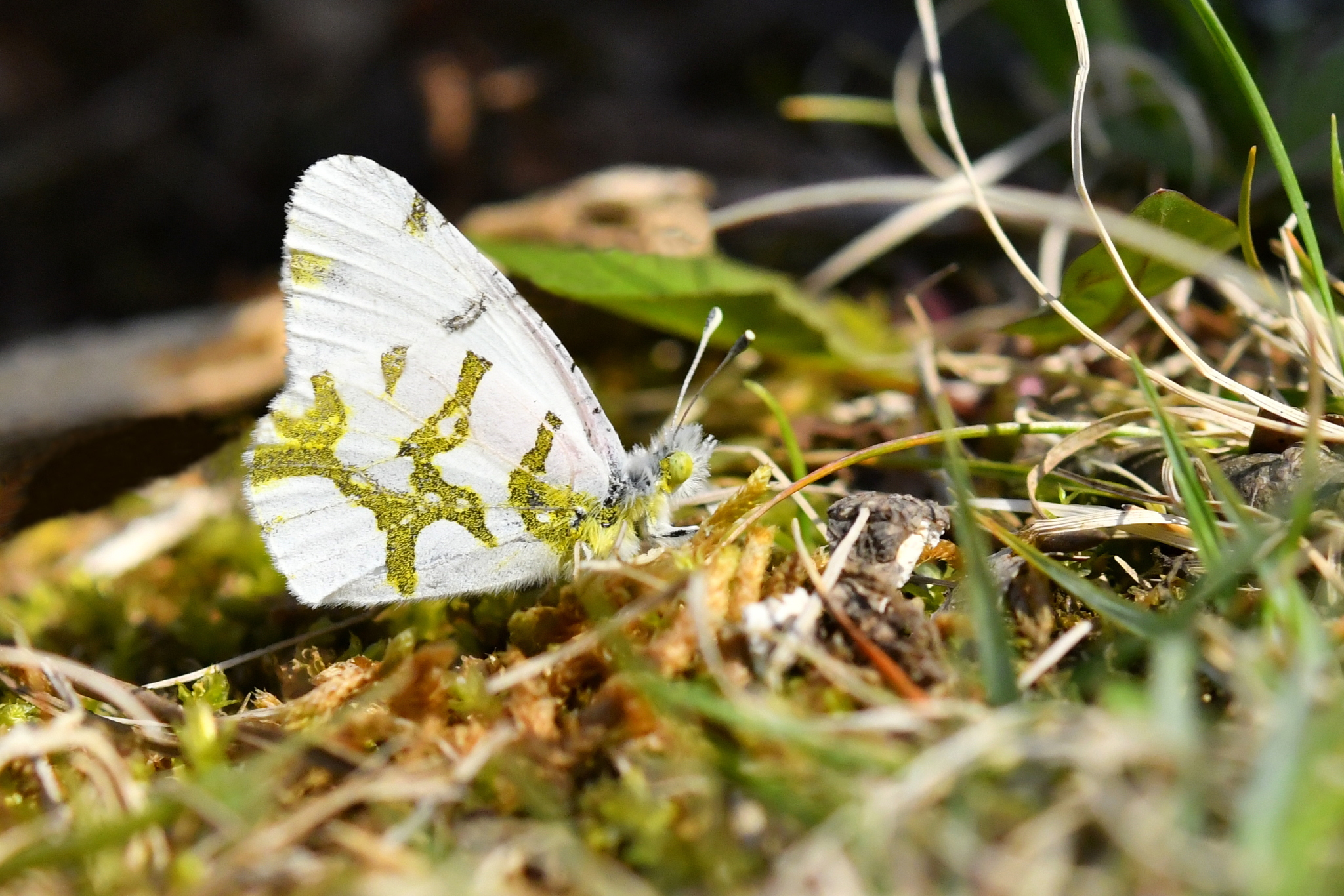
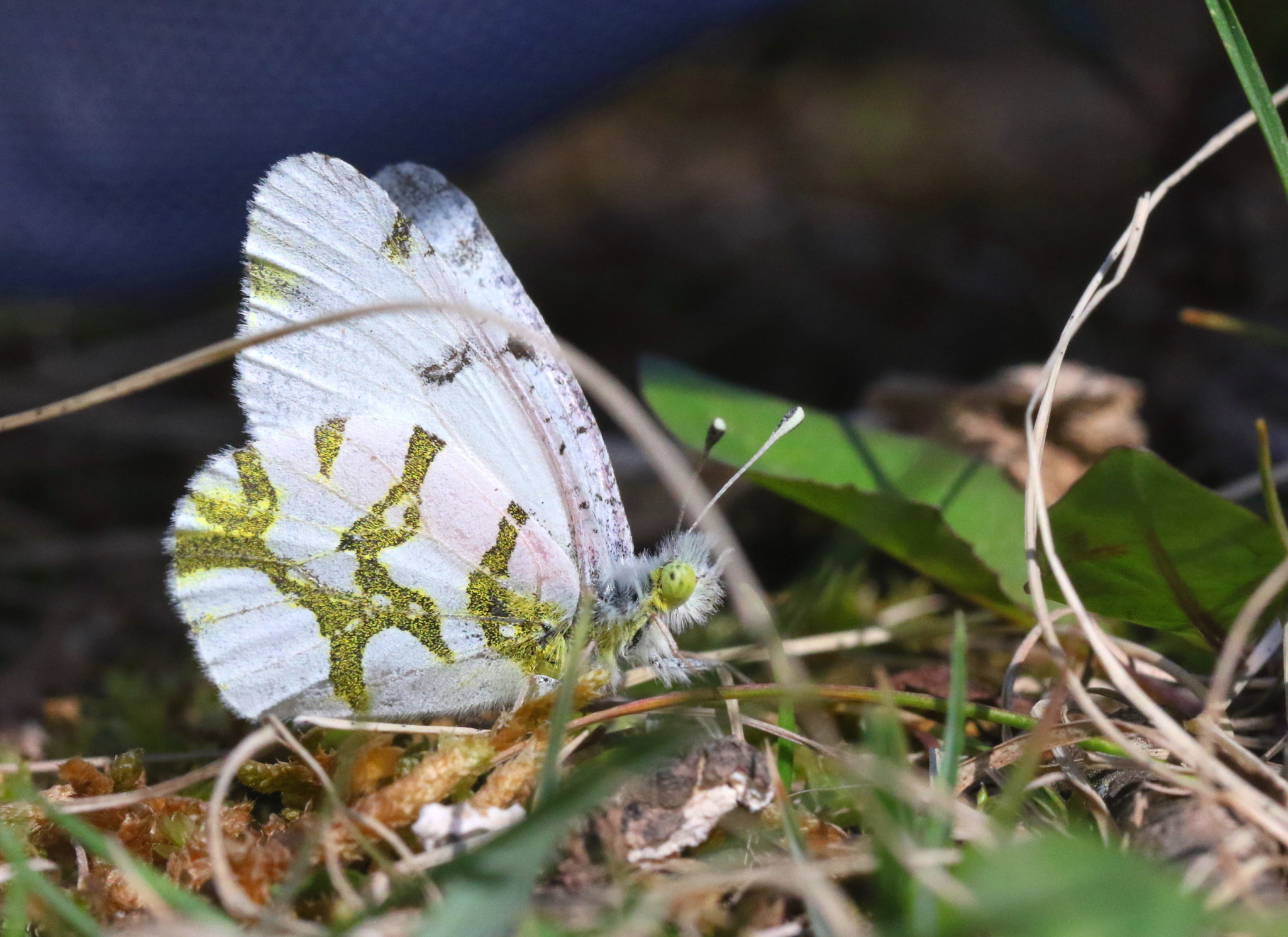
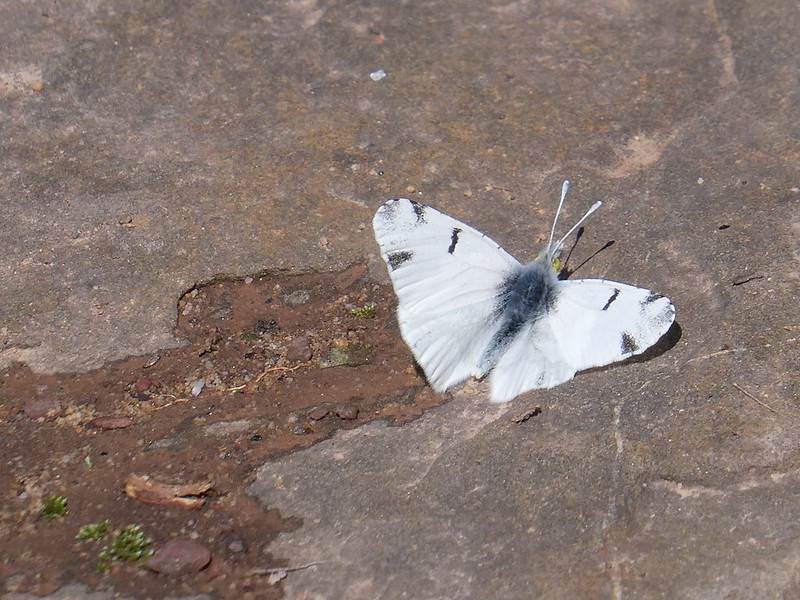
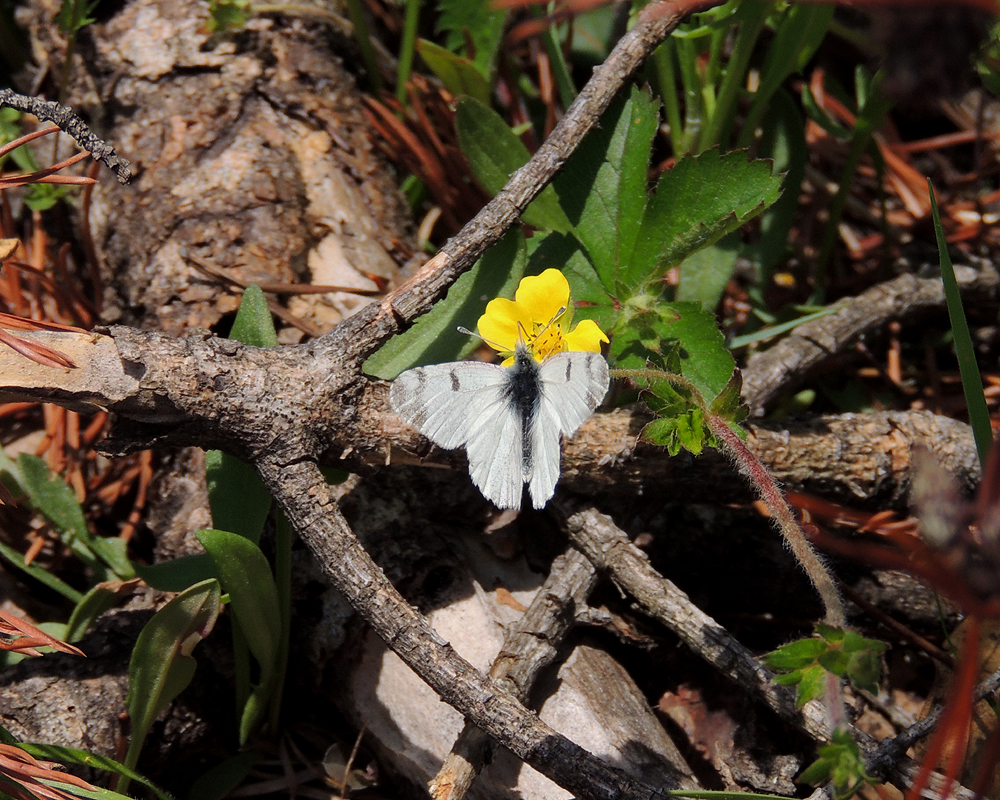
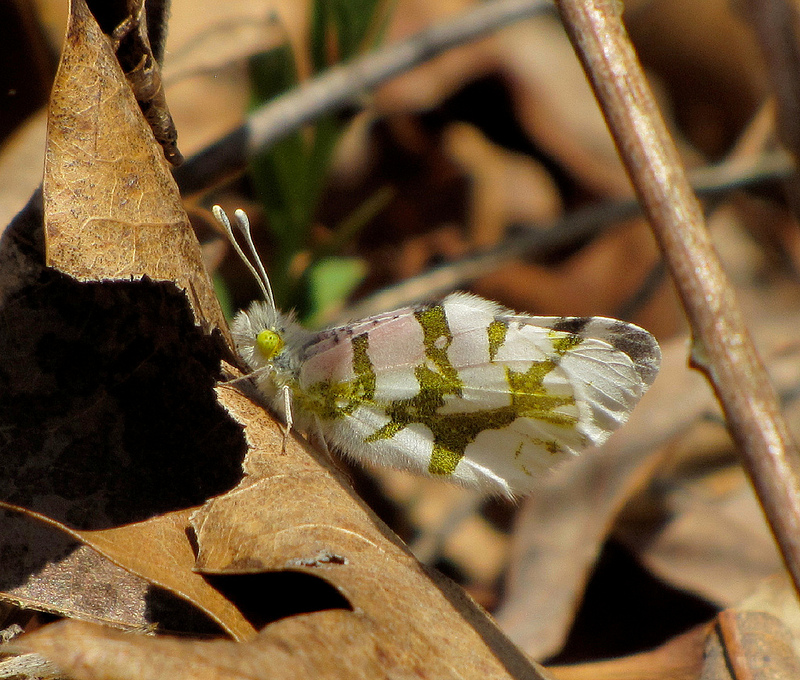
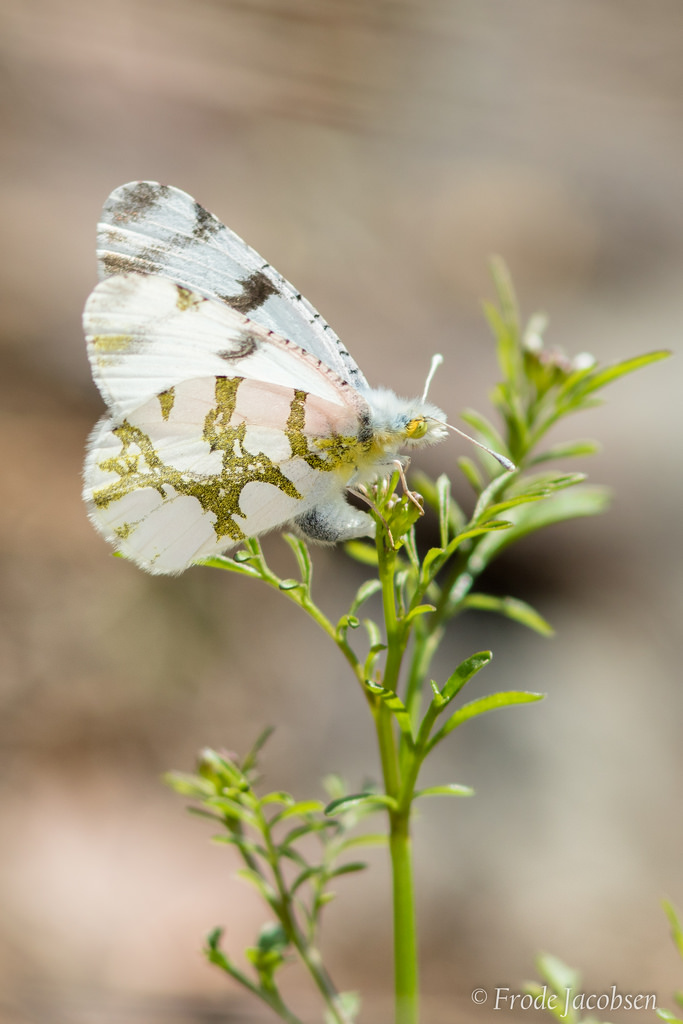
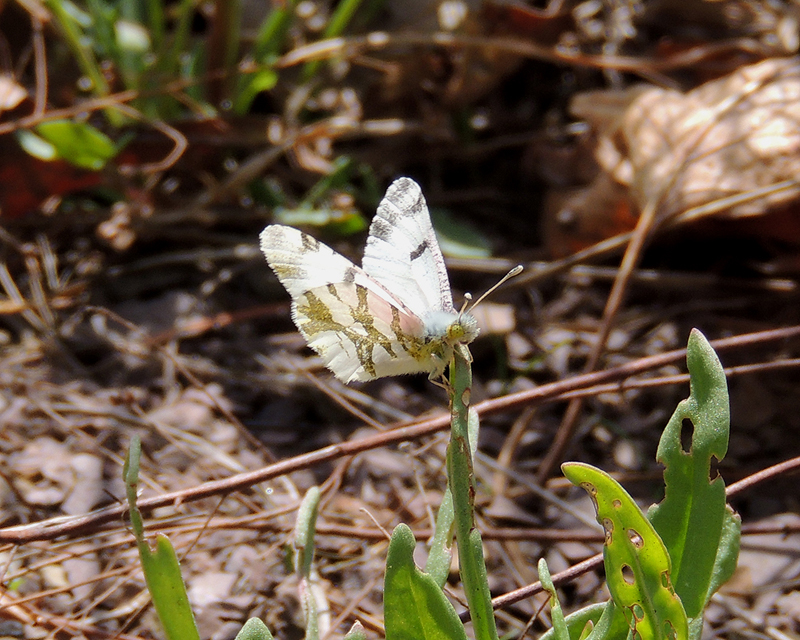
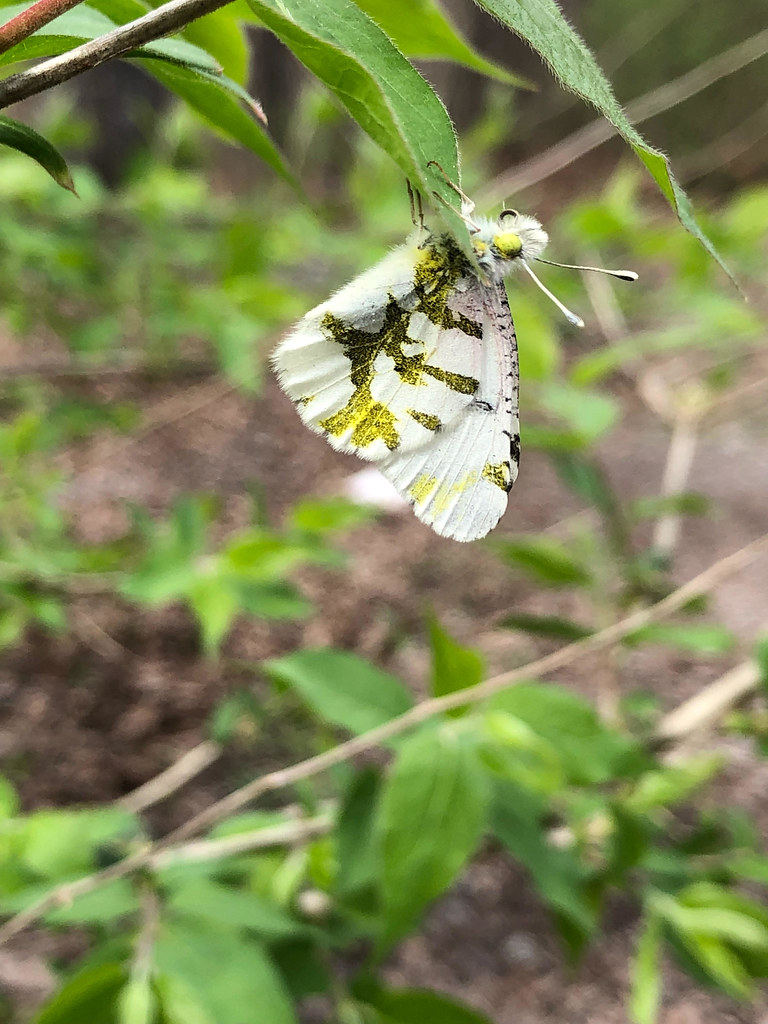
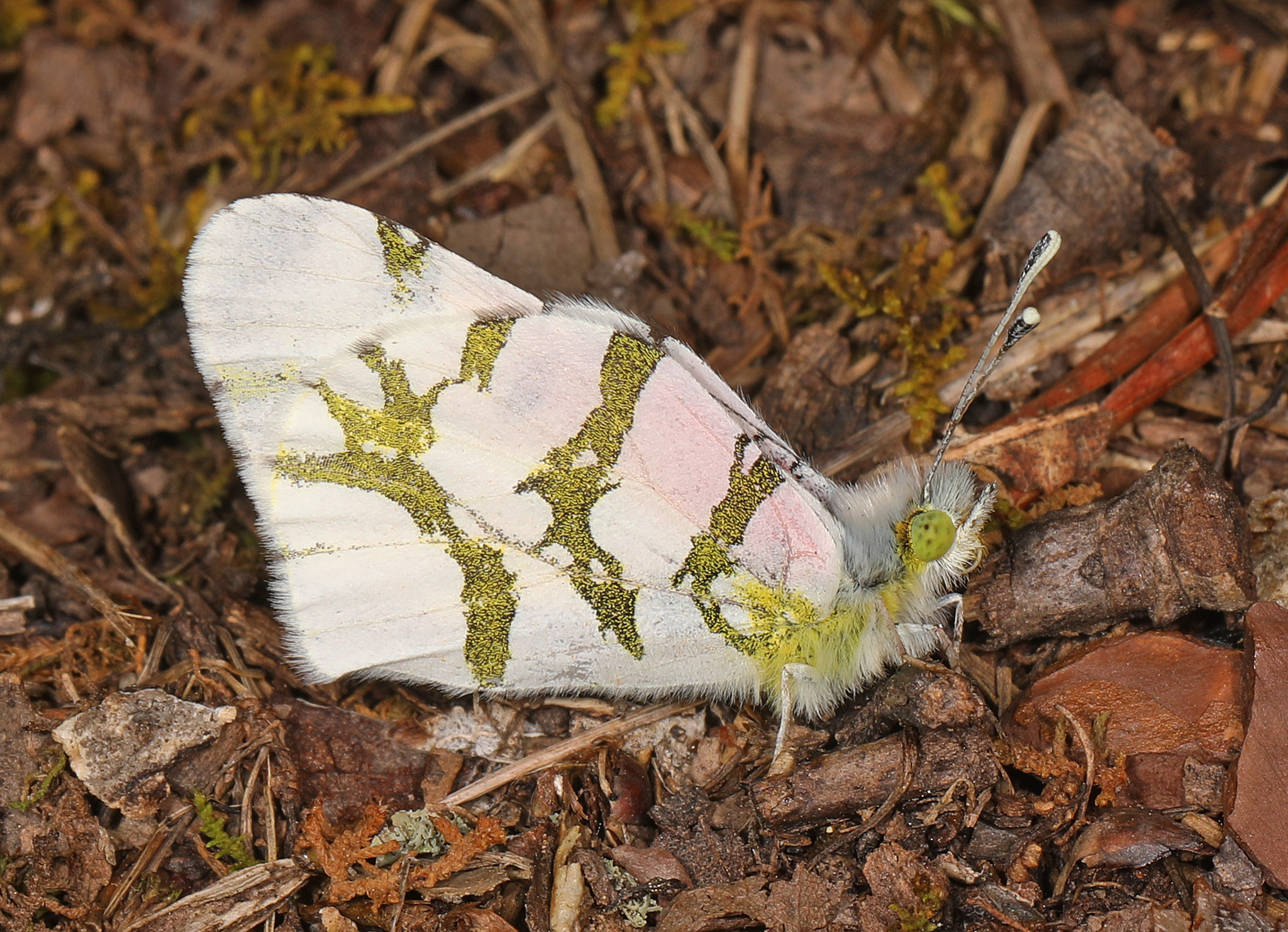
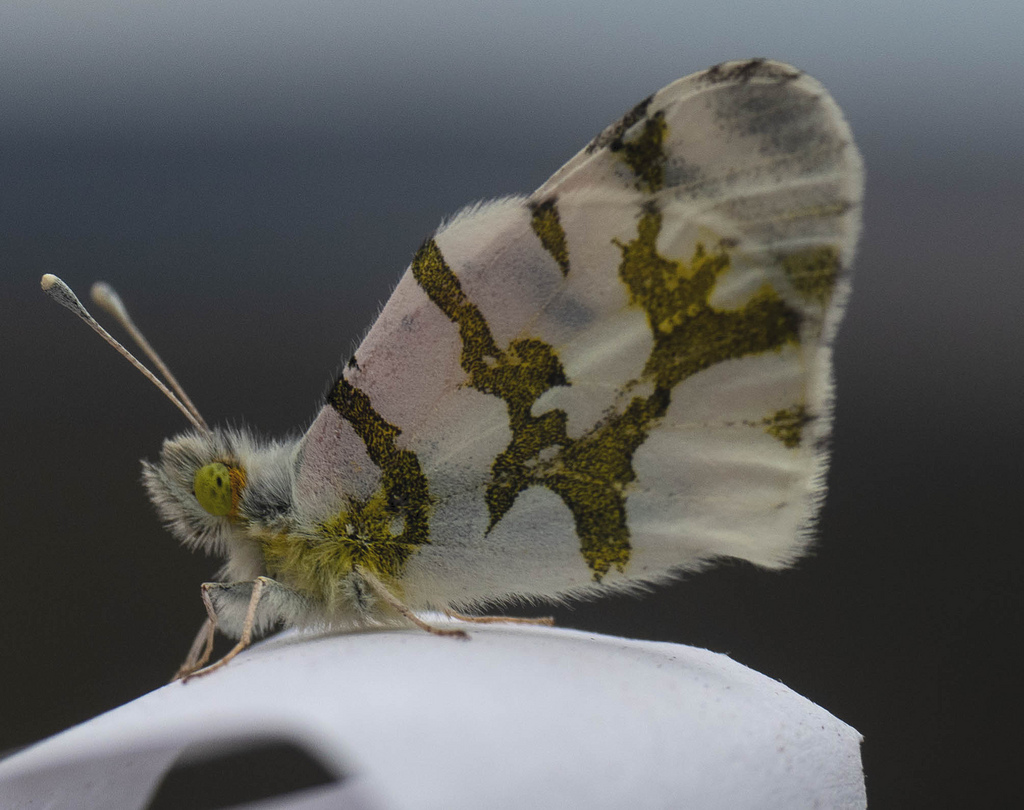
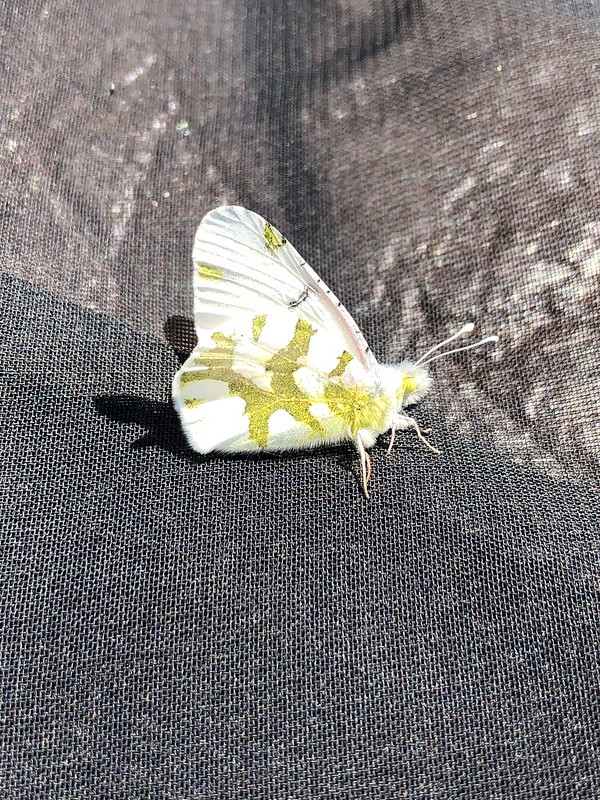
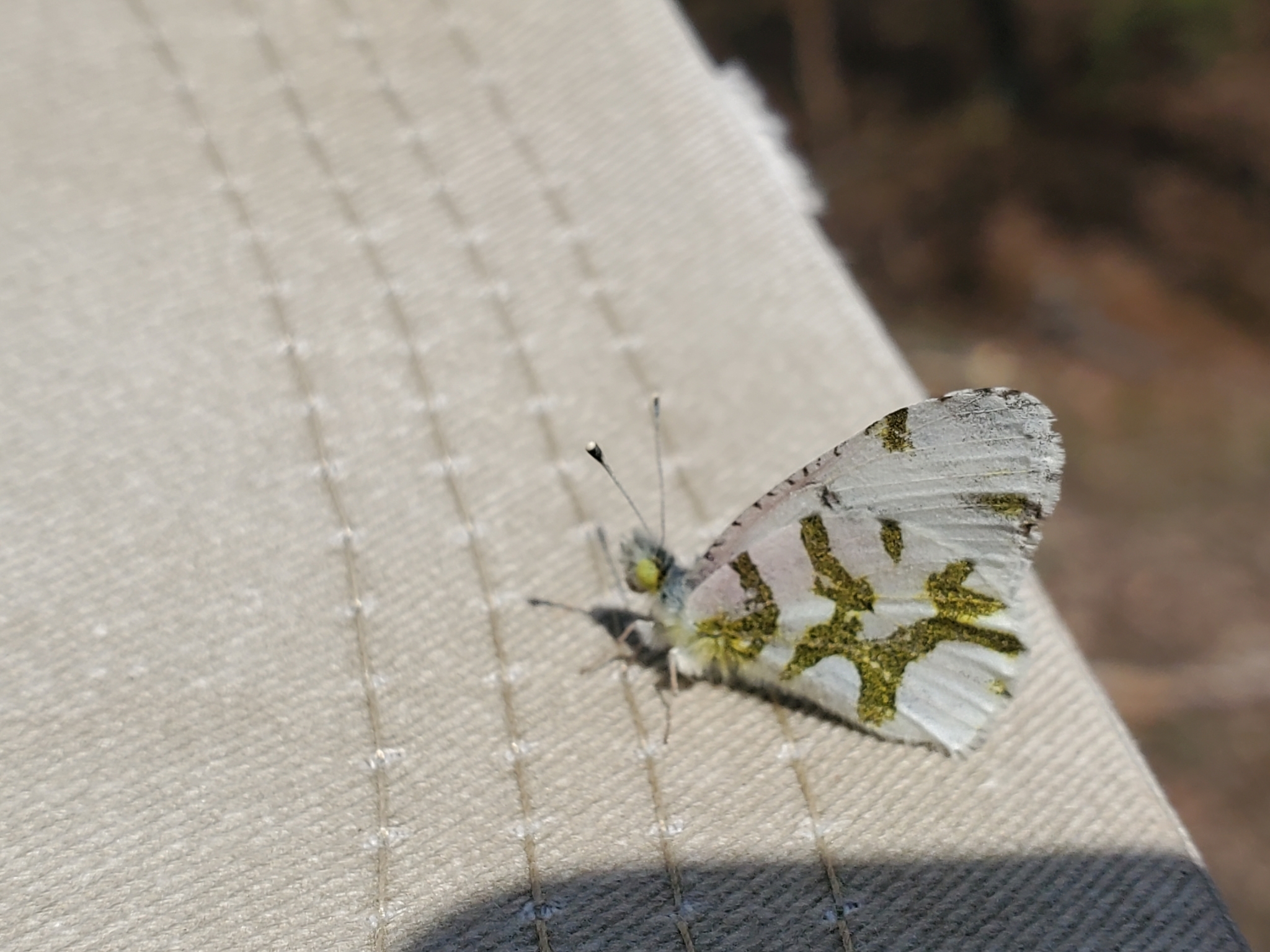
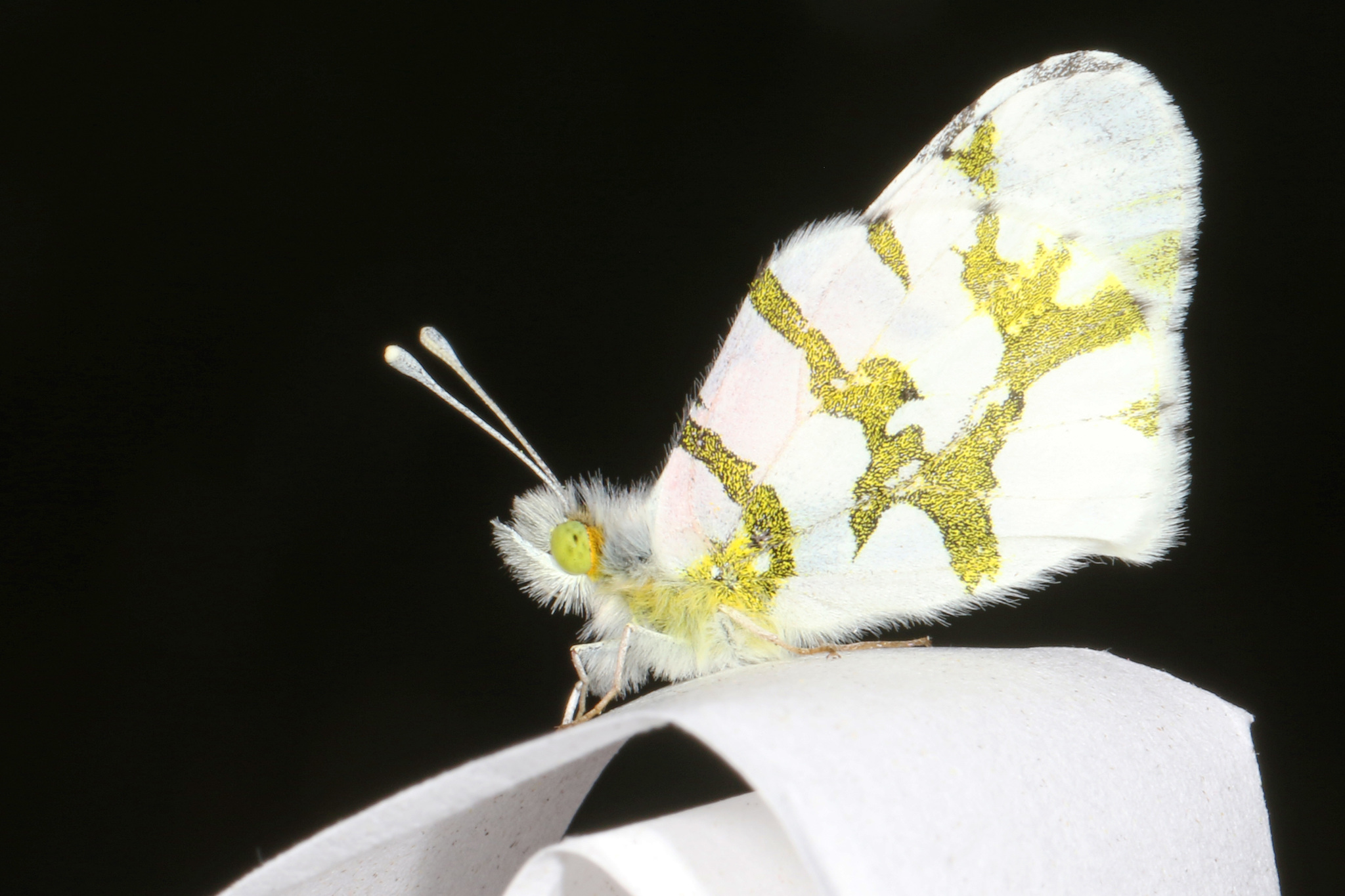
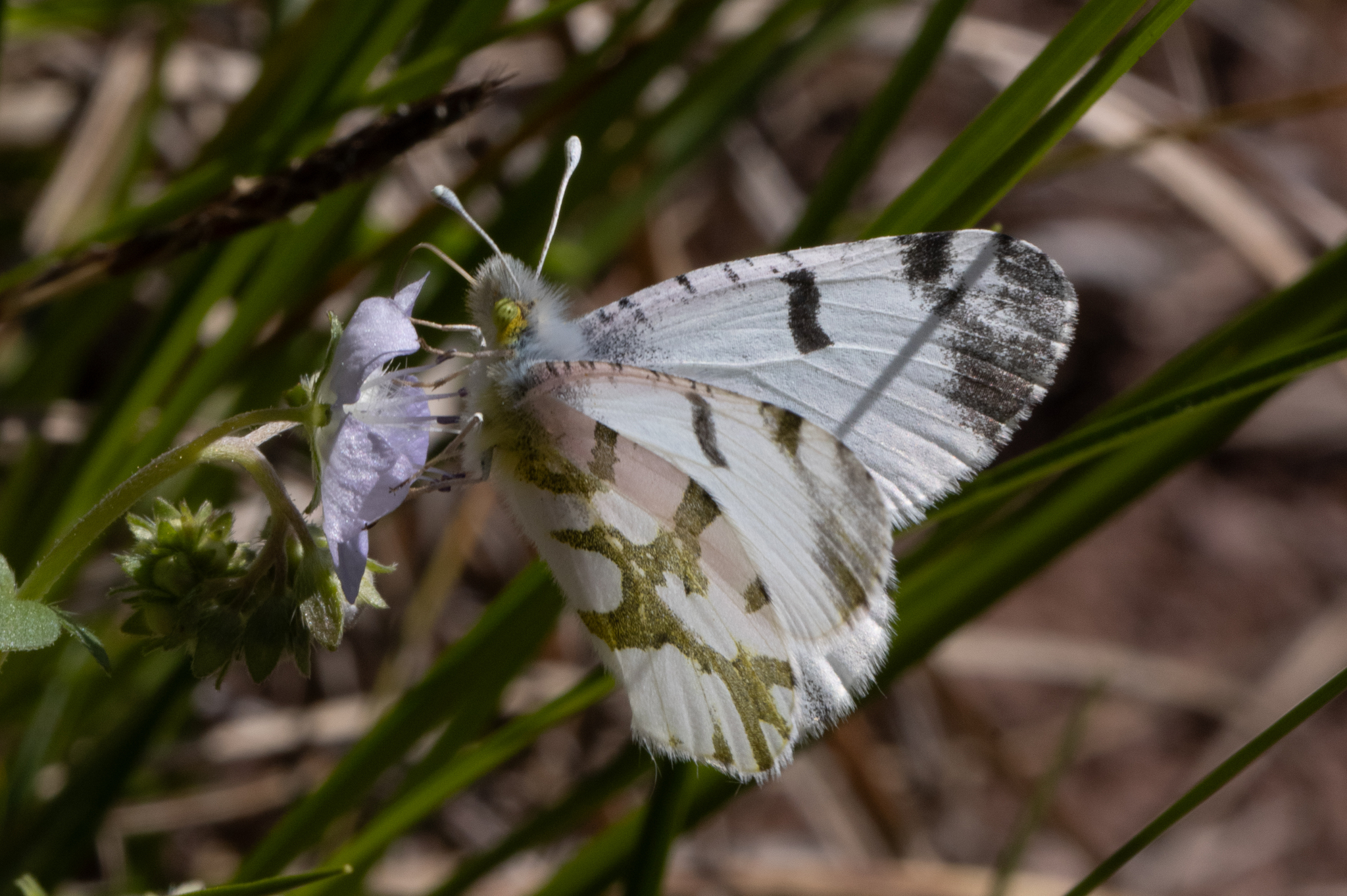
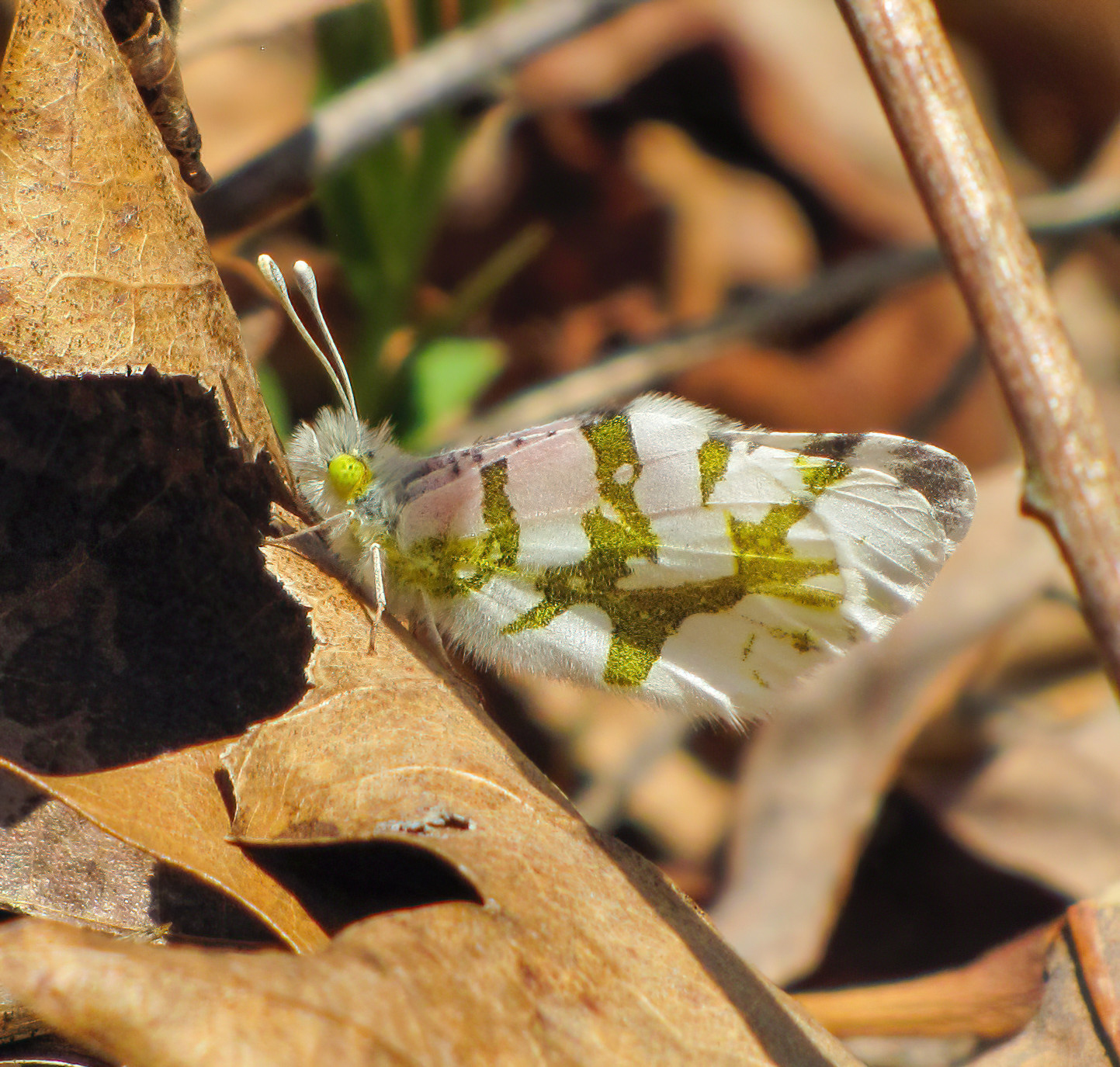
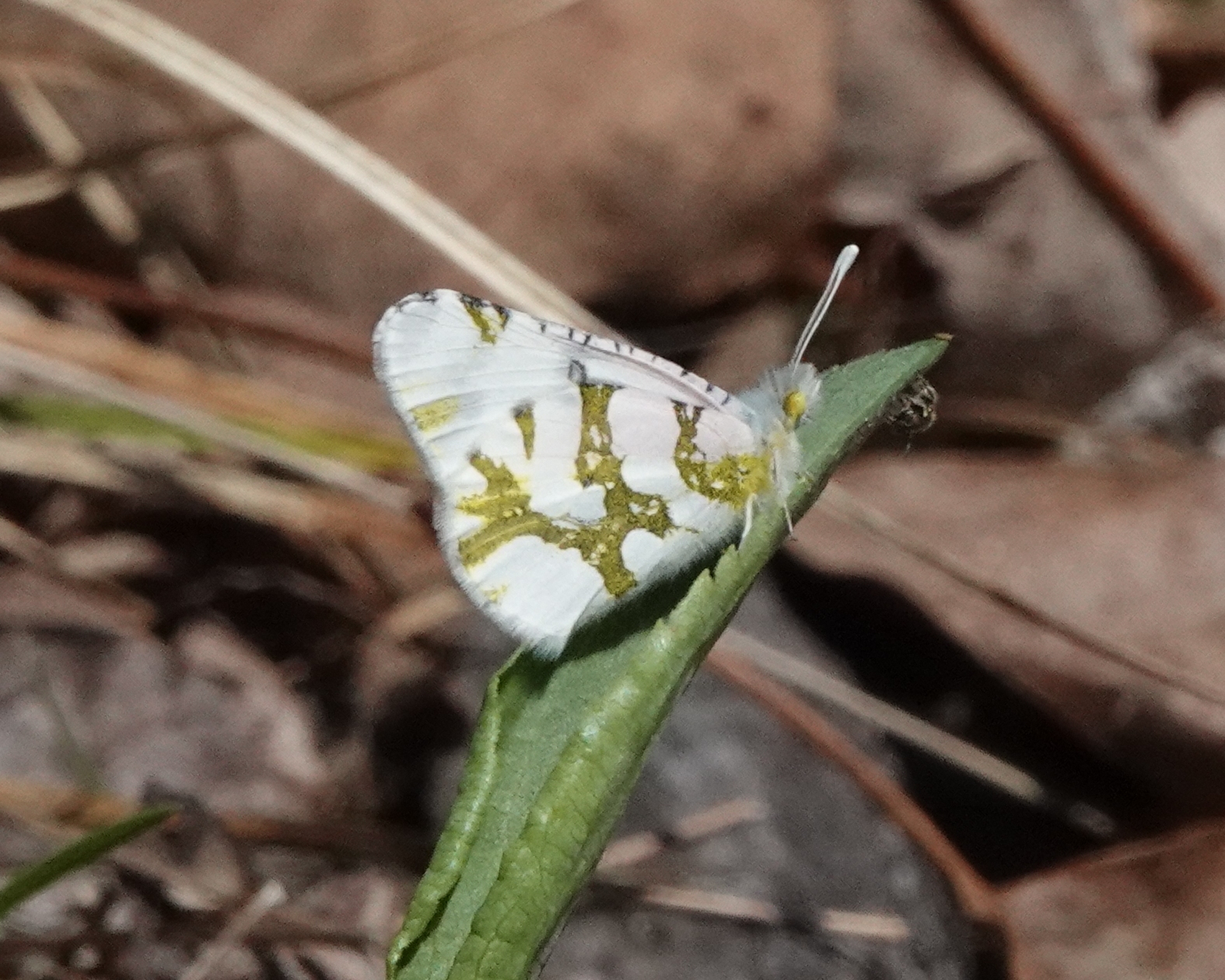
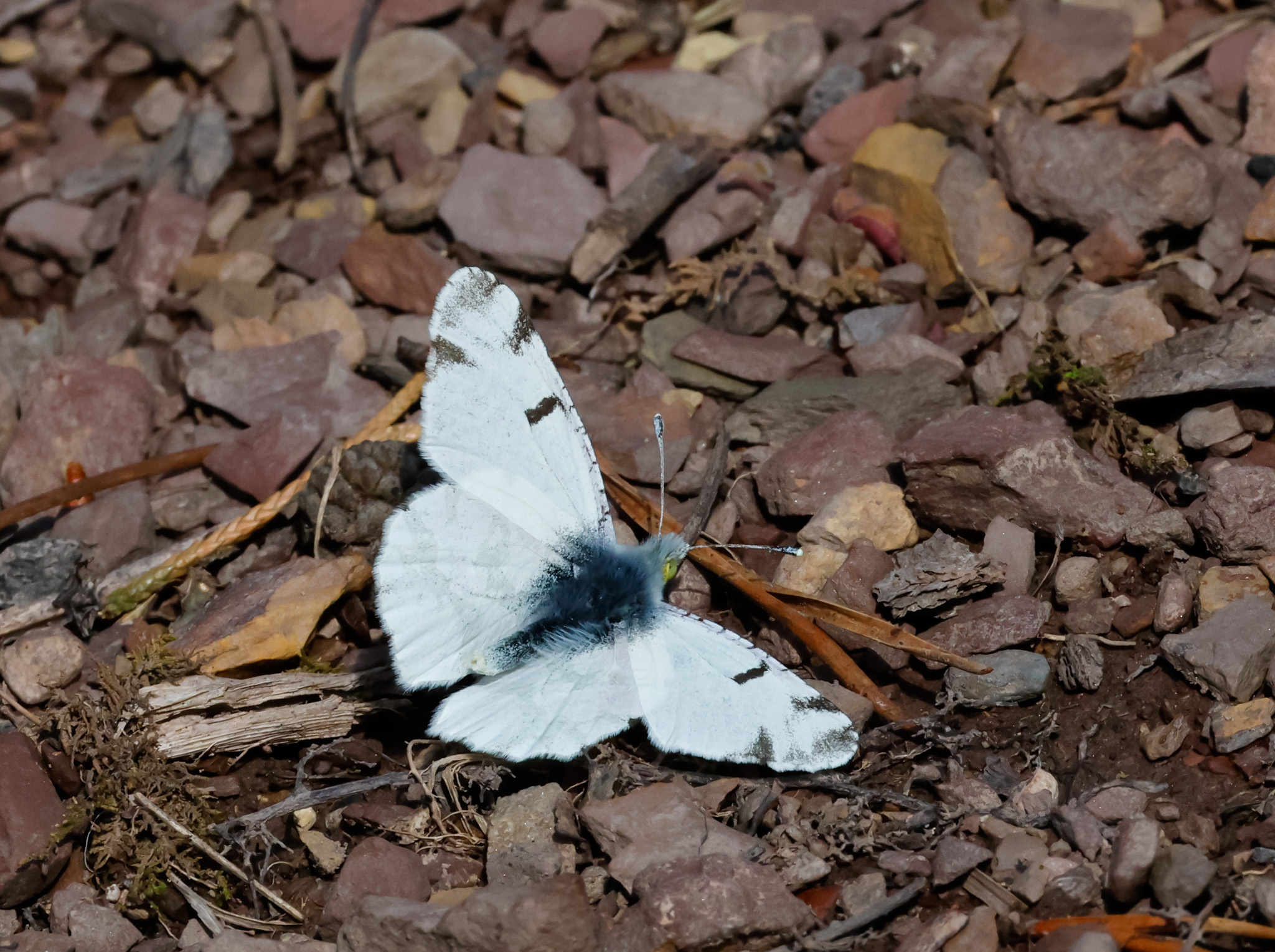
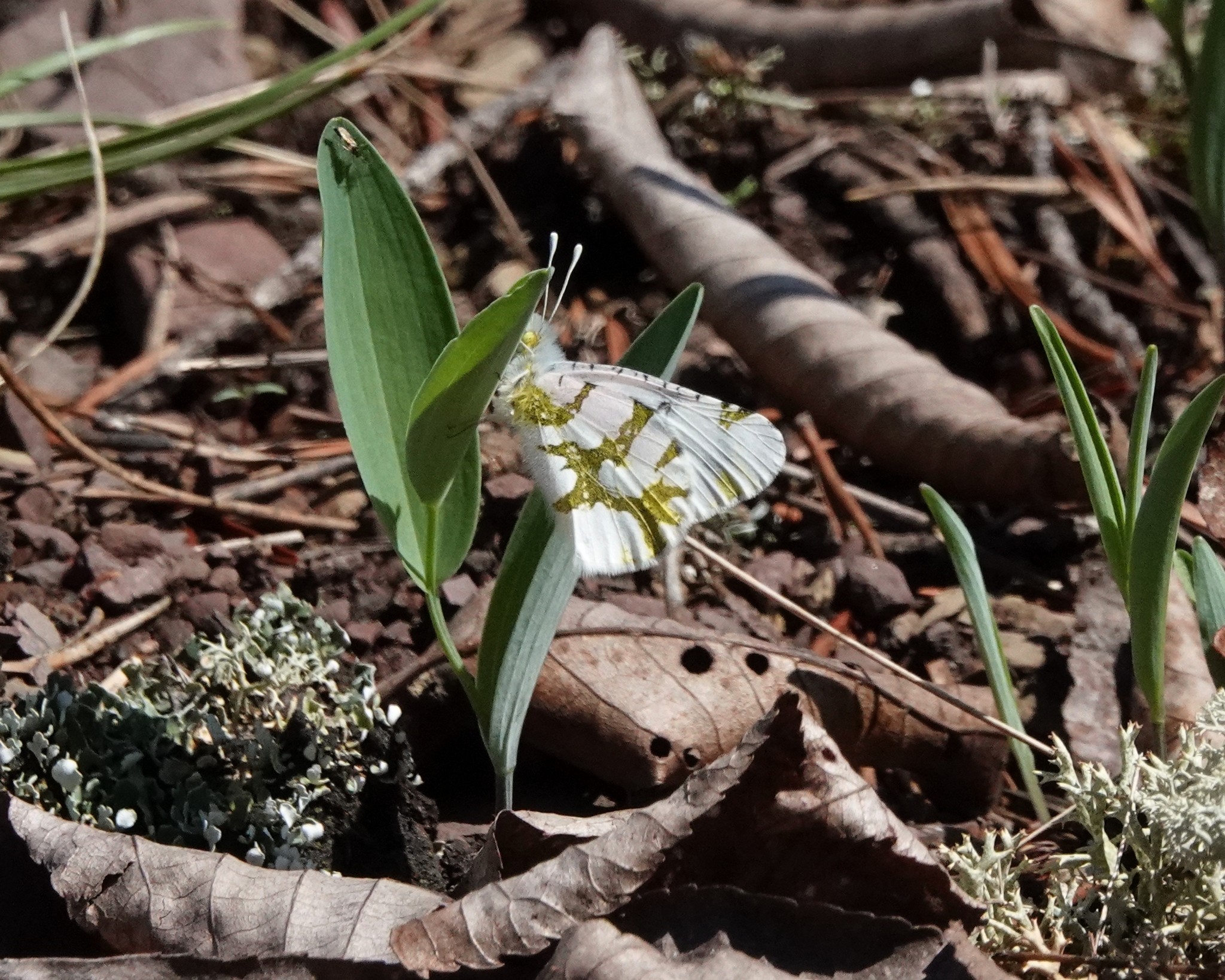
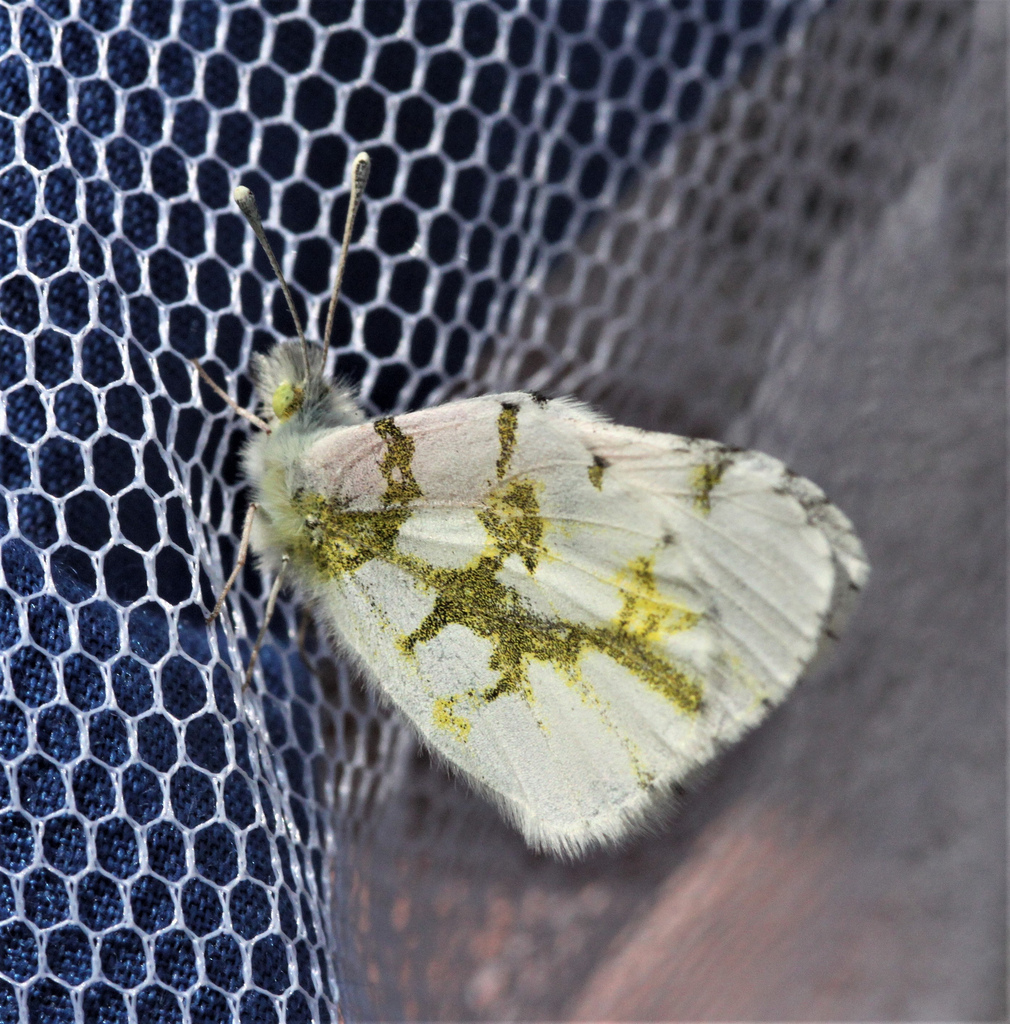
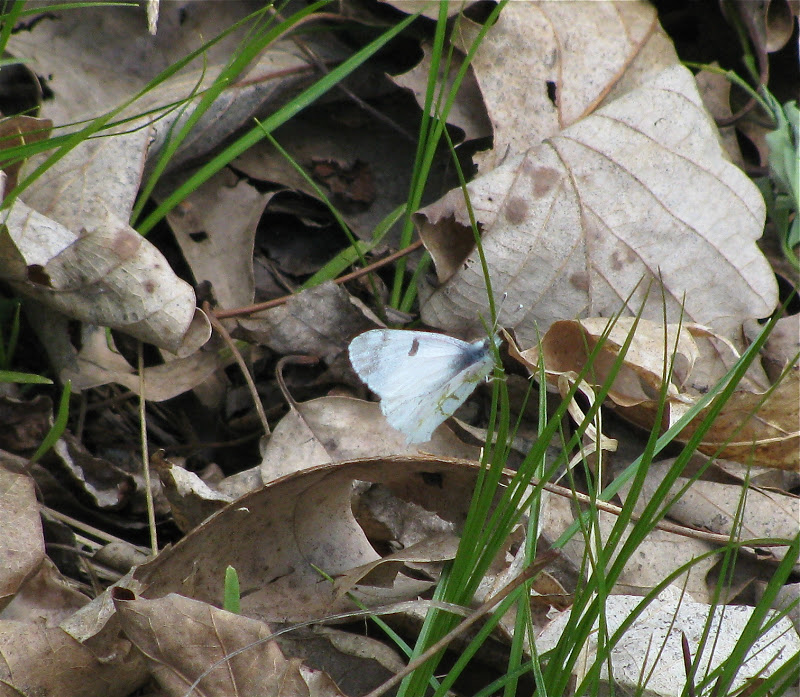
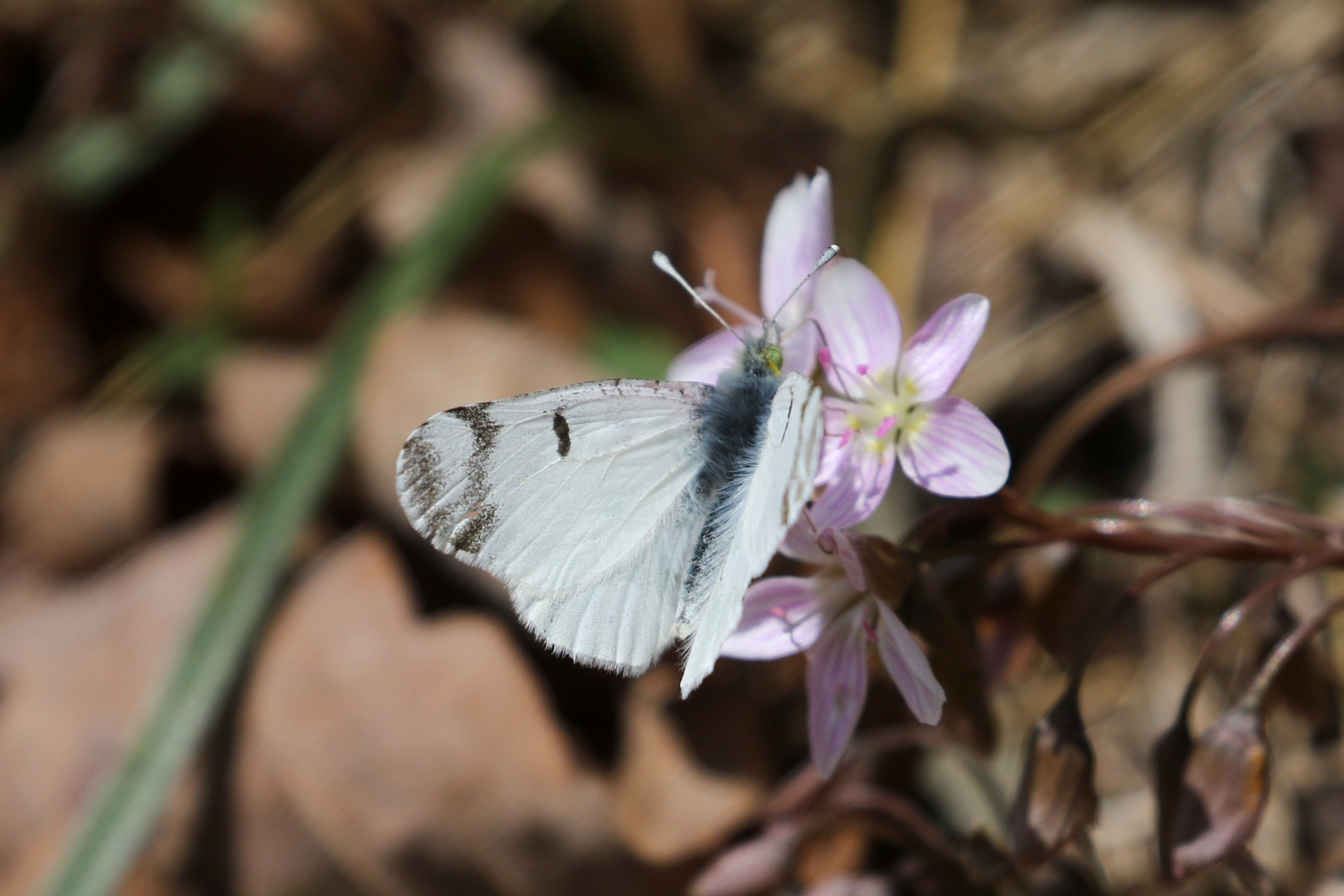
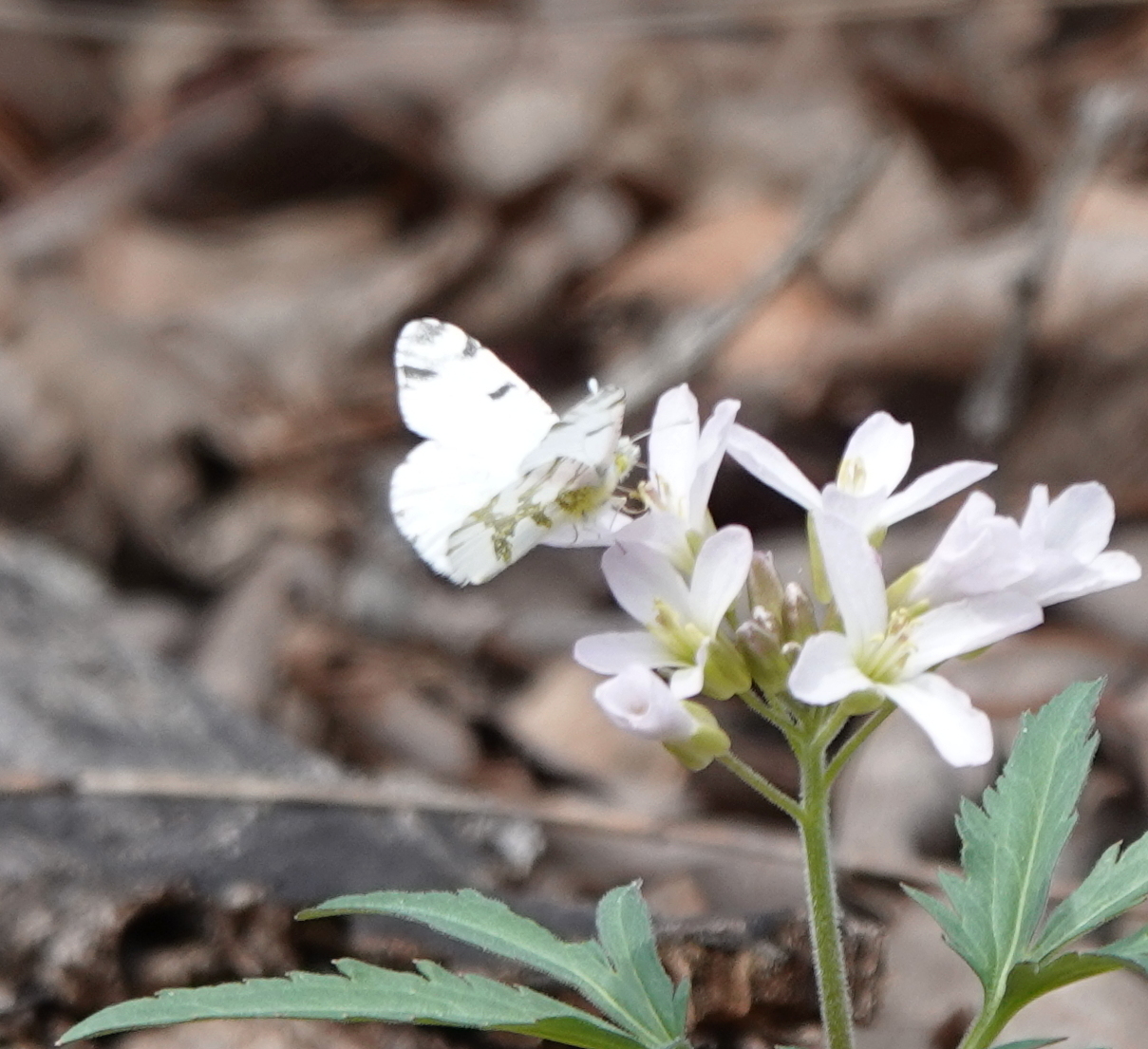
The Olympia Marble (Euchloe olympia) is a rare denizen of open habitats where its preferred host plants can be found, like shale barrens or lakeshores. In our area, it is restricted to shale barrens of western Maryland. This interesting and strikingly-marked butterfly is on the wing early in spring, from March into the middle of May in Maryland (Butterflies of Maryland: A Biological Summary and Checklist by Lynn Davidson & Richard Smith; Kaufman Guide to Butterflies of North America). Its restricted range and uncommon habitat make it vulnerable to extirpation, and it is ranked as S2 (state rare).
Relationships
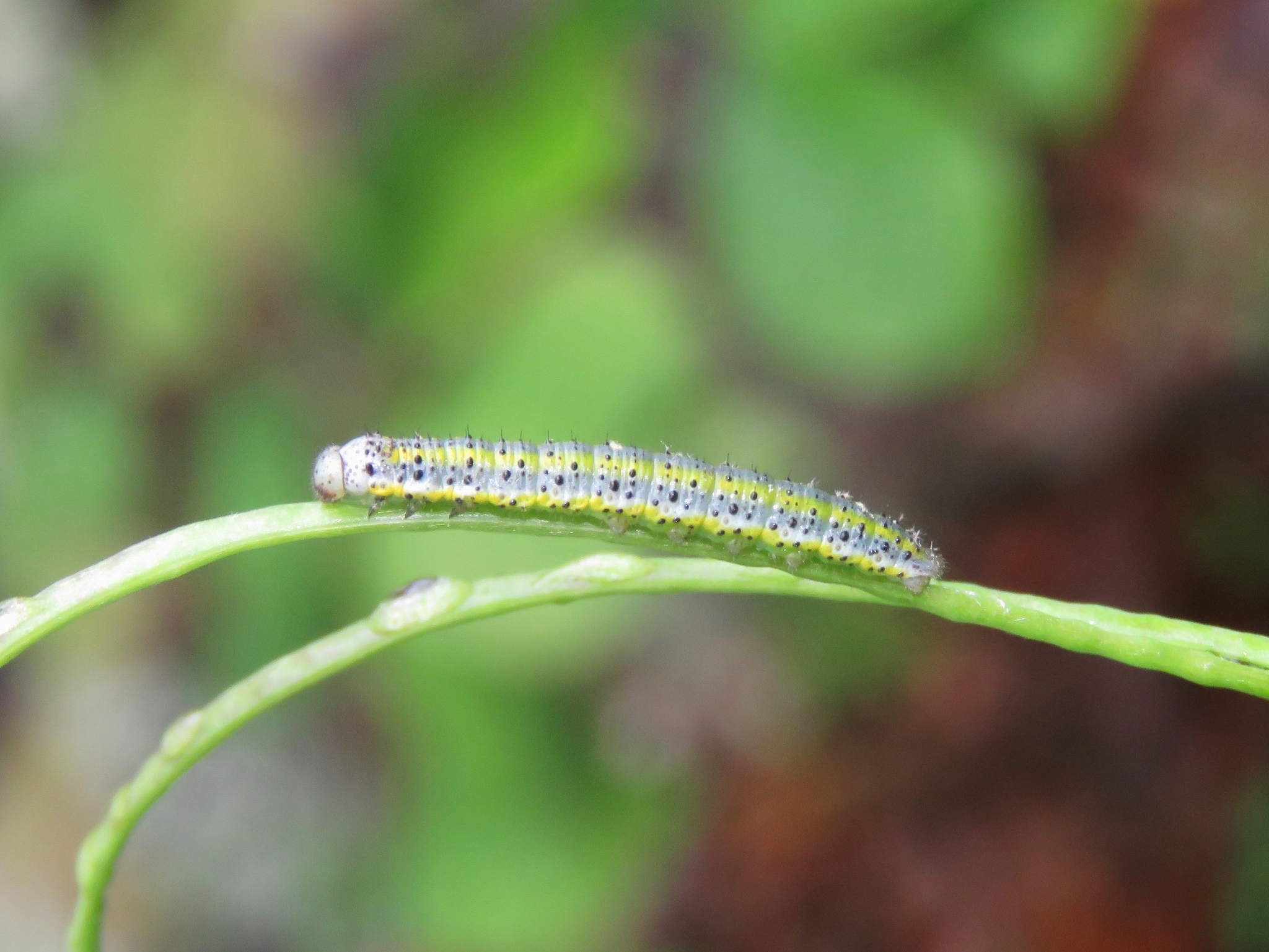
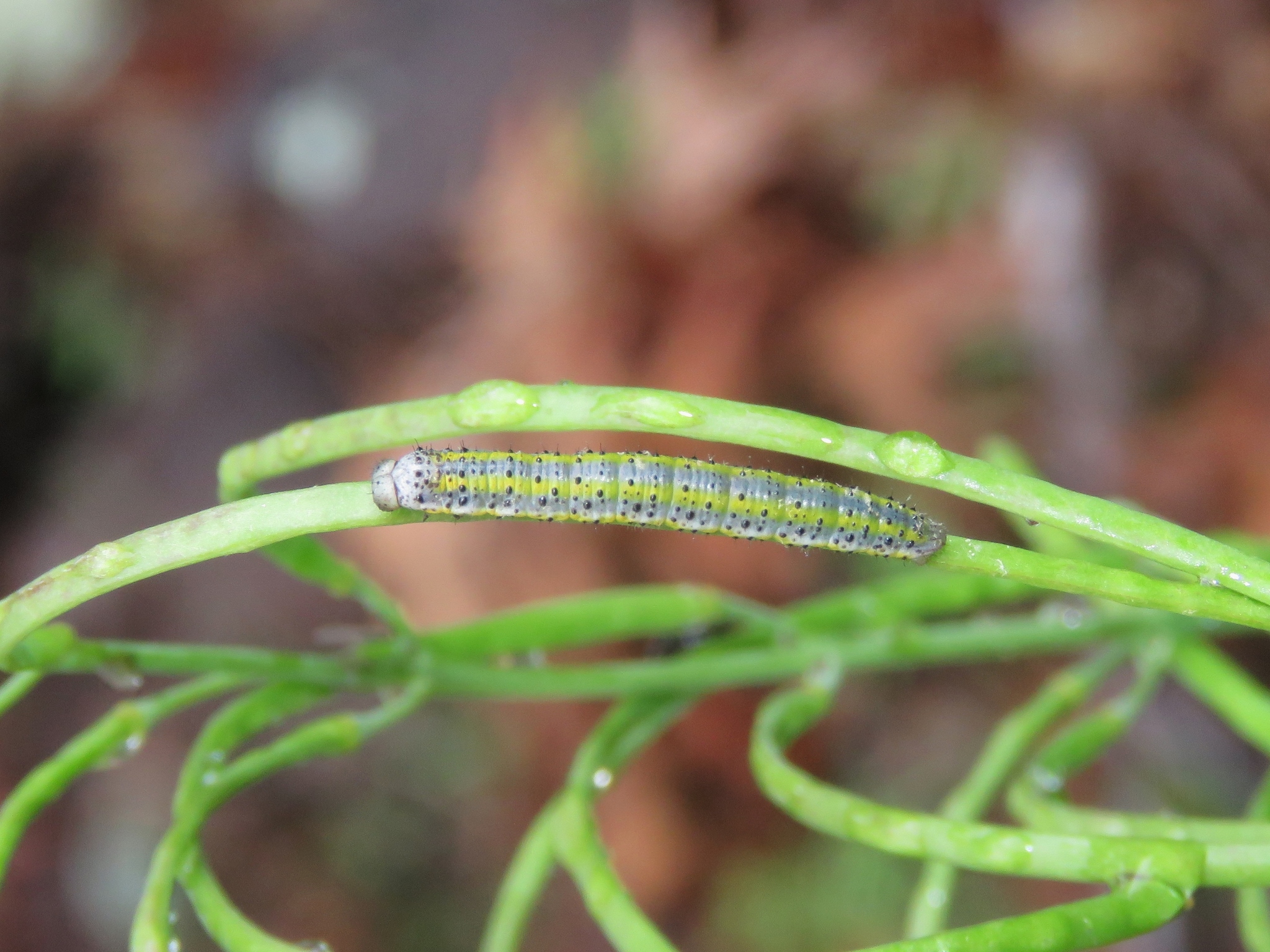
Olympia Marble primarily utilizes rockcresses as larval food plants.
Olympia Marble caterpillar in Allegany Co., Maryland (5/4/2019). (c) apistopanchax, some rights reserved (CC BY-NC).
View Record Details
Media by
Josh Emm.
Olympia Marble caterpillar in Allegany Co., Maryland (5/4/2019). (c) apistopanchax, some rights reserved (CC BY-NC).
View Record Details
Media by
Josh Emm.
Euchloe olympia, the Olympia marble, is a butterfly in the familyPieridae. Its range is southern Canada and the Midwest, down into the southwestern United States.[1]E. olympia is related to E. guaymasensis, but has a distinctive phenotype and genotype.[2]
Euchloe olympia has been observed to use Lepidium virginicum as its main nectar source as a larval and as an adult the main nectar source was found to be Nuttallanthus canadensis. Based on a study done in a central Illinois sand prairie, Echloe olympia was observed to show consistency on the flowers it visits to obtain its nectar from.[3]
The Olympia marble has been classified globally as G5/G4, meaning that globally it is a relatively stable species. The United States has not placed it under any watch as a country. However, it is in danger due to gypsy moth chemical control.
^Back, W., Miller, M. A., & Opler, P. A. (2011). Genetic, phenetic, and distributional relationships of nearctic Euchloe (Pieridae, Pierinae, Anthocharidini). The Journal of the Lepidopterists' Society, 65(1), 1-14.




_on_Canthium_coromandelicum_W_IMG_9093.jpg)