Map Snapshot


12 Records
Citations
No citations linked for this taxon yet.
Source: Wikipedia
| Leucocoprinus leucothites | |
|---|---|
_M.M._Moser_ex_Bon_61894_crop.jpg)
| |
Scientific classification 
| |
| Kingdom: | Fungi |
| Division: | Basidiomycota |
| Class: | Agaricomycetes |
| Order: | Agaricales |
| Family: | Agaricaceae |
| Genus: | Leucocoprinus |
| Species: | L. leucothites
|
| Binomial name | |
| Leucocoprinus leucothites (Vittad.) Redhead (2023)
| |
| Synonyms | |
| Leucocoprinus leucothites | |
|---|---|
| Mycological characteristics | |
 | Gills on hymenium |

 | Cap is convex or flat |
 | Hymenium is free |
 | Stipe has a ring |
 | Spore print is white |
 | Ecology is saprotrophic |
 | Edibility is unknown |
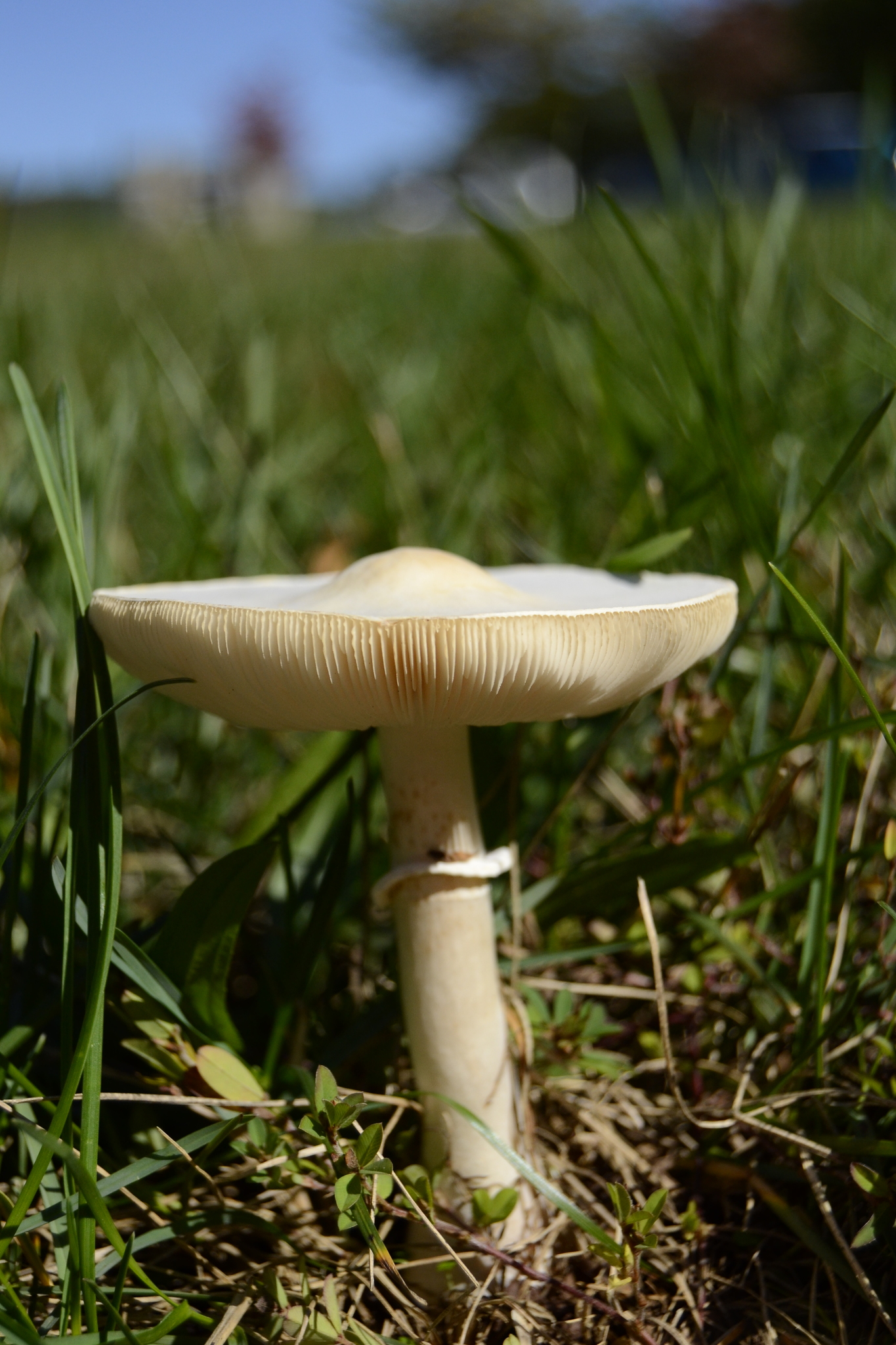
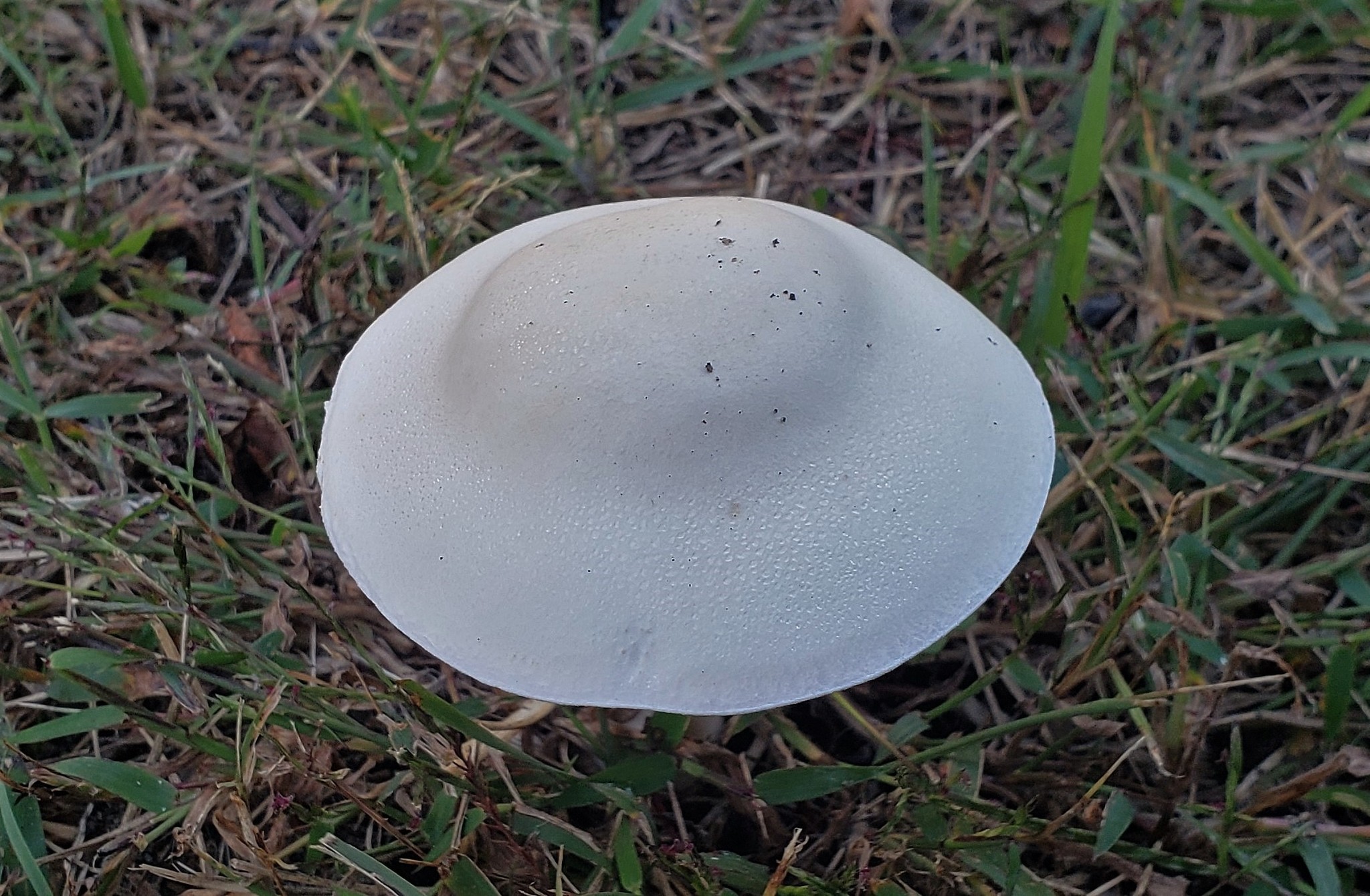
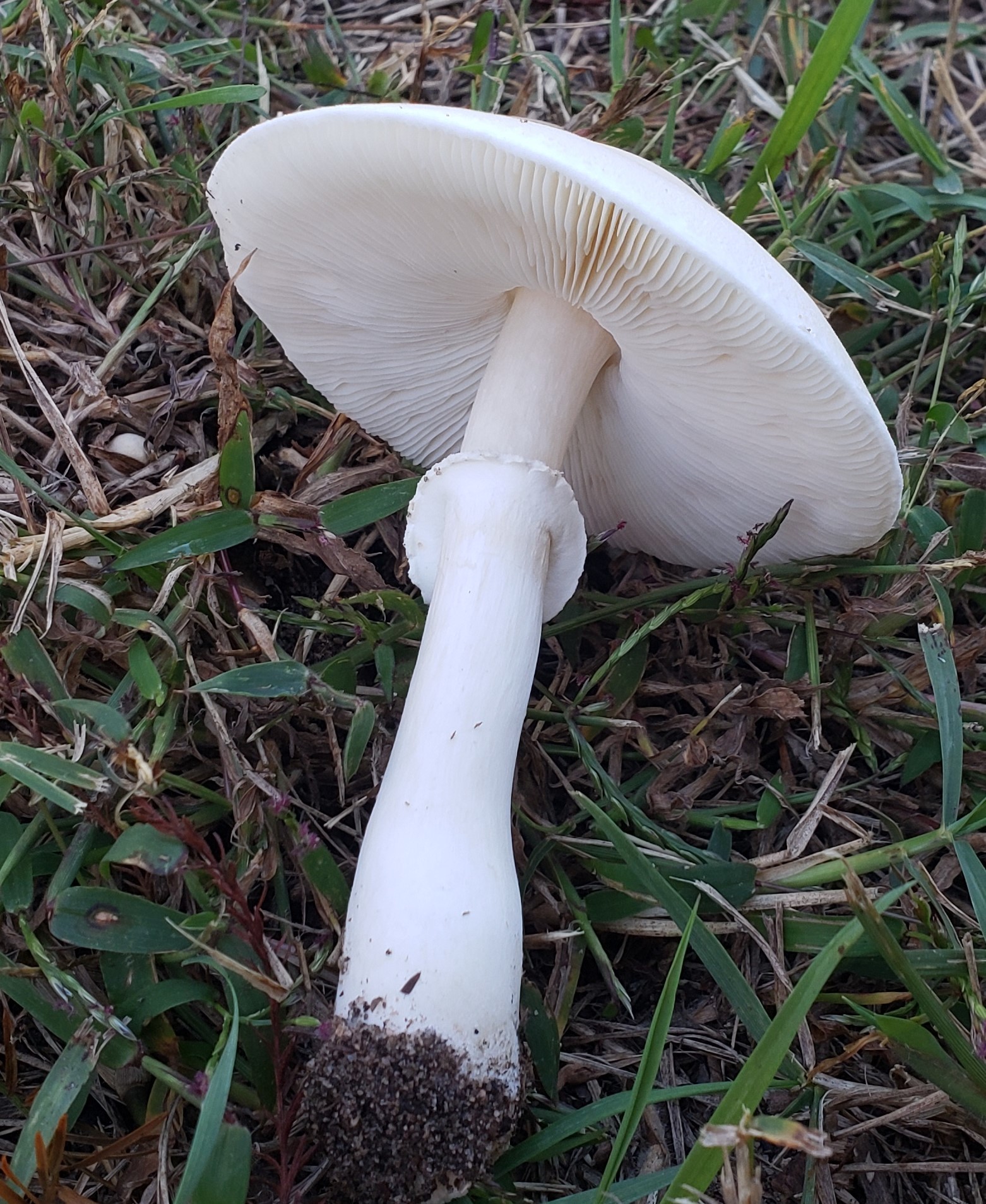
Leucocoprinus leucothites, commonly known as the smooth parasol, woman on motorcycle,[2] ma'am on motorcycle,[3] white dapperling, or white agaricus mushroom, is a species of agaric fungus found in disturbed areas.
Taxonomy
[edit]The species was originally described as Agaricus leucothites by Carlo Vittadini in 1835, and bears similarity to species of that genus.[4] Solomon Wasser transferred it to Leucoagaricus in 1977.[5]
In 2023 this species was reclassified as Leucocoprinus leucothites effectively beginning the process of merging the Leucoagaricus and Leucocoprinus genera.[6]
Description
[edit]The mushroom's cap is 4 to 15 centimetres (1+1⁄2 to 6 in) wide,[7] is granular, white or gray-brown in color then sometimes grayish or pinkish.[4] The flesh may bruise yellowish and the gills reddish.[4] The stipe is 5 to 12 cm long, commonly with a wide base, and bruising yellow or brown.[7] A ring is usually present.[4] The spores are white, smooth, and elliptical.[7] They produce a white spore print.[8]
It could be confused for Agaricus species as well as the deadly Amanita ocreata.[2][7]
Distribution and habitat
[edit]Leucocoprinus leucothites can be generally found in disturbed, grassy areas such as gardens and parks, and sometimes in forests.[4][8] It has a worldwide distribution with most occurrences in Europe and North America.[9]
Edibility
[edit]While sometimes regarded as edible,[7] the species is suspected of being poisonous due to gastric-upset-causing toxins.[10] It could also be confused with a deadly Amanita.[2][7]
See also
[edit]References
[edit]- ^ Wood, Michael; Stevens, Fred. "California Fungi: Leucoagaricus leucothites". MykoWeb. Archived from the original on 2018-02-23. Retrieved 2021-02-15.
- ^ a b c Arora, David (1986) [1979]. Mushrooms Demystified: A Comprehensive Guide to the Fleshy Fungi (2nd ed.). Berkeley, CA: Ten Speed Press. pp. 299–300. ISBN 978-0-89815-170-1.
- ^ Arora, David (February 1, 1991). All That the Rain Promises and More: A Hip Pocket Guide to Western Mushrooms. ISBN 9780898153880.
- ^ a b c d e Trudell, Steve; Ammirati, Joe (2009). Mushrooms of the Pacific Northwest. Timber Press Field Guides. Portland, OR: Timber Press. p. 76. ISBN 978-0-88192-935-5.
- ^ Wasser SP. (1977). "New and rare species of Agaricaceae Cohn. family (in Russian)". Ukrainskiy Botanichnyi Zhurnal (in Russian). 34 (3): 305–8.
- ^ Redhead, Scott A. (August 2023). "Nomenclatural novelties" (PDF). Index Fungorum. 551.
- ^ a b c d e f Davis, R. Michael; Sommer, Robert; Menge, John A. (2012). Field Guide to Mushrooms of Western North America. Berkeley: University of California Press. pp. 89–90. ISBN 978-0-520-95360-4. OCLC 797915861.
- ^ a b Audubon (2023). Mushrooms of North America. Knopf. p. 568. ISBN 978-0-593-31998-7.
- ^ Leucoagaricus leucothites at Global Biodiversity Information Facility, gbif.org
- ^ Miller Jr., Orson K.; Miller, Hope H. (2006). North American Mushrooms: A Field Guide to Edible and Inedible Fungi. Guilford, CN: FalconGuide. p. 55. ISBN 978-0-7627-3109-1.
External links
[edit]
.jpg) | This Agaricaceae-related article is a stub. You can help Wikipedia by adding missing information. |